Gwangju Special Metropolitan City to Establish KRW 6.9 Billion Integrated Energy, Water and Agriculture Self-Reliance Model in Senegal
- Input
- 2026-09-06 10:30:32
- Updated
- 2026-09-06 10:30:32
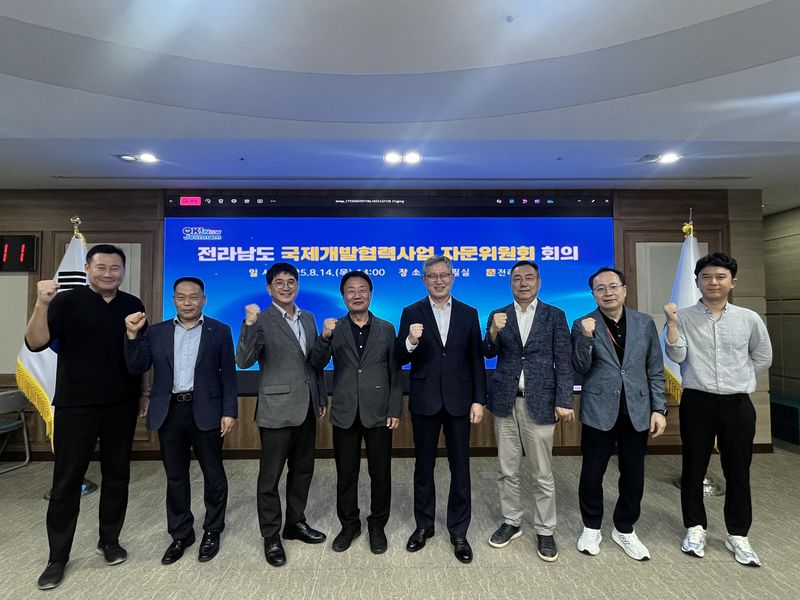
【Financial News Jeonnam-Gwangju = Hwang Tae-jong】Jeonnam-Gwangju Integrated Special Metropolitan City (Gwangju Special Metropolitan City) will establish an integrated energy, water and agriculture self-reliance model worth a total of KRW 6.9 billion to support rural development in Senegal, West Africa, by 2030.
According to Gwangju Special Metropolitan City on the 6th, the “Capacity-Building Project for Energy Self-Reliance in Rural Senegal” was selected as the main project in the Korea International Cooperation Agency (KOICA)’s competition for official development assistance (ODA) public-private cooperation projects.
The project will be led by KEPCO KDN, with Gwangju Special Metropolitan City, Dongshin University, JEONNAM TECHNOPARK and IOTPLUS participating. Over five years, from this year through 2030, a total of KRW 6.9 billion will be invested to establish an integrated energy, water and agriculture self-reliance model based on renewable energy in rural Senegal.
In particular, Gwangju Special Metropolitan City will oversee the construction and operation of the project. It plans to transfer and localize the “Energy Self-Reliant Village” model—whose technical performance and income-generation effects for residents have been verified—to suit local conditions in Senegal. The project will create a foundation for residents to produce and use energy themselves, linking it to daily life and productive activities such as agriculture to strengthen the sustainable self-reliance capacity of rural communities.
Shin Hyun-gon, Gwangju Special Metropolitan City’s international cooperation officer, emphasized, “This is a meaningful project that localizes the experience and technology accumulated through Jeonnam-Gwangju’s Energy Self-Reliant Village model to suit conditions in rural Senegal.”
The project will also improve conditions not only in energy but also in drinking water and agriculture in the target areas. Taking into account local challenges—including the burden of energy costs caused by unstable power supplies and reliance on diesel generators, unreliable drinking-water supplies, post-harvest losses and a shortage of cold-storage facilities—it will establish renewable-energy-based power supply systems, water-supply facilities, agricultural water-supply systems and cold-storage facilities.
To ensure that the facilities continue to operate reliably after the project ends, the project will train specialists in cooperation with local universities and establish a facility operation and maintenance system involving resident organizations. Key goals include training 60 local technical personnel and promoting the self-reliance of the operating system, centered on ANER, Senegal’s agency dedicated to renewable energy.
Shin Hyun-gon, the international cooperation officer, stated, “We will continue identifying ODA projects linked to regional industries and technologies, strengthen our capacity for international cooperation, and expand opportunities for local companies to enter overseas markets.”
[email protected] Hwang Tae-jong Reporter