'Basic Pension' Spending to Exceed 30 Trillion Won in 2030 to Support Retirement Security
- Input
- 2026-09-06 10:14:14
- Updated
- 2026-09-06 10:14:14
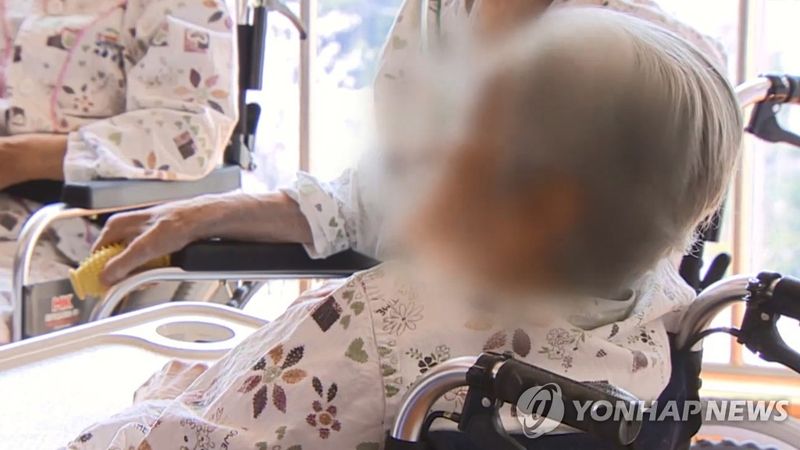
[Financial News] Mandatory spending on the Basic Pension, which supports financial stability in retirement, is projected to exceed 30 trillion won by 2030. As the share of the elderly population rises and prices increase, the overall fiscal burden is also expected to grow inevitably.
The government projected in the National Fiscal Management Plan for 2026–2030, submitted to the National Assembly, that mandatory spending on the Basic Pension would reach 30.0862 trillion won in 2030. It estimated that spending would increase by an annual average of 6.8% from this year through 2030. A year earlier, the government had projected an average annual increase of 6.7% from 2025 to 2029, meaning the projected growth rate has risen by 0.1 percentage point.
Accordingly, spending on the Basic Pension, which stands at 23.1378 trillion won in this year’s initial budget, is expected to reach 25.6530 trillion won next year, 28.2970 trillion won in 2028, and 29.1649 trillion won in 2029. It is projected to exceed 30 trillion won in 2030.
The figures are 613.1 billion won, or 2.4%, higher in 2027; 1.2049 trillion won, or 4.4%, higher in 2028; and 904.2 billion won, or 3.3%, higher in 2029 than projected last year. The increase in spending appears to be driven by a rise in the number of recipients, higher benefit payments, and changes to the payment system.
The government explained in the National Fiscal Management Plan that mandatory spending on the Basic Pension “is projected to increase by an annual average of 6.8% from 2026 to 2030 due to a reform that provides greater benefits to lower-income recipients and relatively less to higher-income recipients, growth in the elderly population, rising prices, and improvements to the couple reduction system.”
The standard pension amount set under Article 5 of the Basic Pension Act was 342,510 won last year and rose by 7,190 won, or 2.1%, to 349,700 won this year. Because it reflects the inflation rate, it is expected to rise every year going forward.
The national government’s spending on benefits under the National Basic Living Security System will also increase substantially.
Spending stands at 22.4665 trillion won this year and is projected to rise by an annual average of 13.9% to 37.8352 trillion won in 2030. Last year, the government expected an average annual increase of 6.5% from 2025 to 2029. However, a new estimate that takes into account increases in the median income threshold, trends in the expansion of eligible recipients, and higher medical aid costs produced this projection. Based on the 2029 figure, spending will be 7.5660 trillion won, or 28.8%, higher than estimated a year earlier.
Mandatory spending on National Health Insurance will also increase.
The government projected that spending would rise from 13.7991 trillion won this year to 17.1899 trillion won in 2030, representing an average annual growth rate of 5.6%. Last year, it had projected an average annual increase of 3.4% from 2025 to 2029, so the revised rate is 2.2 percentage points higher.
The government projected that spending on Long-Term Care Insurance, which provides institutional or home-based benefits to people aged 65 or older and to those who require care for at least six months due to age-related conditions such as dementia or stroke, would reach 3.0278 trillion won in 2030.
[email protected] Yoo Seon-jun Reporter