"Preempting the Humanoid Robot Battery Market"... EcoPro Prepares Full Solid-State Material Value Chain
- Input
- 2026-09-06 11:51:24
- Updated
- 2026-09-06 11:51:24
According to industry sources on the 6th, EcoPro shared this perspective through content titled "Rock War Among Conglomerates Intensifies... The Decisive Battleground is Ultimately Batteries" on its internal communication channel, EcoTalkTalk. Citing examples such as Samsung Electronics Co., Ltd.'s establishment of a Future Robot Promotion Team directly under the CEO, Hyundai Motor Group's plan to deploy the humanoid robot "Atlas" (developed by Boston Dynamics) in dedicated electric vehicle factories, and LG Electronics' establishment of a Robotics Business Center directly under the CEO, the company pointed out that the "robot war" among conglomerates is intensifying. Goldman Sachs has previously projected that the global humanoid robot market will grow to $38 billion (approximately 52 trillion won) by 2035, with annual shipments exceeding 1.4 million units.
EcoPro believes that the key to determining a robot's operating performance and runtime ultimately lies in the battery, and therefore anticipates that ternary batteries will lead this market. The logic is that ternary batteries are advantageous because they are lighter and have a higher energy density than LFP batteries, as increased battery weight raises the robot's overall load and places a greater burden on joint motors and actuators.
Accordingly, EcoPro emphasized that since competition in humanoid robots could change the landscape of the entire industry, capabilities must be concentrated on developing technologies ranging from high-nickel ternary systems to all-solid-state. In an interview with EcoTalkTalk, Song Jun-ho, Head of the IT Materials and Components Research Division at the Korea Electronics Technology Institute (KETI), stated, "Humanoid robots are highly likely to become a representative market where high energy density is crucial," adding, "To this end, we must advance ultra-high-density high-nickel single-crystal technology and commercialize all-solid-state cathode materials early."
In addition, EcoPro shared the current status of its all-solid-state battery technology development with employees by releasing content titled "Dissection of the Super B Project." Its affiliate, ECOPRO BM, was recently selected for the Ministry of Trade and Industry's "Super B Project" in recognition of its R&D achievements in all-solid-state battery materials. The Super B Project is a large-scale government R&D support program designed to foster materials, components, and equipment companies that have secured key positions in global supply chains through irreplaceable technological capabilities, similar to ASML Holding N.V. (ASML), the Dutch lithography equipment manufacturer. Through this project, ECOPRO BM plans to accelerate the advancement of sulfide-based solid electrolytes, a core material for all-solid-state batteries.
Lee Dong-chae, founder of EcoPro Group, emphasized, "As we have gained significant strength in future growth engines, let's further expand our research and development capabilities to become a game changer in secondary batteries."
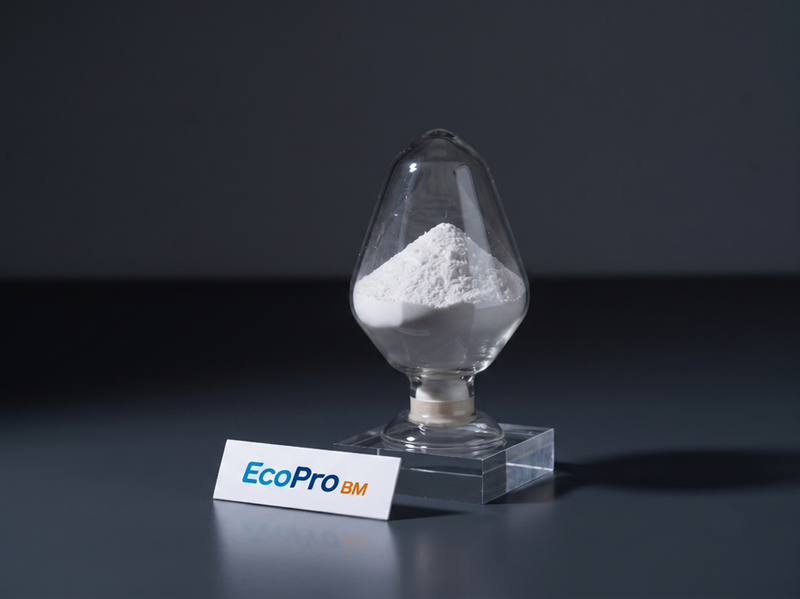
EcoPro has been accelerating its efforts to secure a leading position in the domestic market by acquiring proprietary process technology in the field of sulfide-based solid electrolytes, a key material for all-solid-state batteries. Since commencing development four years ago, ECOPRO BM has optimized its processes and compositions and is currently operating a pilot plant with an annual production capacity of 40 tons, having also passed quality verification by major battery manufacturers. While discussing trial production with leading clients, the company has completed line design with the goal of mass production in 2027 and is preparing to begin construction immediately to meet customer demand. Furthermore, the company is evaluated as building differentiated competitiveness by developing cathode materials for all-solid-state batteries suitable for solid electrolytes, based on its high-nickel cathode material technology.
EcoPro has identified robots as the first application for solid-state batteries. Given the current high cost of solid-state batteries, the forecast is that they will be applied first to the robotics market to lower prices before expanding to electric vehicles.
"We are accelerating our efforts to secure a leading position in the domestic market by acquiring proprietary process technology in the field of sulfide-based solid electrolytes," said Gong Bo-hyun, Senior Vice President of R&D at ECOPRO BM. "For cathode materials for all-solid-state batteries, we have optimized the process to utilize existing ternary production lines, establishing a system that enables a transition to mass production within a short period."
[email protected] Kim Dong-chan Reporter