Noh Man-ho, Korea Council of Agricultural Organizations Chief: "If Imports Blocked by Quarantine Enter the Market, the Agricultural Production Base Will Collapse"
- Input
- 2026-09-06 17:43:39
- Updated
- 2026-09-06 17:43:39
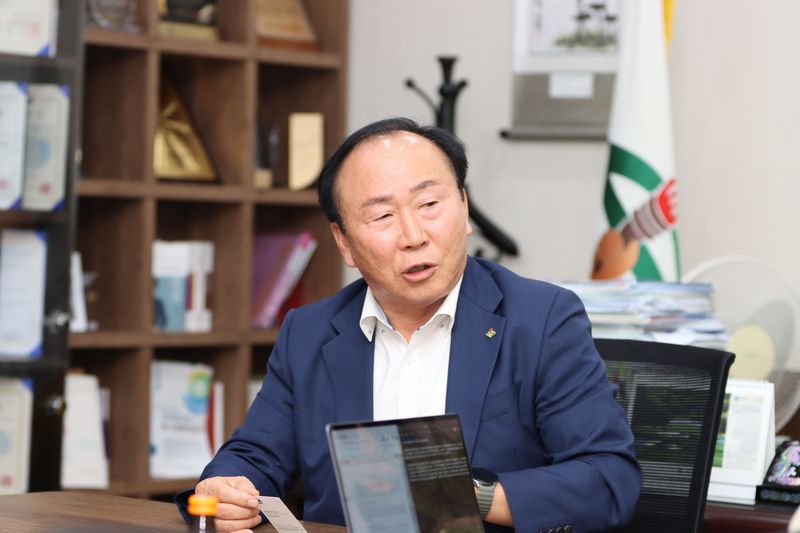
"The reason we oppose joining the Comprehensive and Progressive Agreement for Trans-Pacific Partnership (CPTPP) is that it could open the market to products whose imports have so far been restricted through quarantine. This is not simply a matter of some products becoming cheaper; it could affect the production base and sustainability of domestic agriculture as a whole."
Noh Man-ho, standing representative of the Korea Council of Agricultural Organizations (Photo) made the remarks on the 6th. Noh is also president of the Central Association of Korean Rural Leaders and a member of the Presidential Committee on Agriculture, Fisheries, Rural Affairs and Fishing Villages. The Korea Council of Agricultural Organizations is an alliance of six farmers’ organizations. Along with the Korea Agricultural and Livestock Association and Farmers’ Path with the People, it is one of the country’s larger umbrella organizations. Together, the three umbrella organizations represent 38 farmers’ organizations and 12 fishermen’s organizations nationwide. They are calling unanimously for the complete withdrawal of the push for CPTPP accession.
Noh anticipated that joining CPTPP would lead to demands for further opening of the agricultural market. "CPTPP effectively operates under a ‘unanimous consent’ system, as all existing member countries must approve a country’s entry into formal accession negotiations. It is difficult to determine the direction of negotiations based solely on Korea’s position," he said. He added, "Trade issues raised by existing members could lead to additional demands for market opening or become variables in the negotiations."
Noh expressed concern that pressure to open the market to fruit products would grow as sanitary and phytosanitary (SPS) measures are eased. This is because CPTPP’s SPS rules apply the principle of ‘regionalization.’ Until now, imports of agricultural products from countries affected by pests and diseases have been restricted. Under regionalization, however, import approval would be determined by separately assessing specific regions or areas where pests and diseases have not occurred, rather than evaluating the entire country. In 2022, the National Assembly Research Service (NARS) estimated that if SPS import bans were lifted, average annual production losses would reach approximately KRW 598 billion for apples and approximately KRW 209 billion for pears.
Noh said, "The impact on apples, pears and peaches, which have been relatively less affected directly by market opening, would be considerable if quarantine measures are eased. If imports of beef, pork and dairy products expand, the competitiveness of domestic livestock farms could weaken." He further explained, "The Korea Rural Economic Institute (KREI) has also analyzed that, because of CPTPP, expanded imports of new products resulting from eased SPS measures could have a greater impact on domestic agriculture than tariff reductions on products already being imported."
He stressed that the government should not set its research and policy direction on the premise that Korea will join CPTPP. His position is that the agricultural sector’s potential risks should be assessed and safeguards prepared before accession is pursued. Pointing out that agriculture, forestry, fisheries and food account for only 3.7% of next year’s national budget proposal, Noh emphasized, "As the agricultural sector continues to bear the sacrifices, its share of the budget must be increased to at least 5%."
Noh said, "The government must not pursue accession by deciding on a direction first and presenting supplementary measures afterward. As government ministries hold differing positions on CPTPP, it is undesirable to rush consideration of accession by putting trade-expansion arguments ahead of consultation with the agricultural sector." He continued, "The government’s supplementary measures must be prepared before deciding whether to join, not after accession. The support plans for each product, the required funding and the eligibility criteria should be specified in advance, and financial mechanisms should also be put in place as a priority."
[email protected] Choi Yong-jun, Agriculture Specialist Reporter