Trump’s Venezuelan Oilfield ‘State Capitalism’ Experiment: Will It Succeed?
- Input
- 2026-09-06 04:13:05
- Updated
- 2026-09-06 04:13:05
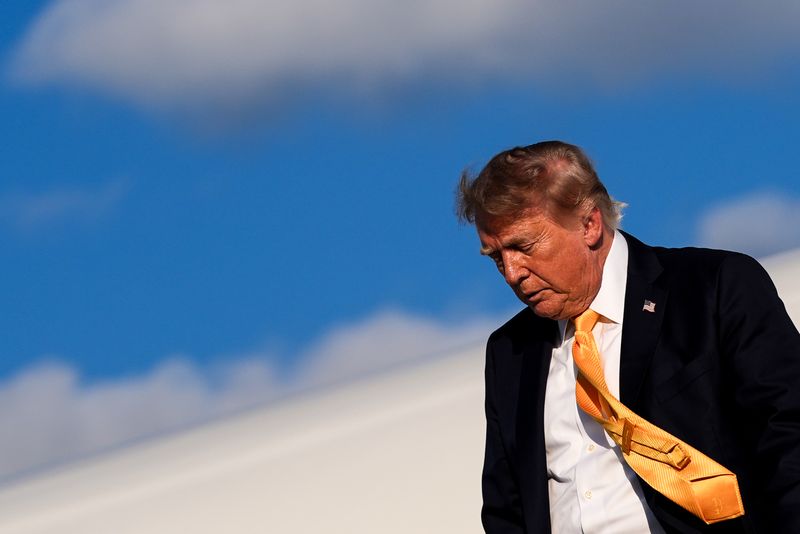
U.S. President Donald Trump is stepping up his experiment with “state capitalism” in Venezuela, the country with the world’s largest proven crude oil reserves.
He is seeking to operate the world’s second-largest state-owned oil company through North American Blue Energy Partners (NABEP), a de facto state-owned company headquartered in Barbados.
However, private companies are reluctant to participate amid criticism that the effort lacks a sound legal basis and concerns that it could be scrapped if the governments of the United States or Venezuela change.
The World’s Second-Largest State-Owned Oil Company After Saudi Aramco
CNBC reported on the 5th (local time) that President Donald Trump is experimenting with state capitalism in Venezuela. If the agreement with Venezuela succeeds, the U.S. Department of Defense would become the largest shareholder in a private oil company controlling more crude oil resources than ExxonMobil.
It has been eight months since Trump sent U.S. special forces to seize President Nicolás Maduro Moros and bring him to the United States, establishing an interim government led by President Delcy Rodríguez in Venezuela.
The Rodríguez government granted NABEP, headquartered in Barbados, the right to control 17 Venezuelan oil fields for 100 years. NABEP CEO Alejandro Betancourt has previously been investigated on allegations including money laundering and corruption.
Under the agreement between Trump and Venezuela, NABEP donated a 35% stake to the Office of Strategic Capital (OSC) at the U.S. Department of Defense free of charge.
Except during emergencies such as the Great Depression or the Great Recession following the 2008 global financial crisis, no administration has acquired such a large stake in a private company.
This is Trump’s state capitalism.
U.S. Government to Control 20% of Venezuela’s Oil
According to the White House, the agreement gives the United States majority control over Venezuela’s 65 billion barrels of proven crude oil reserves. In other words, the U.S. government will control about 20% of the estimated 303 billion barrels of oil believed to lie beneath Venezuela.
Patrick Routhy, director of global intelligence at energy information provider Enverus, said that if the figures released by the White House are accurate, NABEP would become the world’s second-largest oil company after Saudi Aramco based on proven crude oil reserves. He added that NABEP’s oil resources would be roughly four times the size of those held by ExxonMobil, the largest U.S. oil major.
Tyler Priest, a historian of the oil industry at the University of Iowa, said the oil agreement between the United States and Venezuela was unprecedented in scale and that similar attempts had been made in the past. According to Priest, during World War II, the United States sought to secure rights to Saudi oil but abandoned the plan amid opposition from the industry. In 1976, it nearly established a state-owned oil company, but the plan collapsed when the bill narrowly failed in Congress.
Priest warned that the U.S. government’s attempt to intervene directly in business in Venezuela, a country with a history marked by corruption, would face substantial opposition.
A State-Owned Company
In addition to the Department of Defense’s 35% stake, the U.S. government will control the oil produced by NABEP. The DOE has the right to purchase 20% of NABEP’s crude oil at production cost, as well as a right of first refusal on the remaining 80% of output.
The U.S. government also has veto power over the appointment of NABEP directors. NABEP must ensure that a majority of its directors are U.S. citizens, and all transactions are subject to U.S. law. Jurisdiction also lies with the United States.
Scott Lincicome, an international trade law expert at the Cato Institute, said, “This is simply a state-owned company,” adding, “Controlling 100% of the output essentially at cost means owning the company.”
The White House plans to fill the strategic petroleum reserve (SPR) by purchasing Venezuelan oil at production cost rather than market prices. It also plans to use the oil for military and other sensitive purposes.
Oil Majors Hesitate
U.S. Secretary of Energy Chris Wright told CNBC in an interview in Caracas, Venezuela’s capital, on the 2nd that putting NABEP at the forefront was not intended to replace private companies. He stressed that the U.S. government would neither operate nor produce Venezuelan oil. He said NABEP was being used because U.S. oil majors were reluctant to invest. The oil majors remain traumatized by Venezuela’s nationalization of its oil industry in 2007.
Only Chevron, the sole major that has remained in Venezuela, announced last week that it would invest $7 billion and more than double production by 2031.
ExxonMobil CEO Darren Woods previously rejected Trump’s proposal in January, saying Venezuela was “impossible to invest in.” ConocoPhillips CEO Ryan Lance ruled out plans to return to Venezuela in February.
Controversial CEO and Legal Obstacles
The record of NABEP CEO Alejandro Betancourt is also a concern. An official in the Trump administration explained that the company partnered with Betancourt because he was “a good oil businessman who had cooperated with the U.S. government in the past.”
Although he has never been convicted and maintains his innocence, he has been investigated for money laundering and corruption. This means a U.S. state-owned company could become embroiled in questions about his integrity.
Legal and political uncertainty is another problem.
Peter Harrell, who served as the National Security Council’s international economics adviser during the administration of President Joseph Robinette Biden Jr., said, “Apart from the ownership issue, the Trump administration appears not to have considered the legal issues at all.”
Statements from the U.S. government have also caused confusion.
On the 28th of last month, before Trump announced the agreement with Venezuela, Pentagon spokesman Sean Parnell said, “The OSC does not take equity stakes in private companies,” adding, “The OSC’s role is strictly limited under its regulations to supporting capital assistance in the form of loans, loan guarantees, or technical assistance.”
However, after the White House confirmed three days later, on the 31st, that the OSC would hold a 35% stake in NABEP under the agreement, Parnell changed his position in a call with reporters the following day, on the 1st of this month, saying, “The ownership structure is consistent with the legal authorities granted to the OSC.”
Back to Square One(?) if the Government Changes
Political uncertainty is also a problem.
Bob McNally, president of Rapidan Energy, predicted that if the Democratic Party wins the 2028 presidential election, implementation of the Venezuela agreement could be sharply curtailed or scrapped altogether. He added that even if Republicans return to power, a future Venezuelan government could overturn the agreement.
McNally noted, “The U.S. goal is to reduce the risks of long-term private investment, but the plan’s effectiveness will be limited by the serious political risks in both the United States and Venezuela.”
[email protected] Song Kyung-jae[email protected] Song Kyung-jae Reporter