"What tune are we supposed to dance to?"... Retail investors furious over stock market policies that loosen, tighten, and delay [Why the Stock Market]
- Input
- 2026-09-06 05:00:00
- Updated
- 2026-09-06 05:00:00
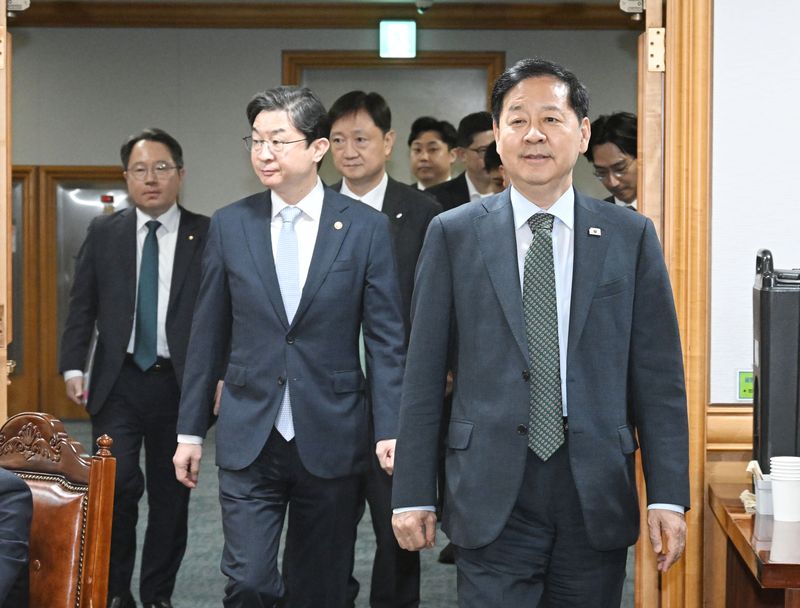
[Financial News] The government has decided to postpone for six months the tightening of delisting criteria, which it had been pushing for the swift exit of failing companies, as stock market conditions have deteriorated. Additionally, regulations were successively added to single-stock leverage products, which were introduced to expand investor choice, just over two months after their listing. As the government repeatedly tightens regulations or postpones scheduled policies depending on market conditions while advocating for stock market revitalization, controversy surrounding the predictability of capital market policies is growing.
They promised to weed out failing companies... but granted a 6-month grace period as the stock market fell.
According to the financial investment industry on the 6th, the government and the Korea Exchange (KRX) have decided to postpone by six months the further upward adjustment of the market capitalization threshold for delisting, which was scheduled to take effect next January. The timing for raising the KOSDAQ (Korea Securities Dealers Automated Quotations) market capitalization threshold from the current 20 billion won to 30 billion won will be delayed from January to July next year. The timing for raising the KOSPI Composite Index threshold from the current 30 billion won to 50 billion won will also be delayed by the same period.
The government explained that it took into account opinions raised by the business sector recently regarding the need for institutional improvements in light of the deteriorating market conditions on the KOSDAQ. It allowed companies meeting certain financial requirements to transfer their listings to KONEX without liquidation trading and also considered the fact that a certain period is needed for the market to recover.
However, as the roadmap designed to boost confidence in the domestic stock market through the swift exit of failing companies was changed again depending on market conditions, controversy surrounding the predictability of the policy has become inevitable.
Last January, financial authorities decided to strengthen delisting requirements to facilitate the timely removal of underperforming companies. At the time, they presented a roadmap to gradually raise the KOSPI Composite Index market capitalization threshold from 5 billion won to 20 billion won in 2026, 30 billion won in 2027, and 50 billion won in 2028, as well as the KOSDAQ threshold from 4 billion won to 15 billion won, 20 billion won, and 30 billion won, respectively. The plan was to raise the standards over three years to mitigate market shock.
Subsequently, financial authorities accelerated the schedule for tightening delisting criteria this year. The application date for the 30 billion won threshold for KOSDAQ was moved forward by one year from January 2028 to January 2027, and the application date for the 50 billion won threshold for KOSPI Composite Index was also brought forward from January 2028 to January 2027. However, due to increased stock market volatility recently, it was decided to postpone the further upward adjustment scheduled for next January by another six months.
Even before the decision to postpone delisting criteria, concerns were raised in the securities industry regarding the application of the strengthened standards to the current market. Last month, Eom Su-jin, a researcher at Hanwha Investment & Securities Co., Ltd., pointed out, "The intention to resolve the issue of declining market confidence due to the accumulation of distressed companies is positive," but added, "We must also consider whether it is appropriate to immediately apply strict delisting standards to small and medium-sized stocks in a situation where volatility and supply-demand imbalances are severe."
Leverage product raises threshold just two months after opening
Cases where policy direction changed in a short period of time were also observed in single-stock leverage products.
Domestic single-stock leverage products were listed for the first time on May 27. The intention was to resolve regulatory asymmetry between domestic and foreign exchange-traded funds (ETFs) and expand investors' product choices. However, as the stock prices of Samsung Electronics Co., Ltd. and SK hynix surged and funds flowed into related products, financial authorities moved to tighten regulations just over two months later.
Starting July 31, financial authorities raised the minimum deposit for single-stock leverage products for retail individual investors from 10 million won to 30 million won in cash. They also decided not to recognize collateral securities such as stocks, ETFs, and bonds. Furthermore, starting on the 19th of last month, they made it mandatory for new investors to complete mock trading, in addition to the existing minimum deposit and pre-education.
The market contracted rapidly. The average daily trading volume of 16 single-stock leveraged ETFs based on Samsung Electronics Co., Ltd. and SK hynix reached 11.6787 trillion won from their listing date until July 30, just before stricter regulations were tightened. However, from July 31, when the regulations began, until the 1st, it plummeted by 91.8% to 962.9 billion won.
The movements of individual investors have also reversed. Individuals net purchased over 15 trillion won worth of related ETFs from the listing until July 30, but turned to net selling after regulations were tightened.
"It is clear that there is a need to strengthen investor protection measures for high-risk products," a securities industry official said, but pointed out, "Given that regulations were significantly tightened immediately after the products were approved, it is necessary to review whether the possibility of overheating was sufficiently considered from the policy design stage."
Rules that change with the market... Investors face even 'policy risk'
From an investor's perspective, the situation is repeatedly one where they must consider not only market direction but also policy changes when making investment decisions.
The government has pursued policies to enhance the investment attractiveness of the domestic stock market and attract household funds into the capital market by increasing corporate value, expanding shareholder returns, and improving the fundamental structure of the capital market.
However, it is pointed out that it is difficult to discern a consistent direction in recent policy trends. Investment options were expanded, but entry barriers were raised as the market overheated; similarly, the schedule for tightening standards was accelerated to quickly remove failing companies, but was delayed again as the stock market wavered.
Each measure has its own justification. The regulation of leveraged products is intended to protect investors, while the suspension of delisting criteria is a measure to mitigate the adverse effects of companies being uniformly exposed to the risk of exit during a market crash.
The problem arises when regulations follow suit every time the market moves. Investors must consider not only corporate earnings, interest rates, exchange rates, and supply and demand, but also what regulations will be introduced in the future and when already announced policies will be changed.
In particular, as overseas stock investment has established itself as a major destination for individual investors, competition to win over investors has become inevitable in the domestic stock market. This is why it is pointed out that securing confidence in the market through consistent policies is more important than short-term market stimulus measures.
"An official from a securities firm stated, 'It is just as important to create an institutional environment that investors can trust over the long term as it is to implement policies that attract capital into the domestic market,' adding, 'If policy predictability is low, it could also burden capital inflows into the domestic stock market.'"
[email protected] Choi Doo-sun Reporter