The OLED Monitor Market Is Reaching 10 Million Units Faster; LG Display Poised to Dominate with Overwhelming Technological Edge
- Input
- 2026-09-07 07:59:00
- Updated
- 2026-09-07 07:59:00
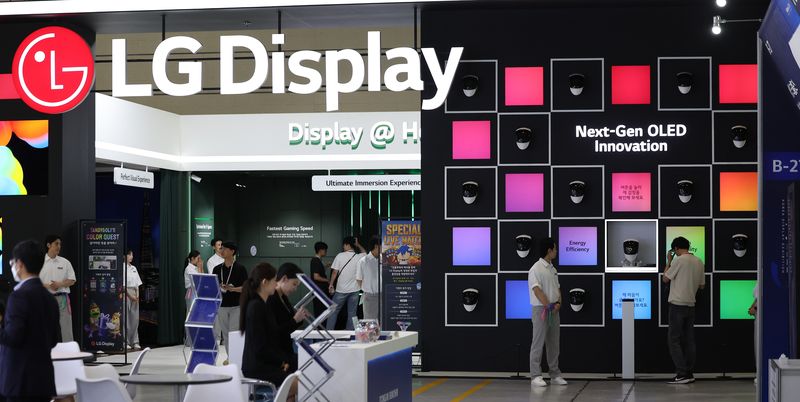
[Financial News] The global monitor market is shifting to organic light-emitting diode (OLED) technology faster than expected. Demand for OLED monitors, once concentrated in high-priced gaming products, is spreading to office and professional applications. As a result, the era of annual shipments exceeding 10 million units is expected to arrive a year earlier than initially forecast. This has strengthened expectations that LG Display, which pioneered the large OLED market, will seize market leadership with a diverse product lineup and differentiated technology.
■ The Shift from LCD to OLED Is Accelerating
According to global market research firm Omdia on the 7th, annual OLED monitor shipments are expected to surpass 10 million units in 2031. That is one year earlier than the 2032 forecast presented in the first-quarter survey this year, a change made in just one quarter.The changes to the medium- and long-term forecasts are even more significant. Expectations are rising not only for the market’s size but also for its growth rate. In the second quarter of last year, Omdia forecast OLED monitor shipments at approximately 6.5 million units in 2031. However, just one year later, it raised that forecast by about 54% to 10 million units. This indicates that the OLED monitor market is expanding faster than previously expected.
The projected compound annual growth rate has also risen each quarter. The forecast stood at 15% in the first quarter of last year, then increased to 17% and 20%, reaching 21% most recently.
These changes reflect growing demand for OLED monitors. Until now, OLED monitors had primarily grown in the high-performance, high-priced gaming segment, where fast response times and high contrast ratios are essential. Recently, however, their applications have expanded from general office work to professional fields such as video and design production, healthcare, and financial trading.
Global monitor manufacturers are also shortening the cycle for replacing displays in their existing premium products, switching from liquid-crystal display (LCD) panels to OLED. This shows that OLED is entering the mainstream monitor market rather than remaining a high-priced option for a limited group of enthusiasts.
■ LG Display Could Lead the Market with Advanced Technology
LG Display is rapidly expanding its OLED monitor panel lineup in response to these changes. Its strategy is to lead the transition to OLED in the monitor market, building on its technological expertise as the world’s first company to mass-produce large OLED panels.LG Display currently has the industry’s most diverse lineup of OLED monitor panels. It offers a range of sizes, from 24.5 inches for the esports market to 27, 31.5, 39, 42, and 45 inches. This approach addresses segmented market demand by allowing customers to choose products based on screen size, game genre, and intended use.
The company is also accelerating efforts to differentiate performance through proprietary technology. One example is DFR, which allows users to freely switch between high-refresh-rate and high-resolution modes on a single monitor. This enables one monitor to support different gaming genres and work environments.
The company has also become the first in the industry to mass-produce RGB stripe OLED panels for the office and professional markets. The panels improve text readability, an issue previously associated with the pixel arrangement of conventional OLED displays.
Industry observers believe that as OLED monitors enter the mainstream market, the ability to offer value beyond simple price competitiveness will become increasingly important. The key to market leadership will be how quickly companies develop meaningful differentiation—such as improved text readability, broader usability, and varied screen sizes—and mass-produce those products reliably.
An industry official assessed, "The fact that OLED has become mainstream in the monitor market means companies must now offer value beyond cost-effectiveness. The companies that develop and manufacture differentiated technologies faster than latecomers will gain the upper hand in the OLED market."
[email protected] Hak-jae Kim Reporter