[Exclusive] Homegrown Unmanned Systems Neglected: Only 3% of Hanwha Aerospace’s Unmanned Vehicle Budget Reflected
- Input
- 2026-09-07 15:42:59
- Updated
- 2026-09-07 15:42:59
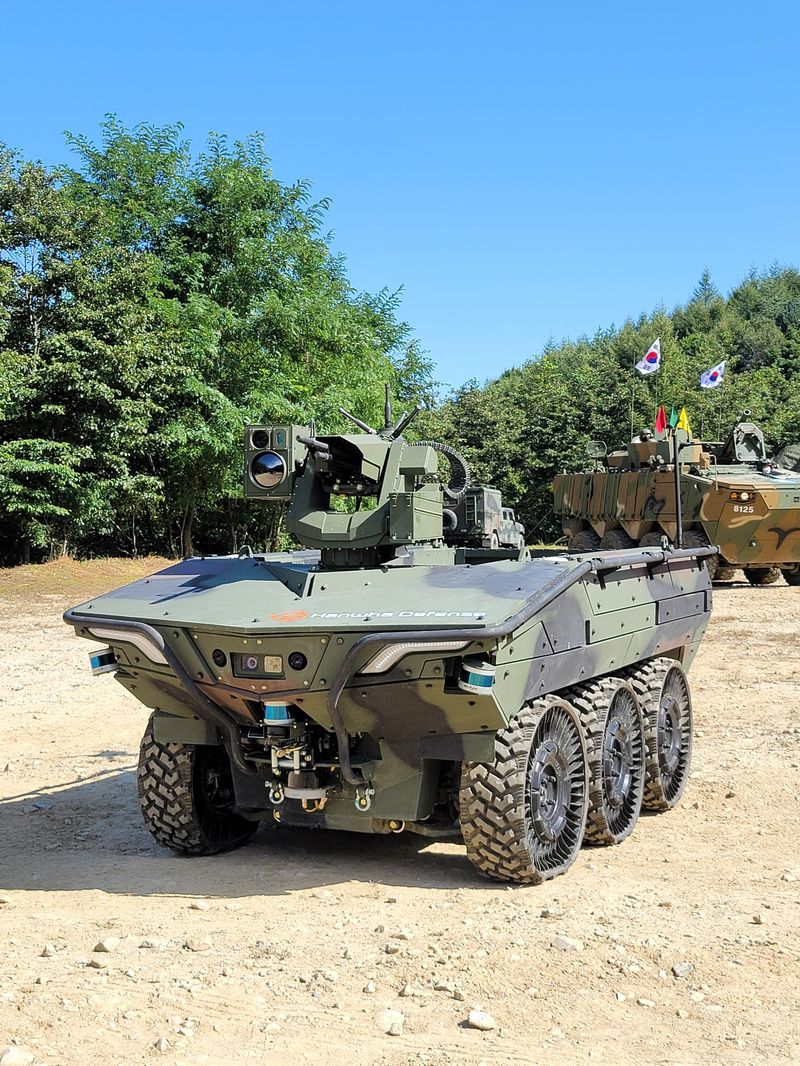
[Financial News] The government has sharply slashed next year’s budget for the multipurpose unmanned vehicle project led by Hanwha Aerospace to just 3% of the requested amount, dealing a major setback to the development of South Korea’s homegrown future unmanned systems. By contrast, nearly the entire budget for medium-range loitering munitions to be acquired from overseas was included as originally proposed. Critics say the military is calling for preparations for “future warfare” while thoroughly neglecting K-defense. Concerns are also growing that this could disrupt the military’s next-generation combat systems and undermine the domestic defense industry’s efforts to secure future growth engines.
According to next year’s budget proposal submitted by the Defense Acquisition Program Administration (DAPA) to Yoo Yong-won, a People Power Party lawmaker on the National Assembly’s National Defense Committee, DAPA requested 8.8 billion won for the multipurpose unmanned vehicle project, but the government included only 350 million won. Hanwha Aerospace’s ‘Arion-SMET’ was selected for the project in July.
The multipurpose unmanned vehicle is part of the Army TIGER project to introduce a future-oriented combat system for the Army. After a first-phase project with a total budget of 49.6 billion won, a follow-up project worth 500 billion won is also being planned. Hanwha Aerospace has likewise invested heavily in unmanned systems as a future growth engine. In May, it completed a performance demonstration in Romania integrating Arion-SMET into a manned-unmanned teaming combat system. Last month, the company also announced its goal of acquiring the capability to carry out missions fully autonomously by 2035.
While K-defense is being neglected at home, 38.353 billion won—most of the requested 40.329 billion won—was allocated for medium-range loitering munitions planned for overseas purchase. This has prompted criticism that the military is neglecting the active adoption and development of homegrown unmanned systems, after previously introducing 180 Polish-made Warmate loitering munitions used by the Ukrainian military.
The situation is similar for other unmanned aircraft programs involving bids from domestic defense companies. Although 43.4 billion won was requested for unmanned aircraft for coastal surveillance, only 240 million won was included. For unmanned aircraft for rifle firing, 4.299 billion won was allocated out of the requested 10.3 billion won. The projects were delayed because the systems failed to meet performance requirements, but critics say the scale of the cuts is excessive.
Political criticism has also emerged, particularly after the Ministry of National Defense pledged to train “500,000 drone warriors” in response to the wars in Ukraine and the Middle East. Yoo Yong-won stated, “As seen in joint training by the United States and Ukraine, unmanned systems are an urgent task directly linked to the lives and deaths of service members and to victory or defeat in war. Nevertheless, the government’s response remains slow.”
[email protected] Kim Yun-ho Reporter