"Our Family Is Searching for Her Ourselves": People Take to the Streets After Adults Go Missing [Recorders of Lives in Overlooked Places]
- Input
- 2026-09-06 07:00:00
- Updated
- 2026-09-06 07:00:00
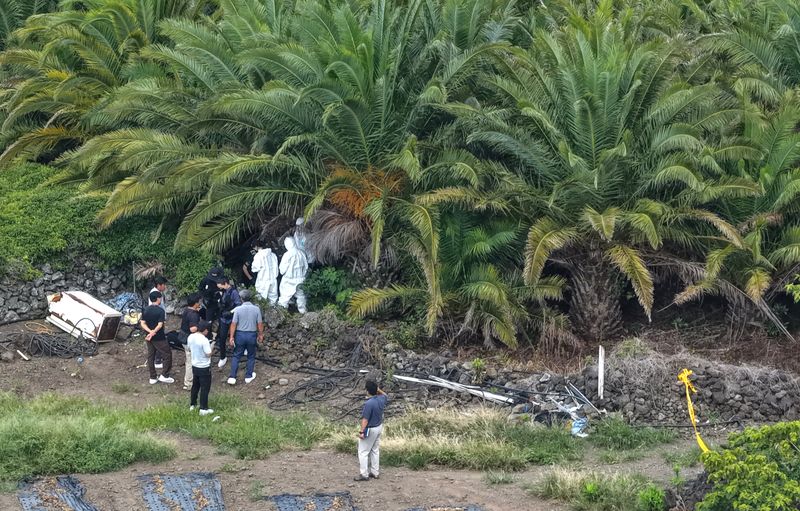
Around 70,000 reports of missing adults are filed each year, but ordinary adults are managed under different standards from children and dementia patients. In the wake of the Jang Mi-ran case in Jeju, this article examines how families search for tips themselves after filing a missing-person report and the gaps in early safety checks.
[Financial News] The reality of families searching for tips themselves after an adult goes missing has once again come into focus following the disappearance of Jang Mi-ran in Jeju. Around 70,000 reports of missing adults are filed with police each year, but ordinary adults are managed under different legal standards from missing children and dementia patients. Families of missing people have also raised concerns that initial searches and safety checks may be delayed.
Jang was found dead near a palm farm in Hallim-eup, Jeju City, on the 24th of last month, 104 days after a missing-person report was filed on May 15. A police officer handling the case closed it on the grounds that the officer had made contact with Jang. However, investigators found indications that the officer had not actually confirmed Jang's whereabouts or safety in person.
After a missing-person report is filed, the first thing families turn to is a tip line. They make flyers listing the last known location, clothing at the time, physical characteristics, and photographs, then post them on streets, at businesses, and at bus stops. They also share the same information on social media and online communities. Separate from the police report, the families' search effectively begins the moment the flyers are printed.
When the missing person is an adult, families' anxiety grows even greater. It can be difficult at first to determine whether the person simply left voluntarily, was involved in an accident, or became a victim of a crime. Even when a phone is turned off or there are signs that the person has left their usual area, the possibility of voluntary movement is often considered first because the person is an adult.
194 Missing Adults a Day
Missing-adult reports are not exceptional incidents. According to data submitted by the Korean National Police Agency and released last month on the 25th by Jung Chun-saeng, a lawmaker from the Rebuilding Korea Party (RKP) and a member of the Security and Public Administration Committee, the number of reports involving ordinary adults that police classified and managed as "runaway persons" was 74,936 in 2022, 74,847 in 2023, 71,854 in 2024, and 70,814 in 2025. Last year, that amounted to an average of about 194 reports a day.
Through July this year, 41,894 reports involving ordinary missing adults had been filed. Nearly 200 families or acquaintances of adults across the country told police each day that they "could not get in touch" with them. Last year, 48.1% of cases were cleared within one hour of the report. The figures were 89.4% for cases cleared within one day and 99.0% for those cleared within 30 days.
Most reports end within a short time with the person returning home or their whereabouts being confirmed. However, following Jang's case, questions arose over whether the person's actual whereabouts and safety had been confirmed before the case was closed, whether danger signals reported by the family had been sufficiently examined, and whether there was a mechanism for follow-up after closure.
This is also why families take to the streets and go online. In the early stages of a disappearance, a brief call saying, "I think I saw someone who looked similar," can help narrow down the person's route. Sightings from everyday places such as convenience stores, taxis, buses, hospitals, and lodging facilities determine the next search area. At the same time, unverified tips and speculative comments also come in. With every call, families cycle between hope and anxiety.
Families Take to the Streets with Flyers
Although a high proportion of missing-adult cases are cleared within a short period, adults are also found dead every year. According to data titled "Missing-Person Reports and the Status of Missing People" submitted by the Korean National Police Agency to Kim Jae-sub, a People Power Party lawmaker, the number of adults found dead after being reported missing was 1,200 in 2022, 1,084 in 2023, 1,112 in 2024, and 931 in 2025. This year, 478 people had been found dead through July.
The proportion of deaths among reported missing persons was also relatively high for adults. From 2022 through last year, the proportion of missing adults found dead ranged from 1.1% to 1.6%. During the same period, the figure was 0.02% to 0.06% for children under 18 and below 1.0% for people with disabilities and dementia patients. Even though most missing-person reports are cleared within a short time, delays in assessing initial risks and confirming whereabouts in some cases can also delay confirmation that the person is alive and the determination of the search area.
The number of unresolved missing-adult cases that had remained open for more than five years after the reports were filed was also close to 5,000. Although many cases of lost contact end as simple disappearances or temporary departures from home, the continuing cases of long-term unresolved disappearances and people found dead have prompted calls to strengthen the initial response to missing adults.
Under the law, missing adults are managed differently from missing children and dementia patients. Children under 18 at the time of disappearance, people with intellectual, autistic-spectrum, or mental disabilities, and dementia patients are covered by the ACT ON THE PROTECTION AND SUPPORT OF MISSING CHILDREN. Systems such as advance registration, missing-person alert text messages, and genetic-information databases are also linked to the law.
The rise in one-person households is another factor that makes it difficult to check on people after a missing-person report is filed. According to "One-Person Households in Statistics 2025," released by the Ministry of Data and Statistics on December 9 last year, there were 8.045 million one-person households in 2024, accounting for 36.1% of all households. As more people live alone, more people have no cohabiting person who can immediately notice that contact has been lost. Families living separately have no choice but to rely on the time of the last call and when messages were checked.
A bill addressing missing adults has been submitted to the National Assembly. The Bill on the Discovery and Protection of Missing Adults, published by the National Assembly Public Participation Legislative Center, includes provisions establishing a missing-adult information system and providing a basis for activities such as accessing personal location and travel-route information, as well as conducting and comparing genetic tests. However, the protection of adults' privacy, the possibility that third parties could abuse the reporting system, and the expansion of police powers must also be examined during the bill's review.
"Danger Signals Must Be Identified When the Initial Report Is Filed"

An expert said the practice of handling missing-adult reports by narrowing the possibilities to a simple voluntary departure must change. Na Joo-bong, chairman of the National Association of Citizens for the Search for Missing and Disappeared Children, said in a phone interview with this newspaper on the 4th, "Police perform their duties under the relevant laws, but when the legal basis for handling missing adults is weak, a structure emerges in which reports are treated as simple cases of leaving home even when they are filed," expressing concern.
Regarding Jang's case, Na said, "If the principles had been followed, a basic investigation should have been conducted," adding, "Just because someone disappeared from a place where they had lived for a long time does not mean the matter should be dismissed by saying, 'They must have gone somewhere; they'll come back.'" He stressed that, at the time of the initial report, police should examine the family's account, the person's last known location, the condition of the phone, the person's usual area of activity, and the possibility of a threat to their safety together.
He also said the expertise of personnel handling missing-person cases needs to be strengthened. Na said, "People assigned to missing-child and runaway-person cases often move to another department after one or two years," adding, "There needs to be a system that allows expertise to accumulate in missing-person work as well." He urged, "Clues disappear as time passes in missing-person cases. We need people who can identify danger signals from the moment the initial report is filed."
We record the stories of real lives in print. Even if the words are rough, we preserve what we gather in the field as it was spoken. From alleys and markets to people's workplaces, records of the ordinary days we have passed by make their way to our readers. To receive [Recorders of Lives in Overlooked Places] conveniently, please subscribe to the reporter's page.
[email protected] Han Seung-gon Reporter