"There Are Still Survivors in the Tunnel": Why Rescue Efforts Are Delayed After Nepal Floods [Climate Crisis Through Disasters 1]
- Input
- 2026-09-05 08:06:25
- Updated
- 2026-09-05 08:06:25

Floods and landslides that struck the Bhotekoshi River and Trishuli River areas of Nepal on the 26th of last month destroyed villages, hydropower facilities, roads and bridges in succession. Based on damage at the scene and publicly available information, this article examines how the collapse of ice and rock upstream, mountainous terrain and development along the river affected the disaster.
[Financial News] Floods and landslides in a Himalayan valley in Nepal last month left people missing and trapped in hydropower plant tunnels, while villages, roads and bridges collapsed. Experts analyzed that ice and rock collapsed on mountain slopes weakened by changes in glaciers and permafrost, sending torrents and debris flows downstream through narrow valleys and facilities along the river.
Search Efforts Move Into the Tunnels
The Associated Press (AP) reported on the 4th (local time) that Nepalese rescuers had rescued two workers from an underground tunnel at the Trishuli 3A Hydropower Plant. It was nine days after the flood struck on the 26th of last month. Rescuers heard voices inside the tunnel and located the two men. The rescued workers were taken to a hospital in Kathmandu, and one of them was reportedly in critical condition.
Nepalese authorities and the power industry believe that about 900 workers are missing from 12 hydropower project sites, with around 500 of them believed to be trapped in several tunnels. An estimated 115 people are believed to be in the Trishuli 3A tunnel alone. According to foreign media,one of the rescued workers said there were more survivors inside the tunnelBikram Timilsina, Nepal's communications minister, appealed on social media, saying, "We are waiting to rescue more people."
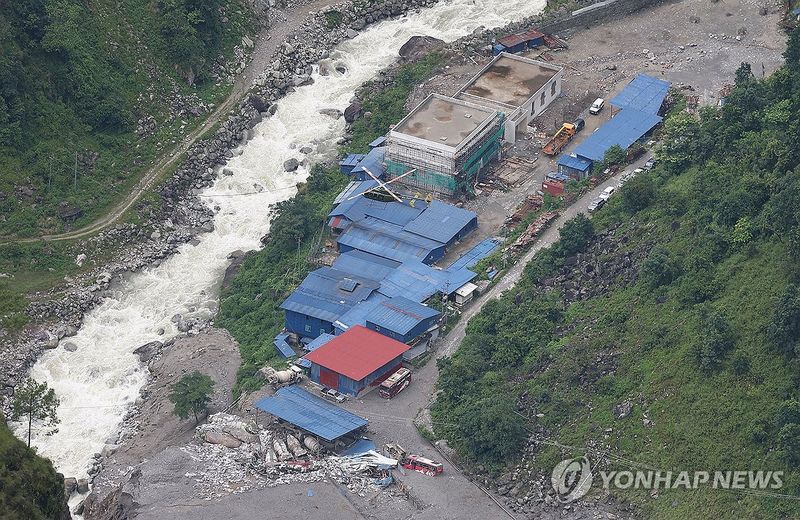
The biggest reason for the delayed rescue is that access routes have disappeared. This was not simply a disaster in which water overflowed its banks; it was closer to a debris flow carrying ice, rocks and soil together. The tunnel entrance and the area around the power plant were covered with mud and rocks, while some roads and bridges were severed. Even with helicopters and excavators deployed, rescuers first have to determine how far the equipment can be brought in.
The Guardian reported the same day, citing rescue authorities, that the two workers were found about 170 meters underground. Rescuers are continuing searches at the Rasuwagadhi Hydropower Plant amid the possibility that workers remain in underground spaces. In mountainous areas, entering a tunnel is difficult without knowing its internal structure. Even after the water recedes, rescuers may be unable to enter immediately if soil and rocks are pressing into the tunnel.
It Was Soil and Rock, Not Just Water, That Came Down
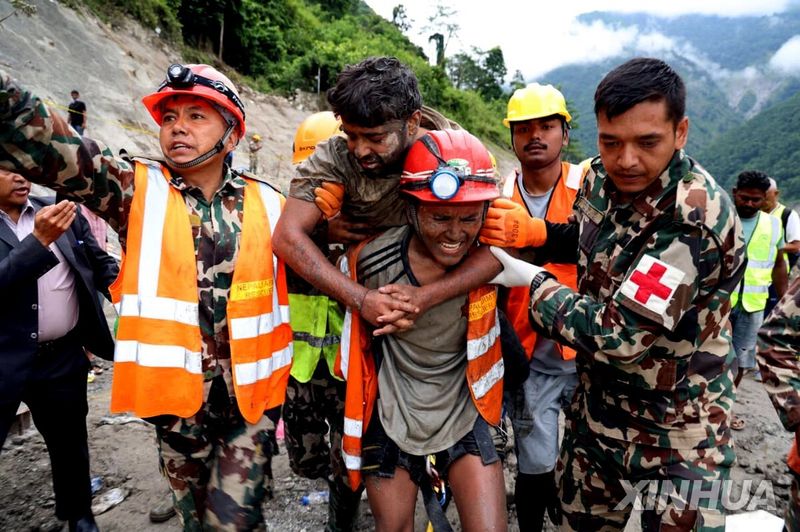
According to Nepal's National Disaster Risk Reduction and Management Authority (NDRRMA),at least 1,287 people were killed and more than 5,000 were reported missing in Nepal as a result of the floodsXinhua News Agency reported that 31 people had died and 531 were missing on the Tibetan side. Nepalese disaster authorities estimated damage to homes and infrastructure at at least 387.5 billion Nepalese rupees, or about $2.5 billion.
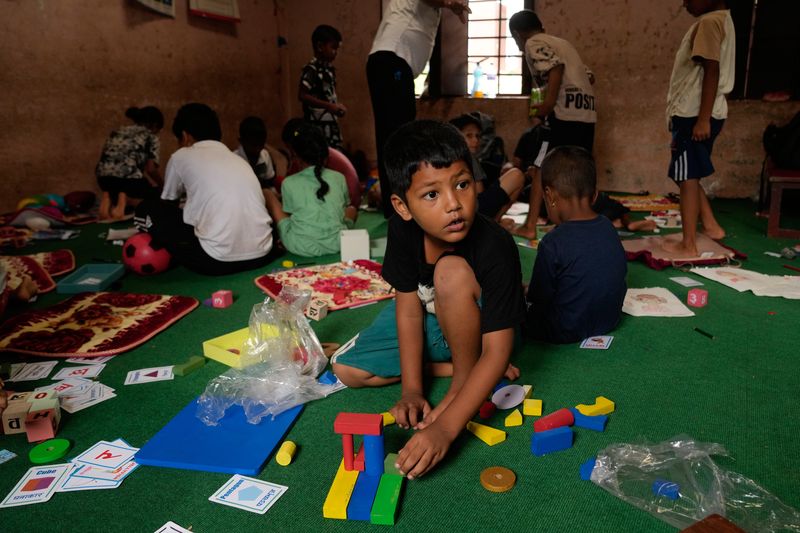
The damage was concentrated in infrastructure along the river. The United Nations Children's Fund (UNICEF) said children in Rasuwa and Dhading had lost their homes, classrooms and medical facilities. Eighteen schools were completely destroyed and 20 were damaged. At least four health facilities also suffered serious damage. Roads, bridges, hydropower facilities, water supply systems and telecommunications networks were damaged in many places.
Nepal's Department of Hydrology and Meteorology's initial explanation focused on a river blockage upstream and the formation of a temporary lake. The Kathmandu Post reported, citing a DHM official, that satellite images received from Chinese authorities showed signs of a river blockage about 20 kilometers upstream from the Miteri Bridge. Binod Parajuli, head of the flood forecasting division at DHM, said, "There were icefalls and landslides, and a lake made of ice and debris formed and then burst."
Parajuli explained that debris mixed with the water increased its destructive power. He said, "If only clear water had come down, there would not have been this level of destruction," adding, "As the debris mixed with the water, the water depth rose sharply." DHM said there had been no heavy rain in the Rasuwa area before or after the incident. That is why the flood is being investigated with a focus on whether an upstream glacier or rock collapse, river blockage and the failure of a temporary lake were involved.
Roads Along the Gorge, and Even Tunnels, Were Swept Away
Mountaineer Um Hong-gil said on JTBC's 'The In-terview' on the 2nd that he had visited the affected area at the end of May. Describing the Rasuwa area, Um said, "It felt as if the valley was gradually narrowing and we were being sucked into a black hole," adding, "It is V-shaped, with steep cliff-like mountains on both sides." He said pilgrims and vehicles had gathered around the border checkpoint, and that he had also seen washed-out roads and construction sites around the valley.
Um said the risks of the rescue operation had to be assessed together with conditions upstream. He said, "Another secondary flood could occur from above," adding, "It would be safer to carry out rescue operations while closely monitoring changes upstream and putting an emergency system in place." Nepal's current monsoon season was also cited as a factor making the search site unstable.
Development along the river was also analyzed as a factor that worsened the damage. Nepal has expanded hydropower projects to generate electricity by using the steep drops of mountain rivers. Power plants place intake facilities, tunnels, generating buildings and access roads in mountainous terrain. Although this is advantageous for power generation, workers and facilities can be exposed to danger all at once when torrents and debris flows descend through the same valley.
The Associated Press reported that floods and landslides swept away villages and roads, covering the Himalayan region with mud and debris. Some schools are being used as temporary shelters. Residents who lost their homes are waiting for relief supplies, while families of people missing and trapped in hydropower plant tunnels are waiting for news of the search.The tunnel search is struggling to gain speed because of collapsed structures and soil and debris.Authorities are continuing the search while checking whether people may have survived, drawing on a previous case in which buried workers were rescued from the Trishuli 3A tunnel.
Mountains Transformed by Glaciers, Rivers Difficult to Warn
The starting point and route of the flood still need to be confirmed through field investigations. However, changes in glaciers and permafrost in the high-altitude areas of the Himalayas have been documented in multiple studies. The International Centre for Integrated Mountain Development (ICIMOD) said in its 2023 report, 'Water, Ice, Society and Ecosystems in the Hindu Kush Himalaya,' that the rate of glacier loss in the region from 2011 to 2020 was 65% faster than in the previous decade.
The reportanalyzed that if current emissions pathways continue, glaciers in the Hindu Kush Himalaya could lose up to 80% of their current volume by the end of this centuryIt identified declining permafrost as a factor that could worsen high-altitude landslides and infrastructure damage. As glaciers retreat and once-frozen ground weakens, mountain slopes can become unstable, while collapsed soil and rocks can block rivers and form temporary natural dams.
Experts analyzing the flood said that, as glaciers and permafrost in the Himalayas weakened amid rising temperatures, ice and rock collapses led to landslides, debris flows and torrents. Villages and hydropower facilities built in the valleys were exposed to damage because they were close to the rivers. In transboundary rivers, they said, authorities should first detect unusual changes upstream and send warnings downstream rather than wait to determine the cause. They also noted that public trust and response training are needed for warnings to lead to actual evacuations.
Matt Westoby, an associate professor of physical geography at Plymouth University in the United Kingdom, said in expert commentary for the UK Science Media Centre, "High-mountain Asia is one of the fastest-warming regions in the world," adding, "Shrinking glaciers and thawing permafrost can destabilize mountain slopes and increase the risk of rockfalls, landslides and avalanches." He said that as infrastructure such as hydropower projects expands into mountainous areas, more people are exposed to valleys where water, mud and rocks come rushing down.
Liz Stephens, a professor of climate risks and resilience at the University of Reading, also said in the commentary,"People think flash floods are caused by heavy rain, but in high-altitude areas such as Nepal and Tibet, they can also occur ascompound disastersfollowing landslides, avalanches and glacial lake outburst floods."She explained, "This complexity makes early warning particularly difficult."
In addition, in transboundary rivers, information from upstream can effectively mean evacuation time downstream. The Bhotekoshi River flows from the high-altitude Tibetan region into Rasuwa, Nepal. If a glacier collapses upstream or a waterway is blocked, downstream residents and workers can be placed in danger within a short time. There are concerns that evacuations could be delayed if warnings begin only after the cause of the incident has been fully identified.
Jeff da Costa, a researcher in hydrometeorological hazards, early warning and disaster risk at the University of Reading, said, "For early warning, it is not necessary to know exactly what happened upstream before people downstream begin taking action." He explained, "If there is a sudden and unusual change in the river, residents can be warned even while the cause is being investigated." Hannah Cloke, a professor of weather and climate science at the University of Reading, also said, "The success of an early-warning system is not determined solely by forecast accuracy, sensor quality or the reach of communications networks," adding, "How people interpret, trust and act on information is also important."
[email protected] Han Seung-gon Reporter