Krovanh Weakens and Moves Away From Jeju; Crane Topples at Port of Jeju Amid Strong Winds, Killing One
- Input
- 2026-09-05 01:24:50
- Updated
- 2026-09-05 01:24:50
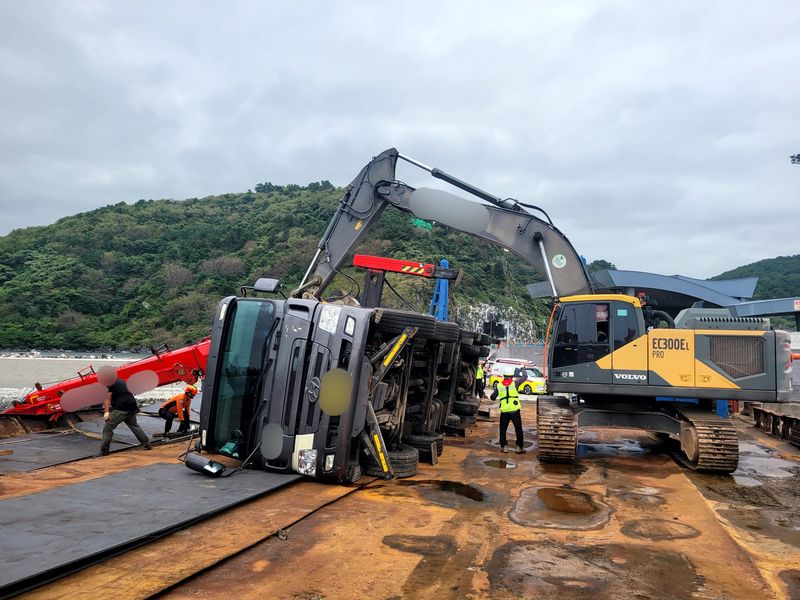
【Financial News Jeju = Jung Yong-bok】 Typhoon No. 24, Krovanh, is weakening and moving away south of Jeju. However, strong winds brought by the typhoon’s indirect effects caused a crane to topple during port operations in Jeju, killing one person and seriously injuring another. Damage to people and facilities, along with transportation disruptions, continued.
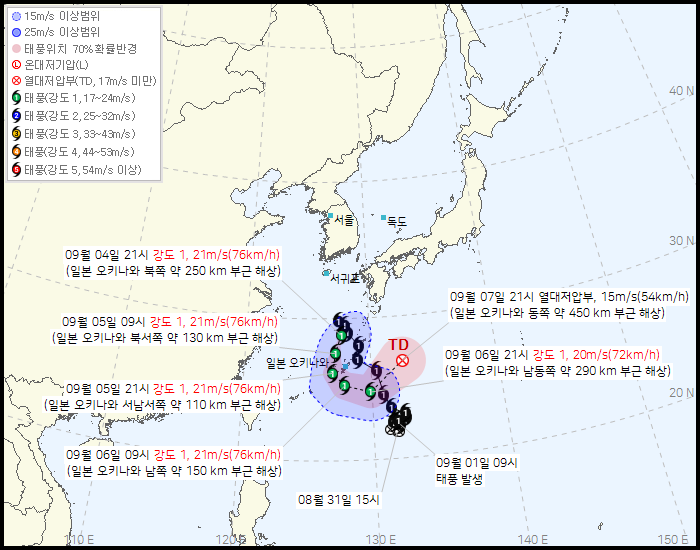
According to the Korean Meteorological Administration on the 5th, Krovanh was moving southeast at 24 kilometers per hour over waters at 28.8 degrees north latitude and 127.7 degrees east longitude as of 9 p.m. on the 4th. Its central pressure was 994 hPa, and its maximum wind speed was 21 meters per second.
The storm had weakened somewhat from 3 p.m., when its central pressure was 992 hPa and its maximum wind speed was 23 meters per second. The Korean Meteorological Administration forecast that Krovanh would move farther south of Jeju on the 5th, turn eastward from the 6th, and weaken into a tropical depression over waters east of Okinawa on the evening of the 7th.
Although the threat from the typhoon itself was diminishing, damage caused by strong winds was becoming a reality in Jeju.
At around 3:53 p.m. on the 4th, a crane toppled from a barge moored at Pier 11 of the Port of Jeju in Geonip-dong, Jeju City, trapping two workers underneath.
The Coast Guard and firefighting authorities rescued the barge owner, a man in his 50s who was in cardiac arrest, and transported him to a hospital, but he died. The other victim, a crane operator in his 50s identified as B, was also rescued and taken to a hospital. He was found to have suffered serious injuries to his shoulder and pelvis, among other areas.
The two men were reportedly replacing floor plates after placing a crane on the barge. At the time of the accident, strong winds of 20.5 meters per second were observed in Geonip-dong, Jeju City.
However, it has not yet been confirmed whether the strong winds directly caused the crane to topple. The Coast Guard is investigating the working conditions at the time of the accident and how the crane fell. Authorities are also examining how the work proceeded despite a strong-wind warning and whether safety rules were followed at the site.
Damage to facilities continued across Jeju. The number of safety measures related to weather advisories reported to the Jeju Provincial Fire and Disaster Safety Headquarters had risen to 26 by the afternoon of the 4th. Trees fell in various parts of Jeju City and Seogwipo City, while central barriers, traffic lights, and speed-enforcement cameras were damaged. Safety accidents also occurred after facilities were blown away by the strong winds.
Air traffic was marked more by widespread delays than cancellations. According to the Air Traffic Information Portal System, 184 flights arriving at or departing from Jeju International Airport had been delayed by 7 p.m. on the 4th. Of these, 93 were departures and 91 were arrivals.
Flight intervals continued to be adjusted at Jeju International Airport as strong-wind and wind-shear advisories for both takeoffs and landings remained in effect. Although the situation had not escalated into widespread mass cancellations by that night, delays accumulated as strong winds continued throughout the day.
Maritime transportation was also disrupted. Some passenger ferries connecting Jeju with Chuja and Wando, and Gapado and Marado, were restricted because of rough seas. Some large passenger ferries operating between Jeju and Wando also experienced disruptions.
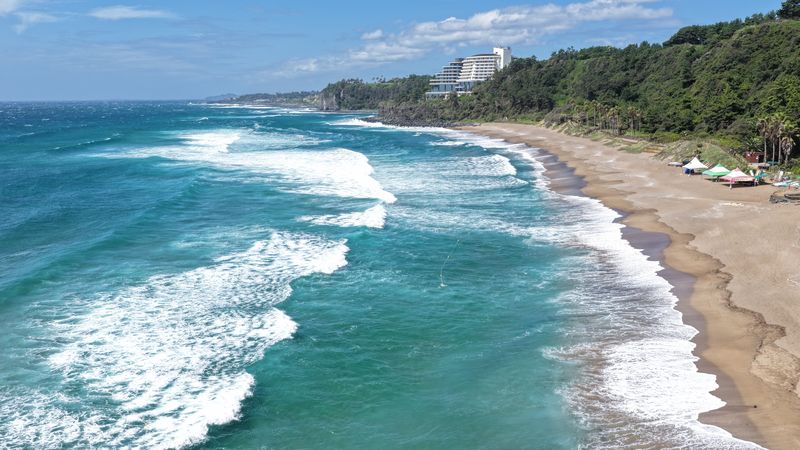
International cruise operations were also affected. Two cruise ships scheduled to call at Jeju on the 4th were unable to enter port because of deteriorating weather, canceling visits to Jeju by approximately 3,900 passengers.
All seven trails in Hallasan National Park were closed, and swimming was prohibited at designated beaches in Jeju.
The departure of the typhoon does not mean that strong winds and high waves will immediately subside. As of 1 a.m. on the 5th, strong-wind warnings remained in effect for the mountainous areas of Jeju, the northern, eastern, and mid-mountain areas of Jeju City, and the southern, eastern, and mid-mountain areas of Seogwipo City. Strong-wind advisories were in effect for western Jeju City, western Seogwipo City, and Chuja Island.
High-wave warnings remained in effect for the waters off eastern and southern Jeju and the distant waters south of Jeju. The advisories in some areas and waters are expected to be lifted between the 7th and 8th.
Krovanh is expected to move to waters approximately 130 kilometers north of Okinawa at around 9 a.m. on the 5th. Its maximum wind speed is expected to remain at around 21 meters per second before falling to 20 meters per second on the night of the 6th, after which the storm is forecast to weaken into a tropical depression.
As the center of the typhoon moves farther from Jeju, the key concern from the 5th onward is how much the remaining strong winds and rough seas, rather than the typhoon’s direct path, will affect daily life.
[email protected] Jung Yong-bok Reporter