"Yongsan Park is Seoul's Last Puzzle"... Experts Gather on Housing Supply Controversy
- Input
- 2026-09-05 07:00:00
- Updated
- 2026-09-05 07:00:00
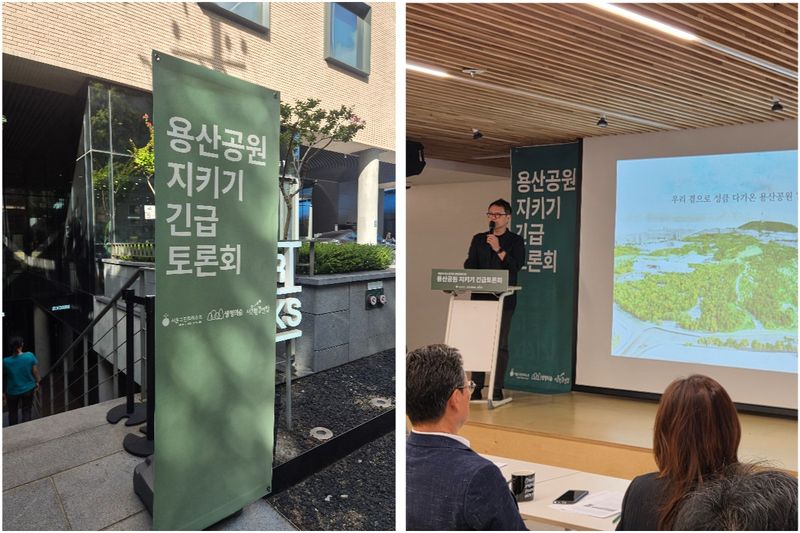
Professor JEONG-HANN PAE is an expert who has been involved in the development of Yongsan Park since 2005, when the government first conceived the plan to transform the Yongsan Garrison into a park. He emphasized, "The Yongsan Park site is not merely empty land, but a space of healing that preserves the pain of colonialism, division, and war, as well as a core ecological axis connecting Namsan Mountain and the Han River." In particular, citing the 'Basic Plan for Suitable Sites in Yongsan' led by the Seoul Metropolitan Government in the early 1990s, he explained that the vision for a 'complete Yongsan Park' that has persisted since then remains an important benchmark today. Professor JEONG-HANN PAE stated, "The social consensus to not develop the site must not be undermined by arguments for real estate development."
He also raised doubts about the effectiveness of the housing supply plan. Professor JEONG-HANN PAE pointed out, "There is talk of supplying 20,000 housing units on the Yongsan Park site, but compared to large apartment complexes in Seoul such as Heliocity, this is excessive relative to the area." Along with the forecast that even if housing construction were to proceed, occupancy would not be possible until 2040, he posed the question, "If occupancy occurs in 2040, will it be possible to control housing prices or resolve the housing crisis for young people?" Furthermore, he urged, "Instead of sacrificing Yongsan Park, a valuable asset for future generations, to cover up the housing shortage, we must accelerate the return date and reconstruct phased plans and governance for the complete development of the park."
Team Leader Choi further pointed out, "As seen in precedents such as the Busan Hialeah Base and Chuncheon Camp Page, cleanup conducted under opaque conditions led to the discovery of massive additional contamination and increased cleanup costs after the return," adding, "Rushing to supply housing without sufficient prior investigation and cleanup could significantly increase the burden on the government." Regarding the opinion that it is acceptable to supply housing because it is "damaged green space," he stated, "Saying it is okay simply because it is damaged when it hasn't even been developed into a park yet is bound to become a one-sided frame for development." He added, "Relocating the Tancheon Water Reclamation Center and supplying housing also results in a chain reaction of damaging surrounding green spaces; it does lead to the outcome of having to destroy one side (Yongsan Park) to protect another."
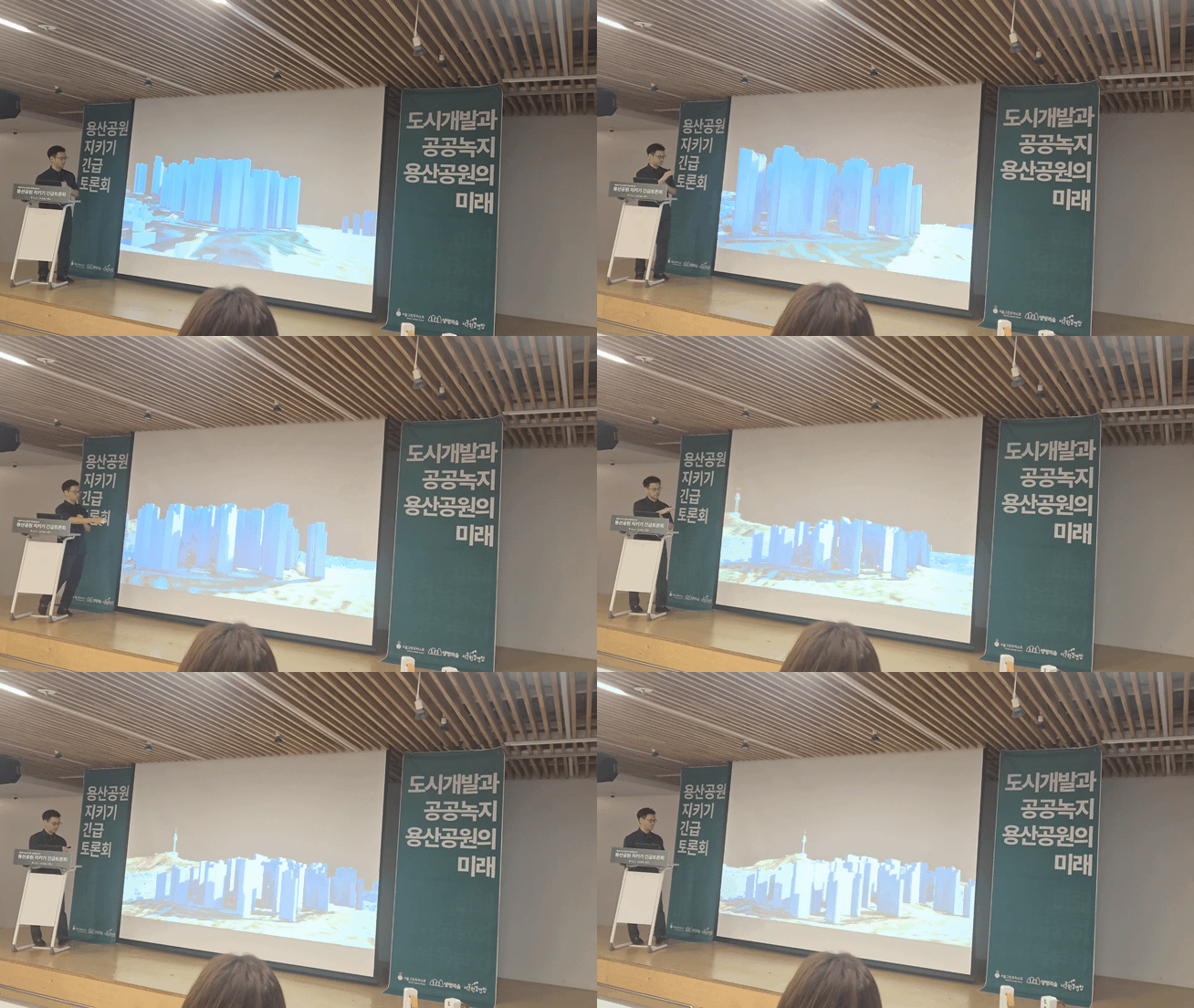
Professor Justin Heejoon Lim of Seoul National University’s Graduate School of Environmental Studies stated, "There will never be another instance in Seoul where such a flat and continuous expanse of land opens up all at once in the middle of the city," adding that "Yongsan is the last remaining puzzle piece in Seoul." He emphasized the need to focus efforts on preserving this value. Professor Lim also unveiled scenarios at the Children's Garden, including aerial views of the Yongsan Park area under conditions of a floor area ratio of 260% and 6,000 households, and a floor area ratio of 360% and 10,000 households, using photos and videos.
Attendees of the forum cited the issue of remaining U.S. military sites—such as the Dragon Hill Lodge, helipad, and U.S. Embassy—still located in the middle of the main site as a challenge that must be resolved to ensure the complete development of the park. Meanwhile, the forum was organized by the Seoul Green Trust, Seoul KFEM, and The Forest of Life with the aim of "protecting Yongsan Park as an urban forest." A large number of experts attended and shared their views, including Professor Kyungjin ZOH of Seoul National University (Chairman of the Seoul Green Trust), Professor Kim Jung-bin of University of Seoul (UOS), Professor Jong-Heon Gim of Pai Chai University, Chairman Seol Dong-geun of the Forest Ecology Leaders Association, activist Yoo Young-min of The Forest of Life, and Senior Specialist Choi Jin-woo of Seoul KFEM.
[email protected] Jeon Min-kyung Reporter