At least 1,290 dead in massive floods in Nepal and China; China’s death toll rises by 10
- Input
- 2026-09-04 22:52:11
- Updated
- 2026-09-04 22:52:11
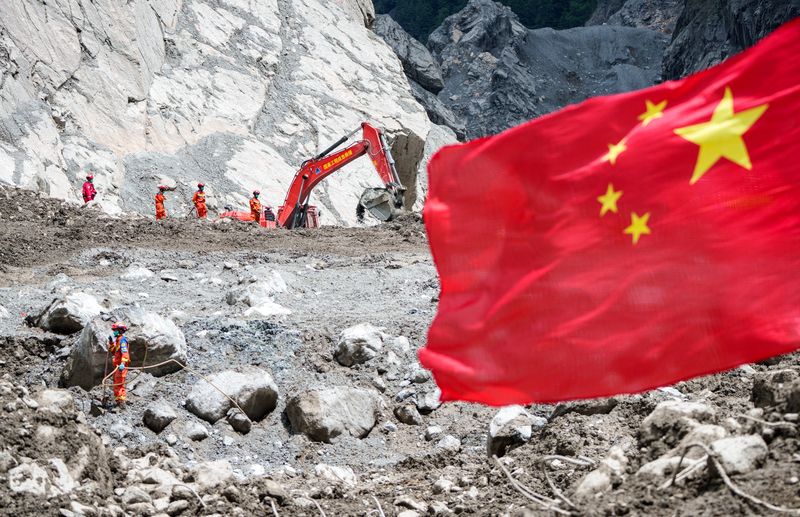
[Financial News] The death toll from floods and landslides that occurred on the 26th of last month in the border region between Nepal and China has risen to 1,290. Ten people who were missing on the Chinese side have been confirmed dead.
According to China's state-run Xinhua News Agency on the 4th, the field command center for the "August 26 Debris Flow Disaster" in Jilong County, Tibet Autonomous Region, announced that as of 6 p.m. that day, the death toll stood at 31 and the number of missing at 531. As of noon on the 2nd, the death toll was 21 and the number of missing was 541.
Around 8:37 a.m. on the 26th of last month, massive flooding occurred in Bagmati Province of Nepal, which borders China. Experts analyzed that melting glaciers in the Himalayas collapsed, sweeping through the valleys along with piles of earth. The flooding caused large-scale landslides on the Chinese side as well as in Nepal.
Following China's recent announcement, the death toll and number of missing persons in Nepal and China stood at 1,290 and 5,614, respectively, as of the evening of the 4th. In Nepal, as of the 3rd, 1,259 people had died and 5,083 were missing. However, on the 4th, two survivors were rescued in Nepal from the tunnel of the Upper Trishuli 3A Hydropower Station on the Trishuli River, nine days after the accident.
During the flood on the 26th of last month, nine Korean dispatched employees, including technicians, went missing at the Upper Trishuli-1 Hydropower Project (UT-1) upstream of the Trishuli River. Upper Trishuli 3A Hydropower Station, where survivors were confirmed on the 4th, is located about 6 km downstream from UT-1.
On the 3rd, Australia's public broadcaster ABC analyzed that survivors trapped in the hydroelectric power plant tunnel could survive for up to 17 days, noting that there may be empty spaces with air remaining inside the tunnel.
On the same day, Nepal's Government Spokesperson and Minister of Education Sasmit Pokharel announced following the conclusion of a cabinet meeting that September 7 would be designated as a national day of mourning for the Great Flood. He stated that on the 7th, "national flags will be flown at half-mast at government agencies throughout Nepal, as well as at Nepalese embassies and diplomatic missions abroad." The 7th marks the 13th day since the disaster occurred, and in Hinduism, rituals for the deceased are generally concluded on the 13th day after death. In addition, the Nepalese government decided to designate the upcoming 8th as a public holiday to commemorate the "Generation Z Victims' Day."
[email protected] Park Jong-won Reporter