War-Driven 'Diesel Shock' Sends U.S. Diesel Prices to Record High
- Input
- 2026-09-04 22:14:41
- Updated
- 2026-09-04 22:14:41
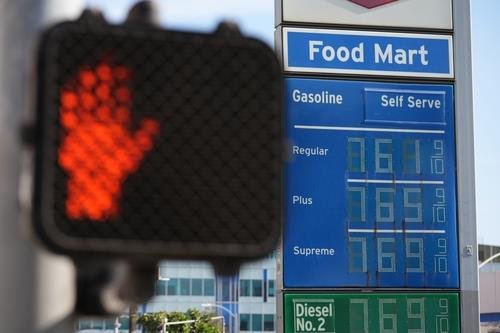
According to CNBC and other outlets on the 4th local time, the national average diesel price in the United States reached $5.85 per gallon. That was about 60% higher than the $3.71 recorded during the same period last year. In California, prices soared to as much as $7.70 per gallon, roughly $2 above the national average.
The direct cause of the surge in diesel prices is war. As Ukraine continued attacking Russian refineries, Russia banned diesel exports. In the Middle East, operations at some refineries were also suspended after attacks by Iran on tankers in the Strait of Hormuz and on energy infrastructure in the region.
Gary Simmons, chief operating officer of U.S. refiner Valero, said that about 5 million barrels per day of refining capacity had been taken offline because of the wars in Russia and the Middle East.
The impact on the global diesel market is also substantial. Andy Lipow, president of Lipow Oil Associates, estimated that global diesel demand is about 28 million barrels per day and that roughly 8% of supply is currently disrupted.
Russia's diesel export ban is affecting about 800,000 barrels per day of supply, while disruptions in the Strait of Hormuz are estimated at roughly 1.2 million barrels per day. In addition, the Jazan Refinery in Saudi Arabia, which produces about 200,000 barrels per day, has halted operations following attacks by Houthi rebels, allies of Iran.
The problem is that rising diesel prices affect the U.S. economy more broadly than gasoline prices do. Diesel is widely used not only in logistics, including trucking and rail transport, but also in agriculture, heating, and industrial operations.
Bob McNally, founder of Rapidan Energy Group, emphasized that diesel is far more deeply connected to the economy than gasoline, calling it "the fuel to watch most closely from a macroeconomic perspective." In the United States, most goods pass through the trucking system during distribution, making it highly likely that higher diesel prices will be passed on to consumers through companies' logistics costs.
John Kilduff, a partner at Again Capital, told CNBC, "No matter how much online shopping you do, every product ultimately arrives at your home on a diesel-powered truck," adding, "There is no way to avoid it." His remarks suggest that higher diesel prices could ultimately translate directly into inflation.
[email protected] Correspondent Lee Byung-chul Reporter