'From Molten Steel to Cars': Chung Eui-sun Bets $8 Billion on U.S. Investment as K-Steel Mill Takes Shape in the Sun Belt
- Input
- 2026-09-05 06:00:00
- Updated
- 2026-09-05 06:00:00
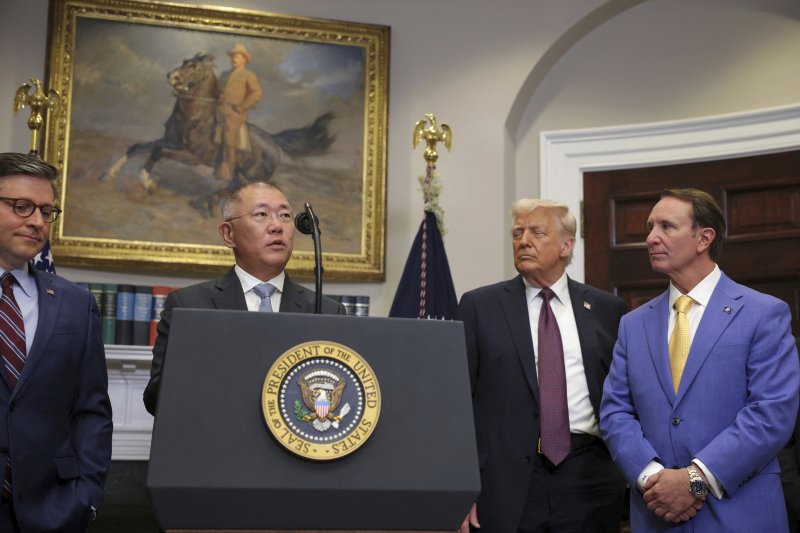
【Donaldsonville, U.S.—Reporter Eun-hyo Cho】 Hyundai Motor Group held a groundbreaking ceremony on the 4th local time in Donaldsonville, Louisiana, for the Hyundai-POSCO Louisiana Steel electric-arc-furnace mill, the group’s first U.S. investment project, valued at $5.8 billion (7.8 trillion won). The project is the first initiative under Hyundai Motor Group’s $26 billion (28.4 trillion won) U.S. investment plan being pursued after the launch of the second Donald Trump administration. By building the first “K-steel mill” in the United States, Hyundai Motor Group will strengthen its ability to respond to high steel import tariffs, currently set at 50%. It will also establish a vertically integrated production system spanning “molten steel to automobiles” across the southern U.S. Sun Belt, from Georgia, home to Hyundai Motor Group Metaplant America and a Kia plant, to Alabama, where Hyundai Motor Company operates a plant, and Louisiana, where Hyundai Steel Company will be located.
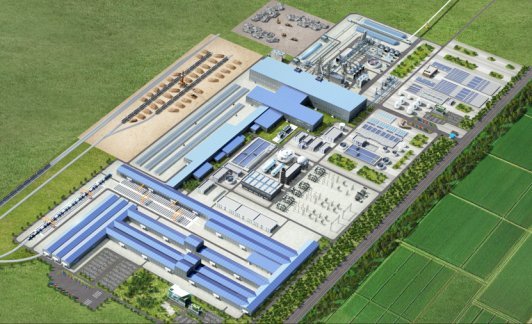
K-Steel Transforms U.S. Sugarcane Fields into a Steel Mill as Japan Also Steps Up Its U.S. Steel Offensive
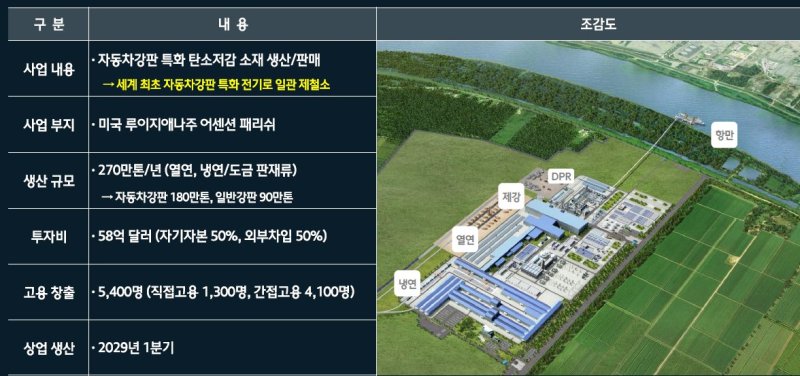
The Hyundai-POSCO Louisiana Steel electric-arc-furnace mill, with approximately 8 trillion won invested, will be built as the first automotive-steel-focused integrated steel mill in the United States based on electric-arc-furnace technology. The ownership structure is Hyundai Motor Group 80%—Hyundai Steel Company 50%, Hyundai Motor Company 15%, and Kia 15%—and POSCO 20%. As Nippon Steel strengthens its access to the U.S. market, the world’s second-largest automobile-producing country, through its acquisition of U.S. Steel, attention is also focused on Hyundai Steel Company and POSCO, South Korea’s two major steelmakers, joining forces to build the first “K-steel mill” on U.S. soil.Hyundai Steel Company plans to transform a sugarcane field measuring approximately 7.37 million square meters (2.23 million pyeong) into a state-of-the-art eco-friendly electric-arc-furnace mill with annual capacity of 2.7 million tons—1.8 million tons for automobiles and 900,000 tons for general use. In simple terms, 2.7 million tons is enough steel to produce 2.7 million cars. Hyundai Steel Company aims to begin construction in the fourth quarter of this year after completing the permitting process and start mass production in the first quarter of 2029.
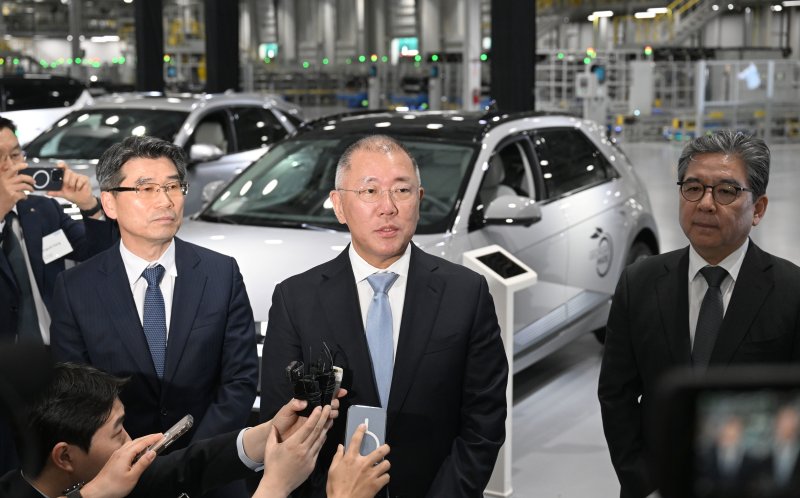
About 250 people attended the ceremony, including Chung Eui-sun, POSCO Chairman Chang In-hwa, Louisiana Governor Jeff Landry, William Kimmitt, the Commerce Department’s deputy assistant secretary for international trade, federal Representatives Troy Carter and Julia Letlow, other prominent U.S. and Louisiana officials, Minister of Trade and Industry Kim Jung-kwan, and South Korean Ambassador to the United States Kang Kyung-wha. Their presence demonstrated the strong interest in the project from the governments and local communities of both countries.
Governor Jeff Landry, who is known to have close ties with President Donald Trump and was appointed the U.S. special envoy to Greenland, expressed high expectations in his congratulatory remarks, saying, "Hyundai Steel Company’s investment will create quality jobs and new opportunities for businesses in Louisiana." Kim Jung-kwan, who had traveled to Washington for negotiations between the South Korean and U.S. governments on investment projects in the United States, also attended the ceremony. He emphasized, "When South Korea’s world-class steel technology and manufacturing capabilities meet the United States’ abundant energy resources and workforce, they will create overwhelming industrial opportunities. Connecting each other’s strengths to raise the competitiveness of both countries together is the new face of South Korea-U.S. cooperation."
‘From Molten Steel to Cars’: Hyundai Motor Group Responds to Tariffs and Secures U.S. Production Competitiveness
Hyundai Steel Company plans to expand its global push by supplying not only Hyundai Motor Company and Kia but also global automakers located in the southern U.S. Sun Belt and customers in Europe. The plant will have excellent access to major automakers’ facilities, including Hyundai Motor Company’s Alabama plant, Kia’s Georgia plant, Hyundai Motor Group Metaplant America (HMGMA), General Motors’ Texas plant, Volkswagen’s Tennessee plant, and Honda’s Alabama plant. This will enable the company to reduce logistics costs and establish a stable supply network.
At the group level, the investment is also expected to strengthen the local production systems of Hyundai Motor Company and Kia. Hyundai Motor Group, the world’s third-largest and the United States’ fourth-largest automaker, will use the HPLS electric-arc-furnace mill to establish in the United States the same vertically integrated production system it has in South Korea, extending from “molten steel to automobiles.” Hyundai Motor Company and Kia moved into third place in the U.S. market on a monthly basis last month, overtaking Ford, and are accelerating efforts to rank third annually.
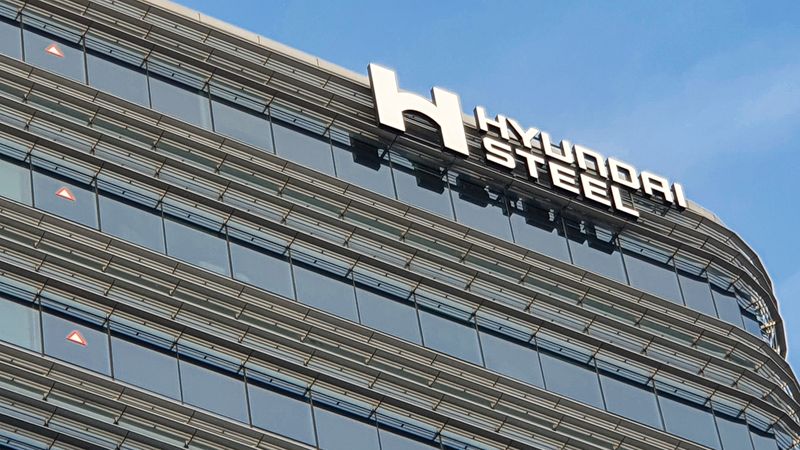
Hyundai Steel Company will build the HPLS electric-arc-furnace mill as a low-carbon production facility. The electric-arc-furnace–blast-furnace hybrid process developed by Hyundai Steel Company is the first step toward a low-carbon production system. It mixes molten steel made in an electric arc furnace using steel scrap with molten steel made in a blast furnace using iron ore, reducing carbon emissions by up to approximately 20% compared with steel produced through conventional blast-furnace methods. The project is also receiving a positive response from the local community because its eco-friendly facilities will provide quality jobs. Hyundai Steel Company also plans to establish the RPCC Training Center, an educational institution specializing in the steel industry to train local workers.
The United States is currently the world’s third-largest crude-steel producer, with output of 82 million tons, and is also a major steel consumer. Because domestic supply falls short of demand, it imports more than 20 million tons of steel each year. In particular, more than 10 million tons of flat products, mainly high-value-added items such as hot-rolled and cold-rolled galvanized steel sheets, are imported annually, accounting for more than 50% of total imports.[email protected] Eun-hyo Cho Reporter