Lee Kwang-jae: “Linking Public Institutions with Regional Universities Can Drive Region-Led Mega-Growth”
- Input
- 2026-09-04 17:29:56
- Updated
- 2026-09-04 17:29:56
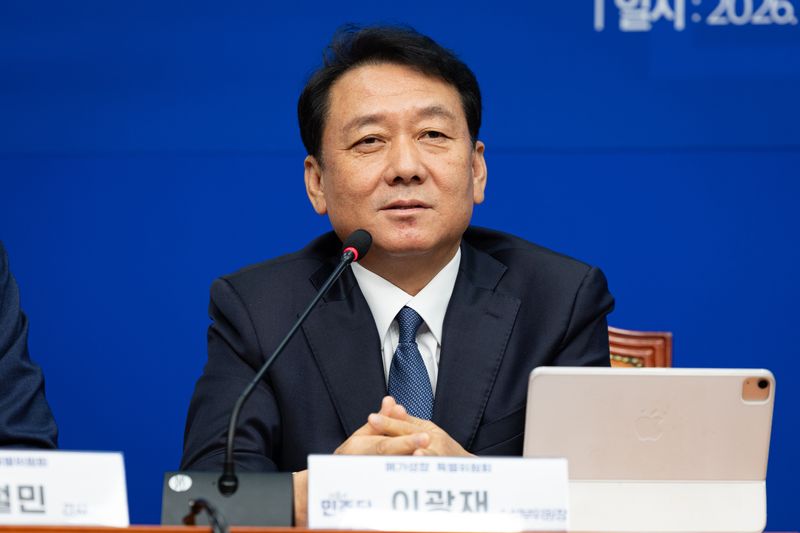
Appearing on Munhwa Broadcasting Corporation (MBC) radio that day, Lee emphasized that additional institutions relocated under the second relocation of public institutions should be linked to existing innovation cities. Regarding the plan, he said, “Rather than buying more land, we should make use of the vacant spaces that still exist in the existing innovation cities.”
In particular, he proposed bringing public institutions, regional universities, and existing industries together. In North Jeolla Province, for example, the National Pension Service (NPS) could establish a contract-based department and research institute focused on pension funds at Jeonbuk National University (JBNU), while the Rural Development Administration (RDA) could work with regional universities to train specialists in agriculture and biotechnology. He also proposed linking these efforts with regional industrial foundations, including the Iksan National Food Cluster and Saemangeum. The same model was proposed for Busan and South Jeolla Province. In Busan, financial institutions could partner with Pukyong National University (PKNU), while also bringing in venture companies funded by those institutions. In South Jeolla Province, the model would combine Korea Electric Power Corporation (KEPCO), Korea Institute of Energy Technology (KENTECH), and Chonnam National University (CNU) with the semiconductor and renewable energy industries.
Lee said, “Innovation cities have been half a success,” and pointed out, “The biggest problem is that, despite having many master’s and doctoral-level professionals, we failed to create an innovation economy by connecting them with nearby universities.” He added, “The core principle of creating mega-growth is to bring together existing innovation cities, existing industries, and 10 newly established universities.”
[email protected] Song Ji-won Reporter