Second Phase of Relocating Public Institutions Gets Underway; Jeju Province Launches Campaign to Attract KRA Headquarters
- Input
- 2026-09-04 14:02:04
- Updated
- 2026-09-04 14:02:04
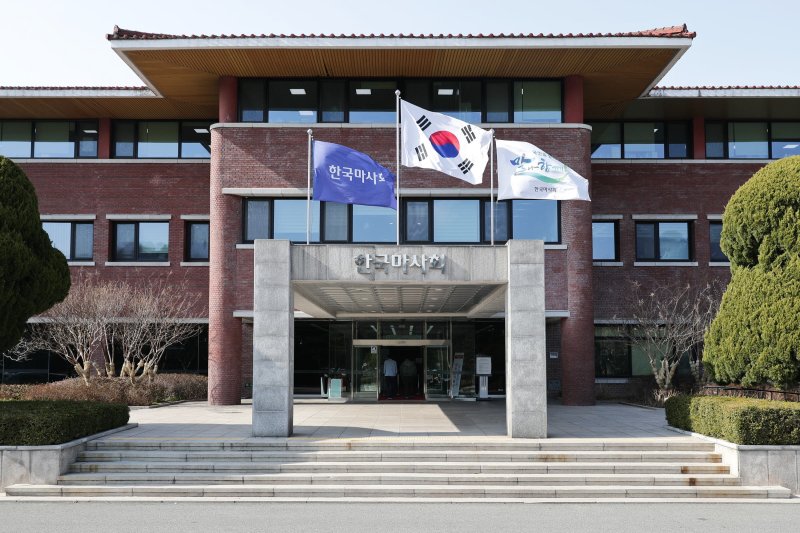
【Financial News Jeju = Jeong Yong-bok】 As the government begins reviewing the second phase of relocating about 350 public institutions from the capital region, Jeju Province is once again stepping up its campaign to attract KRA headquarters. The plan is to connect Jeju’s equine industry, where horse production and racing and riding infrastructure are concentrated, with the relocation of KRA headquarters and develop it into a regional growth engine.
According to Jeju Special Self-Governing Province on the 4th, it will hold a forum titled “Future Strategies for Jeju’s Equine Industry and Measures for Mutual Cooperation” at Heritage Jeju at 4 p.m. on the 8th. Hosted by Jeju Special Self-Governing Province and co-organized by the Korea Racehorse Producers Association and the Jeju Horse Producers Association, the event will be attended by about 100 people, including academics, government officials, representatives of related organizations and members of equine industry groups.
The event stands out because it combines a policy discussion on the equine industry with publicity for relocating KRA headquarters to Jeju.
The government announced the previous day that it would review the need to relocate about 350 public institutions based in the capital region, unveil its plan for the second phase of relocating public institutions outside the capital region in the fourth quarter of this year, and begin the relocations in 2027. Its key principles are to minimize institutions remaining in the capital region and place institutions with related functions together with regional industries and universities.
This is also why Jeju Special Self-Governing Province is linking its case for attracting KRA with the equine industry. KRA headquarters is currently located in Gwacheon, Gyeonggi Province. In addition to conducting horse races, KRA is a public institution responsible for promoting horseback riding, developing the equine industry and improving horse welfare.
Jeju Special Self-Governing Province has already included KRA among its targets for the second phase of relocating public institutions. In its “Strategy for Promoting the Relocation of Public Institutions from the Capital Region to Jeju,” drawn up in 2023, it designated 28 institutions in five functional groups—including Korea Airports Corporation and KRA—as key targets for attraction.
The first hurdle will be how much Jeju’s demands are reflected in the list of institutions to be relocated and the placement principles to be finalized in the fourth quarter of this year. Jeju Province is a major production and development hub for South Korea’s equine industry. After being designated as the country’s first equine industry special zone in 2014, it has built infrastructure for racehorse production, horseback riding, and horse-related education and tourism.
South Korea’s equine industry is undergoing growth and restructuring at the same time. According to the Ministry of Agriculture, Food and Rural Affairs’ 2025 survey of the equine industry, the number of horses raised in South Korea stood at 27,165, down by 356 from the previous year. There were 7,938 racehorses and 4,253 breeding horses. The government is also implementing measures to improve horse welfare from 2025 to 2029 to enhance the industry’s sustainability.
The Jeju forum will likewise address the industry’s foundation and horse welfare, rather than focusing solely on expanding production.
Kang Won-myeong, director of Jeju Special Self-Governing Province’s Eco-Friendly Livestock Policy Division, will give a presentation on “The Current Status of Jeju’s Equine Industry and Establishing a Sustainable Industry Foundation.” Kim Jeong-hoon, a professor in the Department of Business Administration at Jeju National University, will present future strategies and policy directions for the equine industry.
Do Kyoung-tag, a professor in the Department of Animal Biotechnology at Jeju National University, will moderate the panel discussion. Representatives from the Jeju Equestrian Association, KRA Jeju Regional Headquarters, Cheju Halla University, the Korea Racehorse Producers Association and the Jeju Horse Producers Association will participate to discuss ways to implement the ninth popularly elected administration’s equine industry pledges and a model for coexistence between production sites and horse welfare.
The event will also feature province-wide publicity activities and a performance urging the relocation of KRA headquarters to Jeju. Jeju Special Self-Governing Province plans to cite its existing industry infrastructure—including its racehorse production base, equine industry special zone and Let’s Run Park Jeju—as part of its case for attracting KRA headquarters.
Kim Young-jun, director of Jeju Special Self-Governing Province’s Agriculture, Livestock and Food Bureau, said, “We will diagnose the current issues facing the equine industry, gather opinions from the field and experts, and develop a model for mutual growth.” He added, “In connection with the ninth popularly elected administration’s pledges, we will create an equine industry special zone where horse welfare and industry operations are in harmony.” He further stated, “In line with the second phase of relocating public institutions, we will bring together the capabilities of residents and the equine industry to attract KRA headquarters to Jeju.”
[email protected] Jeong Yong-bok Reporter