“I Thought There Was Only an Apartment and Bank Deposits”... Debts and a Massive Lawsuit Revealed After Her Father’s Death [This Law]
- Input
- 2026-09-04 14:07:07
- Updated
- 2026-09-04 14:07:07
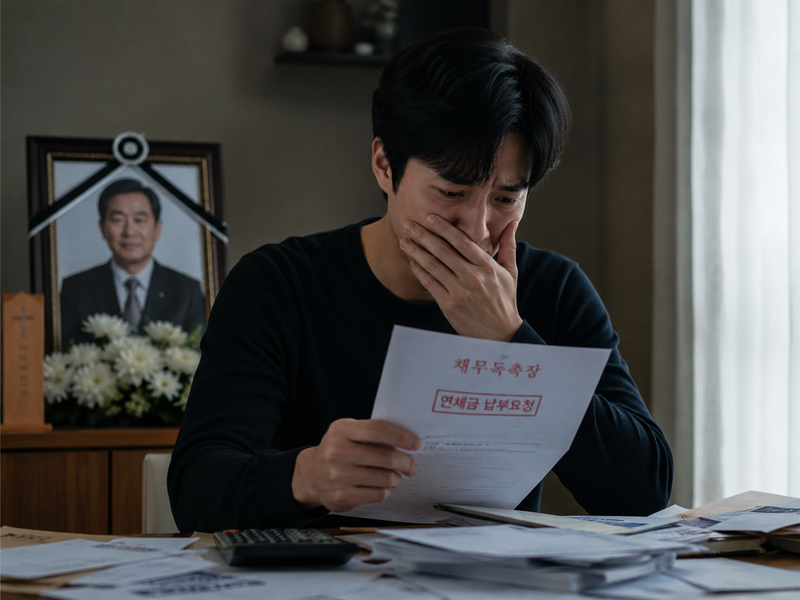
[Financial News] The story of a working woman who discovered after her father’s death that he had left behind debts and a damages lawsuit has been reported.
On the 4th, YTN Radio’s “Attorney Jo In-seop’s Counseling Center” introduced the case of a working woman identified as A.
A’s father was patriarchal and made all decisions without consulting his family. Unable to endure this, A’s younger brother left home as soon as he became an adult and cut off contact with the family. A, however, stayed by her parents’ side and cared for them, including accompanying them to the hospital.
Out of gratitude, her father gave A sole ownership of a small parcel of forest land in a rural area two years ago. His chronic illness later worsened, and he died, leaving behind an apartment in Gyeonggi Province and bank deposits.
The problem came to light after the funeral. During his lifetime, A’s father had guaranteed a relative’s debt and incurred a substantial personal liability. Because A and her younger brother, who was a co-heir, could not make contact, they were unable to withdraw the deposits or transfer ownership of the apartment. Creditors also continued to demand repayment.
A also learned that a massive damages lawsuit was pending because her father had allegedly caused damage to another person’s property. After confirming his death, the plaintiff applied to the court to continue the lawsuit against his successors. A and her mother have now taken over the case.
A said, “I have not even been able to determine the exact amount of my father’s debts. I am worried that his debts may exceed the inherited assets.” She added, “My mother cared for my father for a long time and also contributed to acquiring and maintaining the apartment. I want to know whether that contribution can be recognized during the inheritance process.”
Lee Jun-heon of Shinsegae-ro Law Firm, who reviewed the case, explained, “It would be advisable to use the Safe Inheritance One-Stop Service to check the assets and debts left by your father before deciding whether to accept the inheritance.” He added, “If the debts exceed the assets, you must apply for renunciation of inheritance or limited acceptance within three months of learning that the inheritance has commenced.”
He continued, “Renunciation of inheritance means giving up both rights and obligations. If the first-priority heir renounces the inheritance, the debts pass to the next-priority heirs.” He explained, “Limited acceptance means that the deceased’s debts are repaid only within the value of the inherited assets, so the debts do not pass to the next-priority heirs.”
Regarding the pending damages lawsuit, he said, “If you obtain limited acceptance, you may be liable only within the value of the inherited assets.” He also cautioned that arbitrarily withdrawing and using the deceased’s bank deposits could be deemed a simple acceptance of the inheritance.
He also said it would be difficult for the remaining family members to divide the inherited property without the younger brother, who had lost contact with the family. “An agreement to divide the inherited property reached only among the remaining family members, excluding the younger brother, is invalid,” Lee said. “You can apply to the court to appoint a property administrator for an absentee and proceed on behalf of the heir who cannot be contacted.”
The forest land A received as a lifetime gift could be recognized as a “special benefit” during the inheritance process. Lee said, “The property is treated as an advance inheritance, and its value is added to the remaining inherited assets to calculate each person’s statutory share.” He added, “If the gift of the forest land reduced the younger brother’s reserved share, he may seek the return of the shortfall.”
The mother’s long-term care for A’s father and her contributions to building and maintaining the family’s assets may also be considered during the inheritance process. Lee advised, “If the mother’s contribution is recognized, she will first receive a certain portion of the inherited property.” He added, “If the heirs cannot reach an agreement, she must ask the court to adjudicate the division of the inherited property and determine her contribution share.”
[email protected] Ahn Ga-eul Reporter