Ji Gui-yeon’s Side Denies ‘Room Salon Hospitality’ Allegations: CIO’s Interpretation of ‘Same Person’ ‘Goes Beyond the Statutory Language’ (Updated 2)
- Input
- 2026-09-04 14:24:28
- Updated
- 2026-09-04 14:24:28
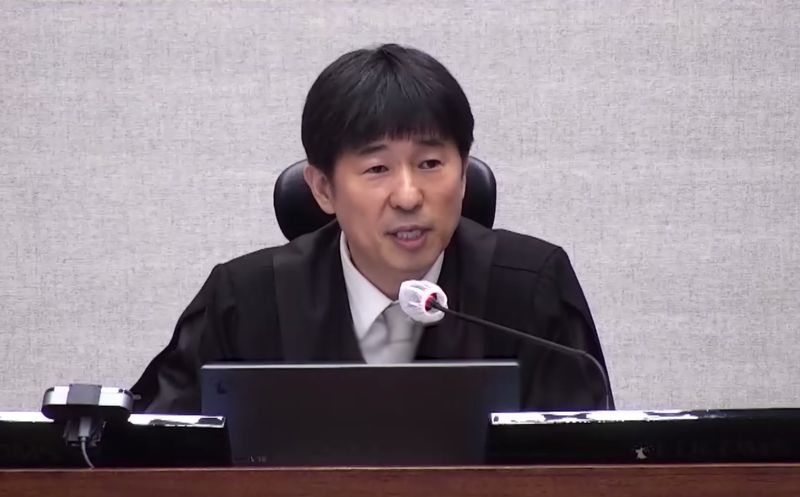
[Financial News] Ji Gui-yeon’s legal team has directly rejected the Corruption Investigation Office for High-ranking Officials (CIO)’s indictment of the Seoul Northern District Court presiding judge, who was charged with receiving hospitality at a room salon, calling it “an unreasonable determination of facts and application of the law.”
Ji’s legal team particularly disputed the CIO’s assessment that he stayed at a room salon in Seoul’s Gangnam district for approximately four to five hours, saying, “He attended briefly and left immediately.” A legal battle is expected to intensify over whether the two lawyers who split the cost of the hospitality can be regarded as a single “same person” under the Improper Solicitation and Graft Act.
Kim Hyeong-seok, an attorney with SP law firm representing Ji, issued a statement on the 4th, emphasizing, “My client, presiding judge Ji, merely attended a gathering with two junior colleagues briefly and left immediately.” He added, “Considering their relationship with the junior colleagues, the circumstances of the gathering, and, in particular, the fact that the junior colleagues had never handled any work related to my client’s duties during the past 10 years, there was absolutely no connection to his official duties or quid pro quo involved.” He further claimed, “This was also clearly acknowledged in the CIO’s investigation results.”
Earlier that day, the CIO’s Third Investigation Division, headed by senior prosecutor Lee Dae-hwan, indicted Ji without detention on charges of violating the Improper Solicitation and Graft Act.
Ji is accused of drinking with two lawyers in August 2023 at a reservation-only establishment in Cheongdam-dong, Gangnam-gu, Seoul, and receiving hospitality worth approximately 4.09 million won, with the lawyers paying the bill, thereby receiving hospitality exceeding 1 million won on a single occasion.
The two sides are presenting conflicting claims over how long Ji stayed at the establishment. After analyzing taxi boarding records and other information, the CIO determined that there was a gap of approximately four to five hours between Ji’s entry into the establishment and his subsequent taxi ride.
In response to a question about whether the investigation results conflicted with the earlier explanation that Ji “left after having one or two drinks,” a CIO official explained, “We believe they do conflict.” Ji’s legal team, however, maintained its previous position that he “attended the gathering briefly and left immediately.”
The method used to calculate the value of the hospitality is expected to become a sharper legal issue at trial.
The Improper Solicitation and Graft Act prohibits public officials and others from receiving money or other valuables exceeding 1 million won on a single occasion from the same person, regardless of whether the benefit is related to their duties or the stated purpose. Ji’s legal team argued that the two lawyers cannot be considered one “same person” because each paid part of the cost.
Kim stated firmly, “Even if my client had remained at the gathering until the end, as the CIO claims, the value of the money or other valuables provided by any single person did not exceed 1 million won. Therefore, the legal elements required for a violation of the Improper Solicitation and Graft Act cannot be met.”
He continued, “The cost of the gathering was paid separately by the two junior colleagues, each using their own funds at different times.” He argued, “It is clearly an interpretation beyond the possible meaning of the statutory language to treat the two people as one and the same person.”
The CIO, however, reached a different conclusion. It determined that the two lawyers did not pay independently, but shared the cost based on a joint intention to entertain a sitting judge at the same drinking gathering.
A CIO official acknowledged that the lawyers’ splitting of the bill could become an issue in the case, but explained that, considering the nature of the gathering, the investigation found that “they merely divided the cost while intending to entertain him together.” The official added that the CIO would seek the court’s judgment on this issue.
The CIO did clarify, however, that the lawyers who provided the hospitality did not directly state during questioning that they had “met for the purpose of providing hospitality.”
The two sides’ positions partly converge regarding the bribery allegations, as proving a specific quid pro quo is difficult. The CIO investigated whether there had been a specific benefit in return, such as favorable treatment in a trial, focusing on the connection between Ji’s official duties and the lawyers who provided the hospitality. However, it determined that there was insufficient evidence to prove this and decided not to prosecute him for bribery.
Based on this, Ji’s legal team maintains that the drinking gathering had no connection to his official duties or quid pro quo. However, the Improper Solicitation and Graft Act’s ban on receiving money or other valuables exceeding 1 million won on a single occasion can apply regardless of whether the benefit is duty-related. Accordingly, the key legal dispute at trial is expected to concern the calculation of the hospitality amount and the scope of the “same person.”
Ji’s legal team stated, “We cannot hide our bewilderment at the CIO’s unreasonable determination of facts and application of the law, and we find it deeply regrettable.” It added, “We will participate faithfully in the trial proceedings and fully explain our position.”
[email protected] Yoo Seon-jun Reporter