New Acting Police Chief Calls to "Return to the Basics"; What Will Determine the Success of Reform
- Input
- 2026-09-04 14:47:44
- Updated
- 2026-09-04 14:47:44
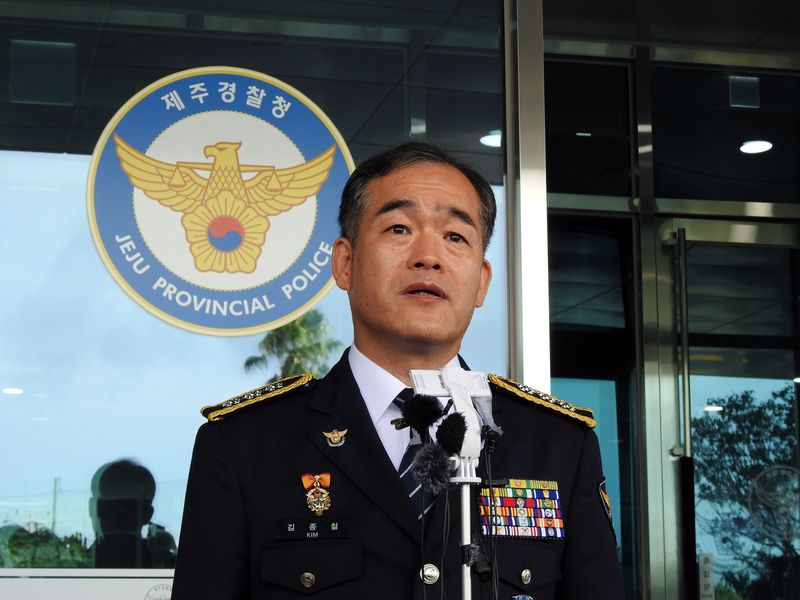
[Financial News] The police, facing a crisis of public trust over a series of flawed investigations and controversies surrounding case handling, have launched a sweeping reform effort. Experts generally view the direction of the reforms positively, but warn that the police must ensure the effort is sustained and broadly incorporate voices from outside the organization and from the field, rather than merely announcing measures whenever a new incident occurs, as they have done in the past.
According to police and other sources on the 4th, Acting Commissioner General Kim chaired a meeting on measures to overhaul missing-person investigations and reviewed the entire response system for missing-person cases. The meeting followed his order on the previous day—his first directive as acting commissioner general—to draw up measures for reforming missing-person investigations.
Kim has accelerated his reform efforts since the 3rd, his first day in office. That morning, instead of holding a separate inauguration ceremony, he convened a meeting of police leadership from across the country, apologized over the Jang Yoon-gi case and the Jeju Province missing-person case, and announced plans to launch the Police Reform Task Force. That afternoon, he made Jeju Province his first field visit, visiting the funeral home of a man in his 60s who had gone missing and died to offer condolences to his family. He then visited the site where the body of a woman in her 30s who had gone missing in Hallim-eup, Jeju City, was found, followed by the Jeju Provincial Police Agency.
Kim plans to examine not only the recent cases as instances of misconduct by individual officers, but also structural problems involving the chain of command, supervisory systems, and organizational culture. The overhaul will cover the entire process of missing-person cases, from intake through search, investigation, and closure. The police will also hold officers accountable regardless of position or rank if inappropriate work practices are identified during a nationwide review of missing-person cases.
The Police Reform Task Force, which will address problems across the organization, will also be launched. The plan is to reassess from the ground up not only crime-response methods, but also systemic and structural problems, oversight of the police, and organizational culture. The aim is to turn problems exposed by the successive incidents into improvements in overall organizational management, rather than limiting the response to disciplining individual officers.
Experts are also broadly sympathetic to this diagnosis of the problems and the direction of reform. However, they stress that the reform effort must above all be sustained if it is to lead to meaningful change.
Whenever a major incident occurs or a problem threatens public trust in the organization, the police have formed various task forces and innovation bodies to devise countermeasures. The Police Grand Innovation Task Force, launched after the 2022 Seoul Halloween crowd crush, discussed personnel reform and improvements to organizational culture. Yet because similar problems have continued to recur, experts say it is necessary to revisit how fully those measures were implemented in the field. They also warn that the Police Reform Task Force must not become a temporary body that disappears after operating for only a short period.
Professor Shin I-cheol of the Department of Police Studies at Wonkwang Digital University said, "If a task force is operated every time an incident occurs, it may give the impression of a makeshift response rather than a consistent and sustainable solution." He emphasized, "This Police Reform Task Force should not be a temporary effort; it needs to operate continuously." He explained that, given the internal resistance likely to emerge during organizational reform, the police need a structure capable of pursuing reform over the long term.
How the task force is formed will also be crucial. Experts say that outside specialists and officers who actually work in the field should participate alongside police leaders and internal personnel, rather than allowing the reform agenda to be decided primarily by the police hierarchy or insiders. Some also argue that the task force must include a sufficiently large share of outside members to ensure that external perspectives are reflected in practice.
Yeom Gun-woong, a professor in the Division of Police and Fire Administration at U1 University, advised, "More than 70 percent of the members should come from outside the police. Internal participants should also include more frontline officers from police substations and precincts, rather than focusing mainly on senior officials, so that the voices of those working in the field can be heard."
Another challenge is to establish safeguards that allow frontline officers to handle their duties proactively while imposing strict discipline where necessary. If the emphasis is placed solely on strengthening accountability, officers in the field may adopt defensive practices, such as handling only the minimum necessary tasks to avoid the risk of problems arising. Accordingly, the police will likely need to specify both the standards for holding officers responsible and the scope of exemptions from liability.
[email protected] Kim Ye-ji Reporter