[On the Ground] From Private Luxury Shopping to Spa Services... Incheon International Airport Seeks the Answer to a “Decisive Competitive Edge” in Istanbul
- Input
- 2026-09-06 10:00:00
- Updated
- 2026-09-06 10:00:00
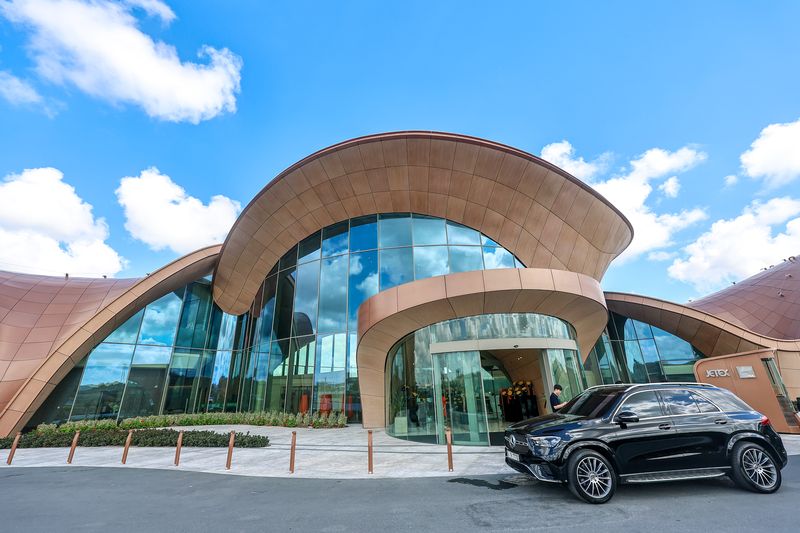
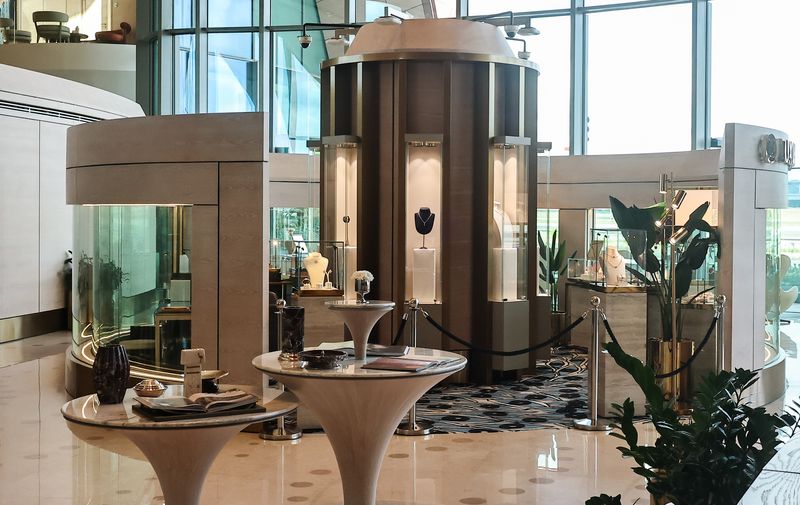
【Istanbul, Türkiye = Reporter Kim Dong-ho】Luxury tile flooring and wooden decorations depicting Türkiye’s flowers immediately catch the eye, while elegant curved designs that blur the boundaries between columns and ceilings dominate the space. After passing through security, passengers can see the runway through floor-to-ceiling windows. Private luxury shopping rooms fit for a celebrity such as Rihanna, an upscale spa, and bedroom suites are arranged like amenities in a five-star hotel. Incheon International Airport Corporation, which is working to expand global business-jet demand and VIP protocol infrastructure, is already getting a preview at Istanbul Airport of the future of a business aviation terminal, or FBO, befitting its status as a global mega-hub. Industry observers said that if such a terminal becomes a reality, Incheon International Airport—which has struggled to introduce a paid fast-track service—could find an alternative for strengthening its future competitiveness.
Immigration and customs procedures completed in five minutes... Maximizing security and privacy
It takes just over two minutes to board a waiting private vehicle and travel to the terminal immediately after getting off a private jet. After passing through independent immigration, customs, and quarantine (CIQ) counters, passengers can leave the airport in less than five minutes. This is an everyday scene at the FBO, the business aviation terminal at Istanbul Airport, a massive hub connecting East and West.Visited on the 3rd local time, the facility is located in an independent area completely separated from the regular passenger terminal, maximizing VIP security and privacy. Upon entering, a “guest experience representative” in an orange uniform provides close personal assistance, while ground-handling staff collect checked baggage and deliver it directly to the aircraft.
Burcu Gures, general manager of the Istanbul Airport (iGA) terminal, emphasized, “Depending on the circumstances, passengers who arrive just five minutes before departure can still be processed for boarding. Recently, we processed a group of 90 American passengers in just 10 minutes.”
The facility’s key competitive advantage is that it applies strict customs and airport security regulations without exception while handling procedures quietly and courteously so customers do not feel pressured or inconvenienced. Dedicated CIQ officers are stationed on-site to provide arrival and departure procedures without waiting. The facility has also completed a one-stop ground-handling system, offering a private-jet apron, hangars, and round-the-clock customized maintenance, repair, and overhaul (MRO), refueling, and catering services.
Built across three floors and covering 5,000 square meters, the terminal opened in May after iGA and global FBO operator Jetex jointly invested €60 million. More than 3,500 people used it during its first four months, with as many as 170 visitors passing through in a 24-hour period.
An industry official pointed out, “Incheon International Airport is the only one among the world’s 30 largest airports that has been unable to introduce a paid fast-track service. It is also the only one among the world’s top 10 airports without private-jet infrastructure.” The official added, “If a business aviation terminal is introduced at Incheon International Airport, it is expected to establish a decisive competitive edge for the future.”
Commercial-flight passengers can also use the facility for €950... Keeping an eye on the Korean market
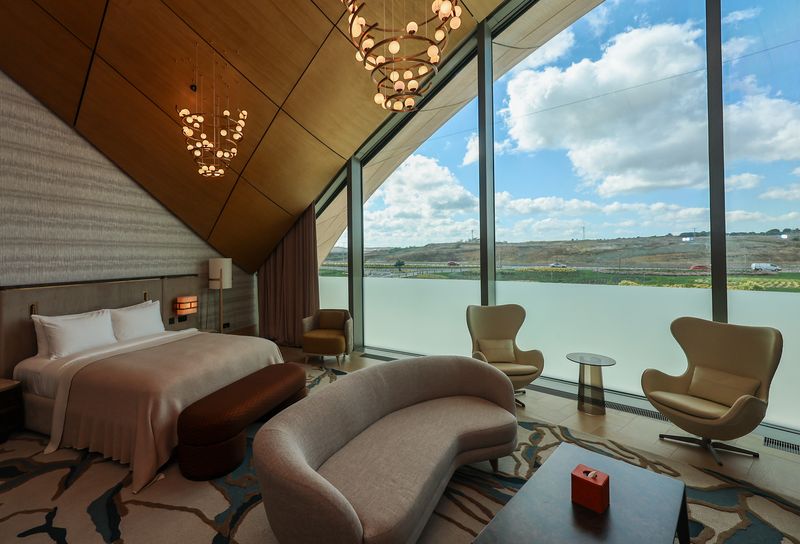
Notably, regular commercial-flight passengers account for a larger share of users than private-jet passengers.Private-jet passengers account for about 1,000 of the total users. International commercial-flight passengers can purchase a package priced at €950 per person, excluding VAT, and receive the same expedited processing, private-vehicle transfers, and access to the premium cigar and whisky lounge. For an additional €1,500 to €2,500, they can rent a private suite equipped with a bedroom, shower booth, and minibar for up to six hours. A massage spa costing up to €320 and a dedicated shopping assistant who can arrange purchases of limited-edition luxury goods inside the room showcase the essence of a customized luxury lounge targeting VIPs from global political and business circles and executives of multinational corporations.
Korea is also a key potential market attracting their attention. Gures expressed optimism about entering the market, saying, “We are currently in contact with investors in Korea’s FBO sector, and we hope negotiations will take place.”
Business aviation operations in Korea are currently handled mainly by Gimpo International Airport’s Seoul Gimpo Business Aviation Center (SGBAC), but limitations have been raised regarding long-haul connectivity and the potential for infrastructure expansion. Accordingly, Incheon International Airport is exploring the development of a dedicated FBO and advanced business aviation infrastructure befitting its status as a global mega-hub, with an opening targeted for 2028 following its Phase 4 expansion project.
The time has come for strategic benchmarking to transform Incheon International Airport into a high-value business aviation hub that generates more than simple passenger-transport revenue. Incheon International Airport plans to capture premium business aviation demand by linking it with the MICE industry in the Asia-Pacific region and efforts to attract global corporate headquarters.
[email protected] Kim Dong-ho Reporter