Samsung Electronics Expands Recycling of Semiconductor and Home-Appliance Waste... 38 Circular-Resource Recognitions
- Input
- 2026-09-04 14:15:34
- Updated
- 2026-09-04 14:15:34
[Financial News] Samsung Electronics is expanding its resource-circulation efforts by converting waste generated during semiconductor and home-appliance production into recycled raw materials.
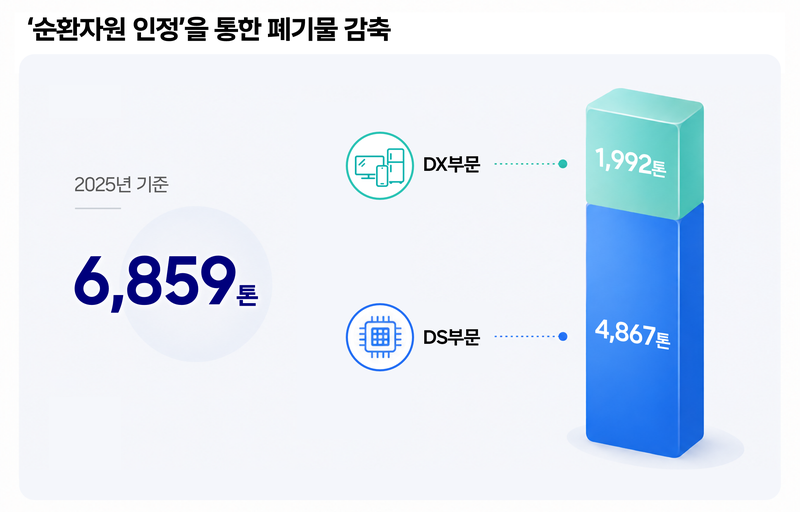
Samsung Electronics said on the 4th that it had obtained a total of 38 circular-resource recognitions as of August this year, ahead of Resource Circulation Day on the 6th. The company reduced its annual waste by 6,859 metric tons last year through the program.
The circular-resource recognition system designates waste that meets legal standards, such as low hazard levels and economic viability, as a resource so it can be used as a raw material without waste-related regulations. As the number of recognized circular-resource items increases, companies can reduce the administrative procedures required for waste treatment while expanding the range of waste that can be used as recycled raw materials.
Samsung Electronics’ Device Solutions Division (DS Division) has expanded the recycling of waste generated during semiconductor production since 2019. As of August this year, all of its business sites had obtained a cumulative total of 30 circular-resource recognitions.
One notable example is the wafer tray used to transport semiconductor wafers. Used wafer trays are collected and processed into recycled plastic in collaboration with the Device eXperience (DX) Division’s Circular Economy Research Institute. The material is then used for the side and volume keys of the Samsung Galaxy S25 series.
Defective wafers generated during production are also recycled. After the wafers are crushed, a specialized materials company extracts the silicon and uses it as a raw material for aluminum alloys. The recycled material is supplied for use in the aviation and construction industries.
Palladium (Pd) is also recovered from diamond discs used in the wafer-polishing process. The recovered palladium is processed into materials such as compound feedstock and reused in printed circuit board (PCB) manufacturing.
The DX Division is also expanding the range of waste generated at its sites that can be used as circular resources. In 2024, it reviewed waste generated at its Suwon, Gumi, and Gwangju sites with the Korea Environment Corporation (K-eco) and selected 20 items—including steel plates, washing-machine drums, and trays—for circular-resource recognition.
By August this year, the company had obtained a total of eight circular-resource recognitions for 12 of those items. It plans to pursue recognition for the remaining eight items sequentially by June 2027.
Samsung Electronics collects packaging Styrofoam left over after the installation of home appliances such as refrigerators and washing machines, then reprocesses it into a mixed plastic material. The material has been applied to the interior components of the domestically produced Bespoke AI WindFree Combo Gallery air conditioner and Infinite AI Air Purifier.
Waste glass generated during product manufacturing is recycled into a composite fiber material and used for the outer tub of the all-in-one washer-dryer Bespoke AI Combo. Material made from recycled waste cooking oil is used in refrigerator storage compartments.
Samsung Electronics plans to identify additional recyclable items at its business sites and expand efforts to reintroduce materials recovered from waste into product raw materials and manufacturing processes.
[email protected] Park Ji-yeon Reporter