Cheong Wa Dae: "Hormuz deployment remains under review; room for maneuver only without undermining readiness on the Korean Peninsula"
- Input
- 2026-09-04 11:59:58
- Updated
- 2026-09-04 11:59:58
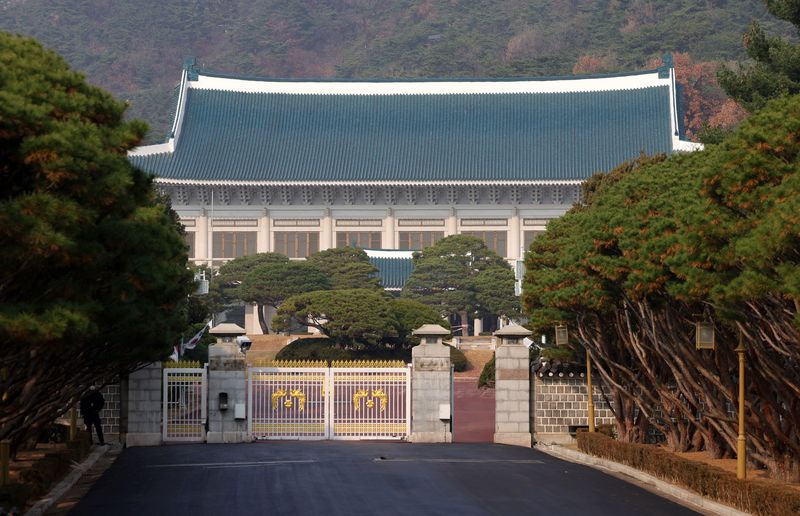
[Financial News] Cheong Wa Dae said it is comprehensively reviewing military contribution options, including combat, noncombat and search missions, to ensure freedom of navigation through the Strait of Hormuz. It stressed, however, that nothing has been decided yet. If South Korea proceeds with a deployment, it will consider the readiness posture on the Korean Peninsula and procedures required under domestic law, including consent from the National Assembly.
A senior Cheong Wa Dae official met with reporters at the Chunchugwan Press Center at the Blue House on the 4th. Asked whether the government was considering deploying troops to the Strait of Hormuz, the official said, "I think the question is slightly ahead of where we are," but added, "Freedom of navigation in the Strait of Hormuz is extremely important to our national interests. We are at the review stage. Nothing has been decided, but we are continuing to review it."
The official explained, "We rely on crude oil transported through the Strait of Hormuz for nearly 70% of our supply, and the economic and security damage caused by a blockage, as well as the impact on our economy as a whole, would be significant." The official added, "That is why, when the United Kingdom, France and the United States proposed an international coalition for freedom of navigation in the Strait of Hormuz, we actively consulted with them from the outset."
Cheong Wa Dae had previously reiterated its general position that it was "reviewing substantive and military contribution options to ensure freedom of navigation through the Strait of Hormuz, while comprehensively taking into account the readiness posture on the Korean Peninsula and procedures under domestic law."
The senior Cheong Wa Dae official said, "We have spoken several times about making a substantive contribution, and a substantive contribution includes a military contribution." The official continued, "We have said that we would review the matter while taking various aspects of the readiness posture on the Korean Peninsula into account and following domestic legal procedures, and we are now at that review stage." The official also explained, "We believe there is room for maneuver as long as it does not significantly undermine the readiness posture on the Korean Peninsula."
The official added, "There are various forms of military contribution. One option is to participate in combat, while another is noncombat support. There are many possibilities. Even if the mission is limited to search operations, various options may be available, and we are comprehensively reviewing them now."
The official noted, "There is a term called 'deployment,' and it is a term found in the Constitution. If, for example, even one or two personnel—whether for a noncombat or combat mission—go to the site, that is defined as a deployment." The official added, "When ordinary people hear the word deployment, they may associate it with combat and a large-scale troop commitment, but that is not necessarily the case. There may be many different options, and we are reviewing them in various ways."
Asked about submitting a consent bill to the National Assembly, the official stressed, "We have not reached that stage yet. The review is under way, and we are at the stage of continuing to examine what needs to be done and how to proceed. That is why we are saying that nothing has been decided."
Meanwhile, the senior Cheong Wa Dae official also described recent South Korea–United States security negotiations as being "in a state where it is difficult to make progress at the moment." The official said, "The process had been proceeding in accordance with the joint fact sheet, but it temporarily stalled early this year and was restored in May." The official added, "It has become difficult to move forward again because it is linked to several other issues, but we are continuing efforts to restore the process, as we did from January through May."
Regarding trade negotiations, the official said, "There are various areas between South Korea and the United States, and they affect one another. Some can also become factors that cause delays. Investment issues are included, and semiconductors are indeed among the subjects under discussion." The official explained, however, "We are working to ensure that these issues do not become impediments or obstacles for either side."
[email protected] Choi Jong-geun Reporter