CIO Indicts Chief Judge Ji Gui-yeon Over Alleged Room-Salon Hospitality... Why Was He Not Indicted for Receiving Bribes? (Updated)
- Input
- 2026-09-04 11:33:58
- Updated
- 2026-09-04 11:33:58
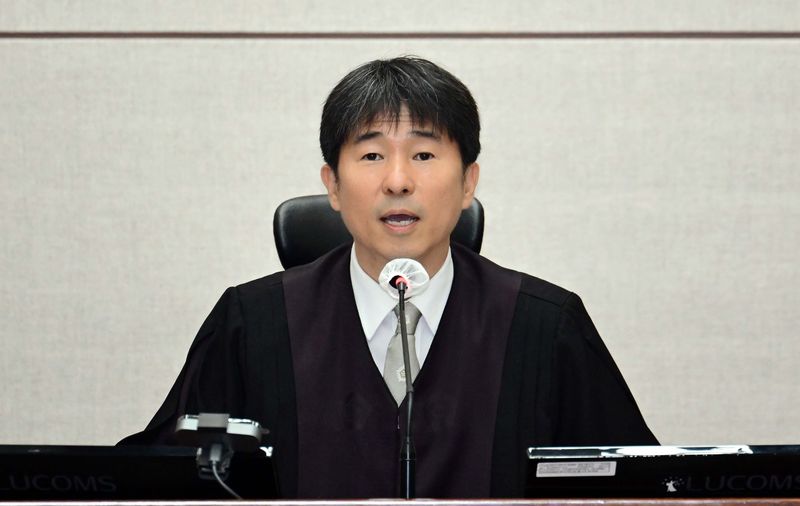
[Financial News] The Corruption Investigation Office for High-ranking Officials (CIO), which indicted Seoul Northern District Court Chief Judge Ji Gui-yeon on allegations that he received hospitality at a room salon, has also secured evidence indicating that Ji stayed at the establishment for four to five hours. The CIO determined that this contradicted Ji’s previous explanation that he left after having one or two drinks.
However, although the CIO recognized a connection between the lawyers who provided the hospitality and Ji’s official duties, it decided not to indict him on bribery-receipt charges, concluding that there was insufficient evidence to prove a specific quid pro quo, such as providing favorable treatment in a trial.
The CIO’s Investigation Division 3, headed by Chief Prosecutor Lee Dae-hwan, announced on the 4th that it had indicted Ji without detention on charges of violating the Improper Solicitation and Graft Act. The CIO also notified the Seoul Northern District Court, where Ji serves, of the investigation results and requested disciplinary action.
Ji is accused of receiving hospitality worth 4.09 million won in August 2023 after lawyers identified as A and B paid the bill at a reservation-only establishment in Cheongdam-dong, Gangnam-gu, Seoul. The amount exceeded the 1 million won per-occasion limit.
The Improper Solicitation and Graft Act prohibits public officials and others from receiving, requesting, or promising money or other valuables worth more than 1 million won from the same person on a single occasion, or more than 3 million won in a fiscal year, regardless of whether the benefit is related to their duties or whether it is characterized as a donation, sponsorship, or gift.
The CIO also tracked Ji’s time at the establishment based on taxi-boarding records and other evidence. Investigators determined that there was a gap of approximately four to five hours between his entering the establishment and taking a taxi again.
A CIO official explained, "We confirmed that he boarded a taxi approximately four to five hours after entering the establishment." Asked whether this contradicted Ji’s previous explanation, the official replied, "We believe it does contradict it."
During questioning by the CIO, Ji reportedly denied the allegations and stated that he either did not clearly remember what happened or may have fallen asleep because he was intoxicated. He also reportedly said that he had not spent a long time drinking with the others at the establishment. However, the CIO said it was unable to determine how much alcohol he actually consumed.
The CIO also explained why its investigation produced different results from an earlier internal inspection by the court. Investigators determined that the Supreme Court of Korea’s inspection team had not secured the full amount of the payments covered by the current indictment. They also found that the earlier inspection was limited in verifying Ji’s movements that day because it lacked authority to conduct compulsory investigations.
During the investigation, the CIO additionally secured taxi-call records and financial documents. Lawyer A was found to have made six payments at the establishment in total. Investigators identified two occasions on which the payment records matched Ji’s taxi-use records and movements. Some of the expenses were reportedly paid by bank transfer after the drinking session ended.
The investigation began in May last year after civic groups and others filed complaints against Ji on allegations of receiving bribes and violating the Improper Solicitation and Graft Act. In July of the same year, the CIO obtained materials from officials at a National Assembly member’s office who had raised the allegations and continued its investigation using communications warrants, taxi-call records, and credit-card transaction data.
The compulsory investigation also faced significant limitations. A warrant to obtain the establishment owner’s bank-account records was rejected, and additional warrants for communications records and searches of mobile phones were not issued. The CIO persuaded the owner and related individuals to voluntarily submit financial transaction records, visit dates, and payment details.
The CIO determined that the lawyers who provided the hospitality had a connection to Ji’s official duties and closely examined whether they had made requests or provided the hospitality in exchange for favorable treatment in a trial. However, it failed to secure evidence proving a specific quid pro quo, including the fact that no records showed the lawyers had cases assigned to the panel on which Ji served.
The CIO also investigated possible links to earlier trials. According to the agency, while Ji was working in the Civil Settlement Division of the Suwon District Court in 2013, a case handled by lawyer A was dismissed at trial but later resulted in a favorable ruling on appeal.
However, the CIO concluded that the approximately 10-year gap between that case and the alleged hospitality, along with the scale of the case and other factors, made it insufficient to regard the hospitality as compensation for Ji’s past official duties. It therefore decided not to indict him on bribery-receipt charges.
By contrast, the CIO determined that the alleged violation of the Improper Solicitation and Graft Act could be prosecuted. A key issue in this case was whether benefits paid for jointly by two lawyers could be regarded under the act as benefits provided by the "same person."
The CIO concluded that the two lawyers had not paid independently but had divided the cost with the shared intention of entertaining a sitting judge at the same drinking session. Investigators said this interpretation could be contested in court and that they would seek a judicial ruling. However, they explained that the lawyers had not directly stated during questioning that they had met "for the purpose of providing hospitality."
The indictment is also the first since the CIO was established in which it brought charges based solely on a "related crime," rather than on a high-ranking official crime itself.
The CIO explained that receiving bribes constitutes a high-ranking official crime, whereas violating the Improper Solicitation and Graft Act is not itself included among high-ranking official crimes under the CIO Act. However, it determined that the violation constituted a related crime discovered while investigating the same facts and therefore indicted Ji solely on the graft-law violation.
The CIO also convened an Investigation Review Committee in July to examine whether this legal interpretation was appropriate. The committee reportedly reached a majority view that the CIO could bring an indictment based solely on a related crime.
No decision has yet been made regarding the two lawyers who provided the hospitality. The CIO maintains that it lacks direct investigative authority over private individuals who provide benefits under the Improper Solicitation and Graft Act. It is reviewing how to proceed, including the possibility of requesting an investigation by another investigative agency.
A CIO official emphasized, "We will continue to rigorously investigate corruption cases involving high-ranking public officials and contribute to strengthening discipline in public service." The official added, "We will also make every effort to ensure the successful maintenance of the indictment going forward."
[email protected] Yoo Sun-jun Reporter