Citrus Orchard Area Shrinks 0.2%, but Production Rises 3.9% to 426,900 Tons, Putting Price Defense to the Test
- Input
- 2026-09-04 10:22:25
- Updated
- 2026-09-04 10:22:25
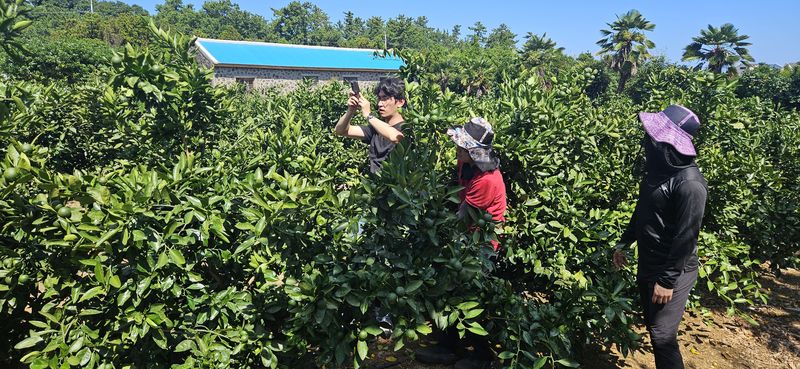
【Financial News Jeju = Reporter Jung Yong-bok】 Jeju’s open-field citrus cultivation area is expected to shrink, but this year’s production is projected to rise by 15,900 tons from last year to 426,900 tons. Total supply is increasing because the rise in productivity per unit area is outpacing the decline in orchard acreage.
On the 4th, the Agricultural Outlook Center of the Korea Rural Economic Institute (KREI) forecast 2026 Jeju open-field citrus production at 426,900 tons. That is 3.9% higher than last year’s 411,000 tons and 2.8% above the five-year average of 415,300 tons.
The cultivation area, however, is expected to fall to 13,972 hectares, down 0.2% from last year’s 13,994 hectares and 1.7% from the five-year average of 14,214 hectares.
The reason production is rising despite the smaller area is productivity. Converting KREI’s forecast into output per 10a, this year’s figure is approximately 3,055 kilograms. That is about 4% higher than last year’s approximately 2,937 kilograms, calculated using the same method. The increase in yield more than offsets the reduction in orchard acreage.
Regional differences are also pronounced. Production in Jeju City is forecast to increase 9.0% from last year, while Seogwipo City is expected to post a 1.1% increase. Jeju City will account for 35.3% of total production, compared with 64.7% for Seogwipo City.
KREI analyzed that Jeju City is expected to see a relatively larger increase because fruit set has been normal, while Seogwipo City has more fruit per tree despite the effects of alternate bearing. Growing conditions are also generally better than last year. Physiological disorders and pest and disease outbreaks have declined, while dry weather has reduced fruit drop and splitting.
However, prolonged high temperatures and drought have delayed fruit enlargement, and some orchards have suffered sunburn damage. Final shipments and the proportion of marketable fruit may vary depending on future changes in fruit size, sugar and acidity levels, and appearance.
In the long term, Jeju’s open-field citrus production base is rapidly shrinking. According to the Jeju Agricultural Information System (JASIS), the open-field citrus cultivation area fell 42%, from 24,261 hectares in 2000 to 13,994 hectares in 2024.
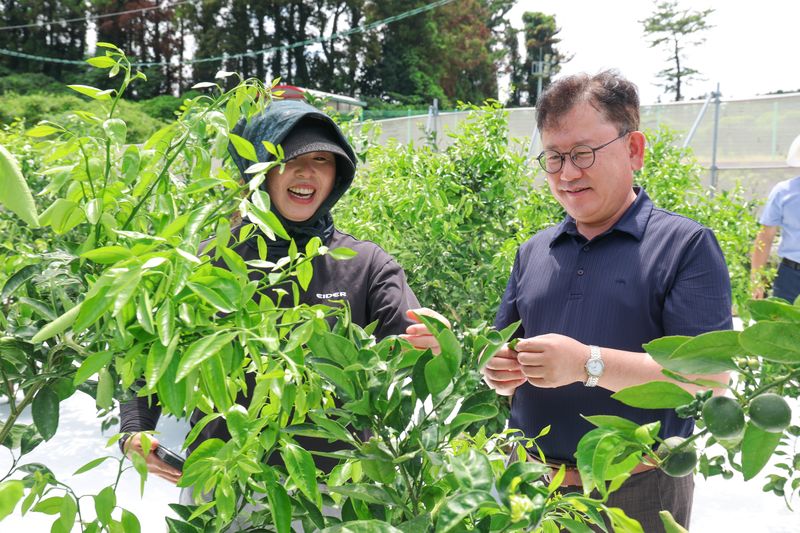
Over the same period, the cultivation area for late-maturing citrus varieties expanded more than sixfold, from 665 hectares to 4,279 hectares. This reflects a shift in the variety structure of Jeju’s citrus industry, driven not only by orchard closures caused by an aging farming population but also by continued conversion to late-maturing varieties such as Cheonhyehyang and Redeuhyang and to other cropping systems. Even so, when yields rise as they have this year, supply cannot be judged solely by the reduced acreage. Production may increase again depending on weather and fruit set.
Warning signs are already emerging in prices. KREI expects September shipments of greenhouse citrus to increase 8.2% from last year. Shipments are expected to be concentrated because the Chuseok holiday peak will arrive earlier than last year.
The September wholesale price at Seoul’s Garak Market is expected to be around 21,000 won per 3 kilograms, below last year’s 23,000 won.
Prices were already weak in August. The average wholesale price for marketable fruit was 21,800 won per 3 kilograms, down 7.2% from last year’s 23,500 won and 6.4% below the five-year average of 23,300 won.
Greenhouse and open-field citrus differ in cultivation methods and shipping periods, so their price trends cannot be directly linked. Still, the figures confirm that increased supply can immediately put pressure on prices.
The previous shipping season showed the same problem. In the first quarter of this year, arrivals of 2025 open-field citrus at Garak Market increased 95.3% from a year earlier because of higher production. The average wholesale price for marketable fruit fell 36.5% year on year to 15,700 won per 5 kilograms.
If the forecast of 426,900 tons becomes reality, managing the proportion of marketable fruit and the timing of shipments will become even more important to farm income.
Jeju Special Self-Governing Province is also conducting its own production survey. Based on 320 sample orchards across the province, the Jeju Agricultural Research and Extension Services will examine flowering in May, fruit numbers and size in August, and yield and quality in November.
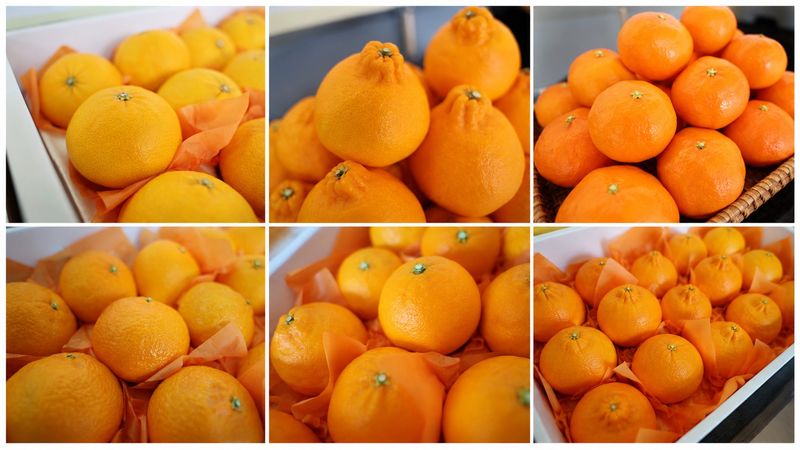
Starting this year, automated technology is being used alongside on-site measurements: when citrus trees are photographed with a smartphone, artificial intelligence analyzes the number and size of the fruit. The goal is to reduce measurement discrepancies among surveyors and improve the accuracy of production forecasts.
The second Citrus Outlook Survey Committee meeting was also held at the Agricultural and Fisheries Workers’ Center on the 3rd. Once Jeju’s own production estimate is finalized, the extent of its difference from KREI’s 426,900-ton forecast will serve as the first benchmark for assessing this year’s supply and demand.
Jeju Special Self-Governing Province has also begun preparing to improve orchard structure next year. It will survey demand for the 2027 citrus orchard-thinning program through the 11th and use the results to determine next year’s budget and project scale. Farmers who apply may receive priority support for thinning costs within the available budget.
Thinning widens the spacing between trees, allowing more sunlight and air to enter orchards while improving working conditions and creating a foundation for producing high-quality citrus. However, this demand survey is a procedure for preparing next year’s program. It should be distinguished from an immediate means of controlling shipments of this year’s 426,900 tons of open-field citrus.
The key to this year’s supply and demand will likely be how precisely producers manage the quality of very early-maturing citrus, prevent off-grade fruit from entering the market, process fruit for industrial use, and stagger shipments.
KREI’s figure is not a confirmed production total. It is a forecast based on sample-farm surveys, field investigations, and supply-and-demand analysis, so actual production may change depending on weather conditions such as typhoons, rainfall, and temperature.
Kim Youngjun, head of the Agriculture, Livestock and Food Bureau of Jeju Special Self-Governing Province, said, "Citrus orchard thinning is a program that improves sunlight exposure and ventilation, thereby increasing the efficiency of farm work and the quality of the fruit." He added, "I hope farmers will participate actively so that their demand is fully reflected in next year’s program."
[email protected] Jung Yong-bok Reporter