Yen Jumps 5 Yen in Two Days as '160-Yen Trauma' Triggers Yen Carry-Trade Unwinding
- Input
- 2026-09-04 09:54:14
- Updated
- 2026-09-04 09:54:14
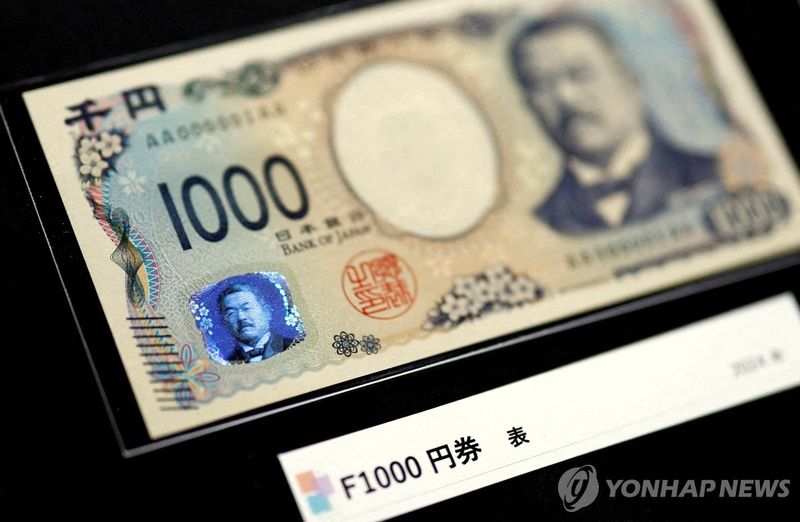
【Financial News, Tokyo—Correspondent Hye-jin Seo】The yen rose more than 5 yen against the dollar in just two days, entering the 155-yen range. The move came as speculative investors, wary of intervention by Japanese foreign-exchange authorities, closed their yen-selling positions all at once. The yen’s gains accelerated as expectations of a U.S. rate hike weakened while the possibility of another Bank of Japan rate hike increased.
In Tokyo foreign-exchange trading on the morning of the 4th, the yen was quoted at 155.92–155.94 yen per dollar as of 8:30 a.m. This was up 1.11 yen from 5 p.m. the previous day. The yen had earlier risen to as high as 155.30 yen per dollar in New York trading on the 3rd (local time), reaching its highest level in a month.
The yen had been in the low 160-yen range against the dollar as recently as the night of the 1st, meaning it surged by more than 5 yen in two days. Against the euro, it also rose 0.97 yen over the same period to 181.25–181.30 yen per euro.
■ Yen-selling positions undergo a 'domino unwinding' after the 158-yen level is breached
The immediate trigger for the yen’s surge was a speculative short squeeze. Investors who had bet on yen depreciation bought back the currency to limit their losses, creating a cycle in which yen strength prompted further buying.
In New York trading, speculation spread that Japanese foreign-exchange authorities had conducted a “rate check,” asking financial institutions about exchange rates ahead of a possible market intervention. Even before any actual intervention was confirmed, investors reduced their yen-selling positions, sending the yen up by about 1 yen against the dollar in a short period.
In Tokyo trading, buybacks intensified after the yen broke through its 200-day moving average of 158.44 yen per dollar in the direction of further appreciation. The 200-day moving average is a key indicator investors use to assess medium- to long-term exchange-rate trends.
A research team at a major European bank analyzed, “Once the 200-day moving average was breached, leveraged investors were forced into a situation where they had no choice but to buy back their yen short positions.”
A yen carry trade involves selling the low-yielding yen and investing in higher-yielding currencies or assets. When the yen weakens, investors can earn both the interest-rate differential and foreign-exchange gains. But when the yen rises sharply, foreign-exchange losses erode their interest income. Because these trades are often leveraged, sudden exchange-rate movements can trigger a chain reaction of position unwinding.
According to the Commodity Futures Trading Commission (CFTC), as of the 25th of last month, leveraged funds’ net yen-selling positions were more than twice their average level since 2020. They had temporarily declined after coordinated intervention by the United States and Japan but expanded again over the past two weeks.
Michael Ashley Schulman, a partner at Cerity Partners, said, “Among traders who suffered losses from the coordinated U.S.-Japan intervention at the end of July, the practice of selling dollars first once the exchange rate reached 160 yen per dollar had taken hold.” He added, “This time, memories of the intervention resurfaced, causing yen buying to expand in a self-reinforcing manner.”
■ Expectations for U.S. rates decline as calls for another Japanese hike emerge
Diverging expectations for U.S. and Japanese monetary policy also fueled the yen’s strength.
Christopher J. Waller, a governor of the Federal Reserve System (Fed), said in a speech on the 3rd (local time) that inflation “has begun to show signs of slowing.” He said that if this trend continued, he would support keeping the policy rate unchanged at the Federal Open Market Committee (FOMC) meeting scheduled for the 15th and 16th.
The probability of a September rate hike implied by U.S. short-term interest-rate futures fell to about 50% in the early hours of the 4th Japan time, from about 63% the previous day.
By contrast, expectations for a Bank of Japan rate hike strengthened. A foreign media outlet reported, citing multiple sources familiar with the matter, that the BOJ was likely to raise its policy rate by 0.25 percentage points to an annualized 1.25% at its monetary policy meeting this month.
Hajime Takata, a BOJ policy board member, also said on the 2nd that the central bank should respond nimbly rather than being bound by a rate-hike interval of roughly once every six months or by an increase of 0.25 percentage points. Markets are even discussing the possibility of consecutive rate hikes or larger increases by the BOJ.
Expectations that the Government Pension Investment Fund (GPIF) would reduce its overseas-asset holdings and increase its yen-denominated assets also supported yen buying. After it became known that the GPIF had unusually held a management committee meeting on the 21st of last month, during the summer holiday season, speculation spread that it was reviewing its strategic portfolio.
The next key turning point is 155 yen per dollar. If U.S. employment data are weak, expectations of a Fed rate hike could fall further, pushing the yen higher. Conversely, if employment is stronger than expected, the yen’s advance could lose momentum and the market could return to yen depreciation.
Kit Juckes, chief foreign-exchange strategist at Societe Generale, predicted, “The carry strategy of selling the yen to earn interest income whenever the currency strengthens has now become risky.” He added, “This could mark a turning point, with the yen potentially appreciating to 140 yen per dollar over a period of several years.”
[email protected] Hye-jin Seo Reporter