Tesla Unveils Driverless Robotaxi 'Cybercab' on Public Roads in Austin, Texas
- Input
- 2026-09-04 10:11:04
- Updated
- 2026-09-04 10:11:04
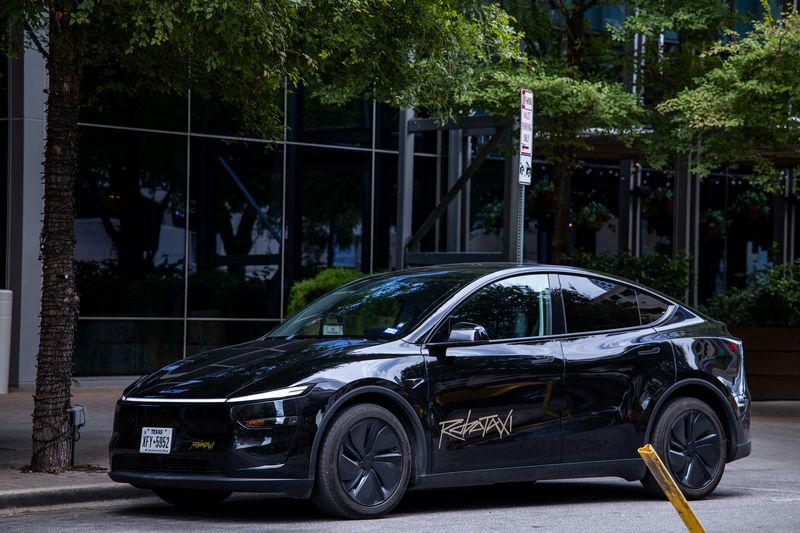
[Financial News] Tesla has deployed its autonomous robotaxi, the Cybercab, on public roads in Austin, Texas. The vehicle has no steering wheel or pedals. The move marks the first real test of CEO Elon Musk's vision to transform Tesla from a traditional electric-vehicle manufacturer into a fully autonomous driving company.
According to The Wall Street Journal and other foreign media outlets on the 3rd (local time), the two-seat, gold-colored coupe-style Cybercab unveiled by Tesla that day features a striking design without even side mirrors. Instead of expensive LiDAR or radar equipment, it relies solely on cameras and artificial-intelligence neural-network technology, a setup designed to significantly reduce operating costs.
Starting that day, customers in the Austin area could immediately summon a Cybercab through Tesla's dedicated robotaxi app, which was launched last year. The service had previously operated with Tesla Model Y vehicles and some safety personnel on board, but dozens of Cybercabs were added to the dispatch fleet under the latest move. Tesla has thus become the second company in the United States to transport passengers using dedicated autonomous vehicles, putting it in direct competition with Uber, Lyft, Alphabet's Waymo, and Amazon's Zoox.
Regulators, including the National Highway Traffic Safety Administration (NHTSA), have recently taken an active stance toward the early adoption of autonomous-driving technology. For example, they have proposed new rules that would eliminate the requirement for manual pedals. Under current regulations, vehicles without manual steering controls may apply for an exemption allowing sales of up to 2,500 units annually. An NHTSA spokesperson said, "Tesla has not yet submitted a separate exemption application for the Cybercab, but we are closely monitoring the situation and remain in close communication."
Tesla has newly registered 45 Cybercabs for its Austin robotaxi service, bringing the total number of robotaxis operating in Texas to 420. The company also has production facilities capable of manufacturing more than 125,000 vehicles annually.
Still, some observers point out that the figures remain below the targets Musk previously announced. Musk had said, "By the end of 2025, I will provide autonomous-driving services in half of the United States and sell the Cybercab for less than $30,000 (approximately 40.7 million won)."
Even so, Wall Street and investors continue to hold high expectations. Alexander Potter, an analyst at Piper Sandler, assessed the deployment of 45 vehicles in Austin as "a 'good enough' starting point that the market can accept, provided the operating fleet continues to expand steadily through the end of the year."
[email protected] Yoon Jae-jun Reporter