Jeju to Reduce ‘Separate’ Gender-Equality Education; Civic Groups and Counseling Organizations to Share Content
- Input
- 2026-09-04 09:38:42
- Updated
- 2026-09-04 09:38:42
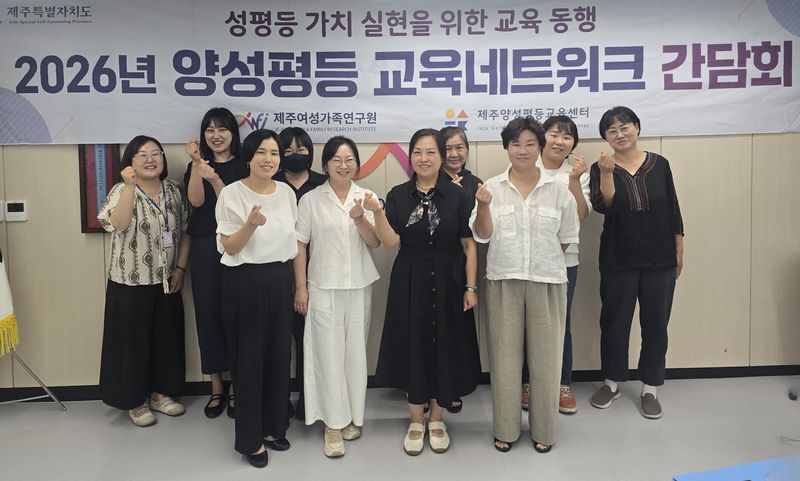
【Financial News Jeju = Reporter Yong-bok Jeong】 Jeju-based gender-equality education institutions and women’s and human-rights organizations have begun building a cooperation system to jointly use educational content and project information scattered across individual organizations and strengthen customized education for different groups.
The Jeju Women and Family Research Institute said on the 4th that the Jeju Gender Equality Education Center held the second Gender-Equality Education Network meeting on the 2nd under the theme “Educational Partnership for Realizing Gender-Equality Values.”
Participants included Seogwipo YWCA, the Jeju Women’s Human Rights Counseling Centers and Facilities Council, the Jeju Women’s Human Rights Solidarity Jeju Women’s Counseling Center, the Jeju YWCA Integrated Counseling Center, and the Jeju Province Gender Equality and Women’s Policy Officer.
The participating organizations shared updates on gender-equality and women’s human-rights education and projects being pursued this year. They also discussed ways to use the educational resources and programs held by each organization together in the field.
A key agenda item was how to use two card-news pieces developed by the Jeju Gender Equality Education Center this year—one on bystander intervention strategies and the other on preventing secondary victimization—in educational settings.
The participants also discussed continuously sharing information on education and projects by organization on the center’s bulletin board and coordinating promotional efforts. Rather than having the center produce content and distribute it unilaterally, the proposed system would allow field organizations to suggest the materials they need and use them jointly.
Participants called for content to be divided more specifically according to the target audience. The Jeju Women’s Human Rights Counseling Centers and Facilities Council proposed providing lecture plans and content that could be used to educate workers and users of welfare facilities. Because learners differ in age, occupation, and usage environment, the proposal emphasized the need for educational materials tailored to field conditions instead of repeatedly using the same resources.
Some participants also said a system was needed to coordinate gender-equality education across the region. Seogwipo YWCA proposed that the Jeju Gender Equality Education Center take a central role in connecting and coordinating integrated gender-equality education across the province, supported by assistance and a cooperation system from Jeju Province.
The Jeju Gender Equality Education Center plans to continue holding regular network meetings, connect participating organizations’ educational needs with relevant content, and expand cooperation on joint programs and promotion.
Go Bo-suk, director of the Jeju Gender Equality Education Center, said, “We will go beyond simply sharing each organization’s projects and build a cooperation system that connects educational resources and experience so they can be used in local communities.” She added, “We will continue communicating so that gender-equality values can be realized in everyday life.”
[email protected] Yong-bok Jeong Reporter