Jeju 4·3 Memories in 400 Voices: National Citizens’ Choirs Sing “We Do Not Part”
- Input
- 2026-09-04 09:34:54
- Updated
- 2026-09-04 09:34:54
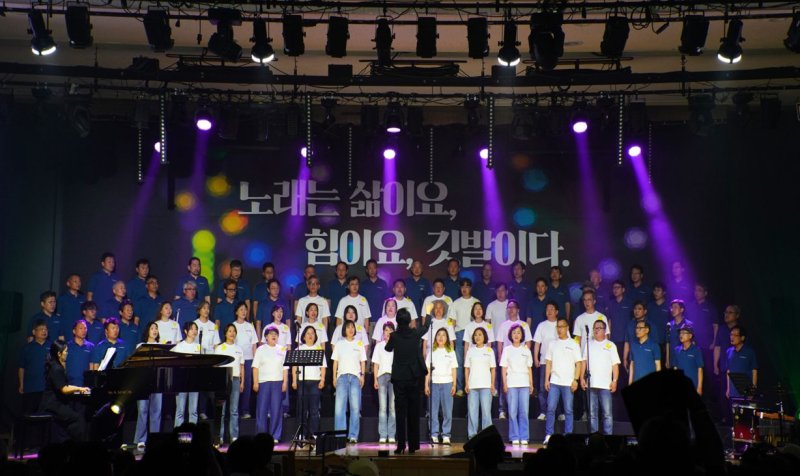
【Financial News Jeju = Reporter Yong-bok Jeong】 A nationwide performance that explores the memories of Jeju 4·3 through music and community art will take place in Jeju. More than 400 members of 13 citizens’ choirs from across the country will gather at Jeju 4·3 Peace Park and Gwandeokjeong Hall to sing “We Do Not Part” together. The performance will be filmed and shared nationwide.
According to the Jeju 4·3 Peace Foundation on the 4th, the 10th National Democratic Citizens’ Choral Festival in Jeju will be held on the 19th and 20th at the Jeju Culture and Art Center, the site of the Memorial of Names at Jeju 4·3 Peace Park, and around Gwandeokjeong Hall. The event is hosted by Jeju Special Self-Governing Province and jointly organized by the Jeju 4·3 Peace Foundation and the Organizing Committee of the National Democratic Citizens’ Choral Festival.
This year’s festival subtitle is “We Do Not Part.” The organizers received direct approval from author Han Kang, who wrote a novel of the same title about Jeju 4·3, to use the title. Choir members from across the country will perform “We Do Not Part” in a mass choir, and the performance will be made into a music video and distributed online.
The event will bring together more than 400 members of 13 citizens’ choirs from across the country. Participants include the Jeju 4·3 Peace Choir; Seoul’s Lee So-sun Choir, June 15 Citizens’ Choir, and That Day Choir; Incheon’s 5·3 Choir; North Chungcheong Province’s Ddookkeobi Ensemble Choir; the Daejeon–Daegu Peace Choir; Busan’s Park Jong-chul Choir; Ulsan’s The Resonance Choir; South Gyeongsang Province’s Gaeddongi Children’s Arts Troupe; North Jeolla Province’s Nokdu Flower Citizens’ Choir; and Gwangju’s 1987 Choir. The Seogwipo Middle School Choir will also make a guest appearance.
The main performance at the Jeju Culture and Art Center will begin at 4 p.m. on the 19th. Organizers expect about 1,000 people to attend the indoor and outdoor events combined. Admission is free.
The performance is structured to expand from the memories of Jeju 4·3 toward the meaning of democracy and solidarity.
Part 1, “The Island of Memory,” is organized around the theme “From the Memory of Jeju 4·3 to the Memory of Democracy.” In Part 2, “Those Who Remember,” citizens’ choirs from across the country will perform songs conveying the history of their respective regions and messages of democracy and peace.
The Jeju 4·3 Peace Choir will sing “Beyond Memory” and “Neobeunsungi,” while Incheon’s 5·3 Choir will perform “In the Distant Future” and “Hallasan.” Busan’s Park Jong-chul Choir, Gwangju’s 1987 Choir, and North Jeolla Province’s Nokdu Flower Citizens’ Choir will also express their regions’ historical memories through music.
The finale is titled “Those Who Do Not Part.” All participants will sing “The Southern Land That Never Sleeps,” written and composed by An Chi-hwan, along with the mass-choir song “We Do Not Part,” which shares the title of this year’s festival subtitle.
The mass choir will not end inside the concert hall. More than 400 choir members will sing “We Do Not Part” at the Memorial of Names at Jeju 4·3 Peace Park and at Gwandeokjeong Hall. Participants ranging from children to Jeju 4·3 survivors’ families will join across generations. The performances will be filmed, made into a music video, and released online through YouTube and other platforms.
The Memorial of Names is a site inscribed with the names of victims of Jeju 4·3. Gwandeokjeong Hall is also an important site in Jeju’s modern history after liberation. For that reason, the choral performances at the two locations carry symbolism beyond that of an ordinary concert.
This year’s festival in Jeju is also significant in the 10-year history of the National Democratic Citizens’ Choral Festival.
The festival held its first event in Seoul in 2017, based on the National Council of Organizations Commemorating and Succeeding the Democratization Movement. It has continued every year, traveling to cities across the country. Even during the COVID-19 pandemic, the organizers kept the festival going through online and outdoor performances.
The festival began with eight organizations at its first event, but the number of participating choirs later grew to more than 12. New citizens’ choirs were also formed through the festival. Over the course of 10 editions, more than 200 songs have been created or arranged, including 10 commissioned works.
The Jeju festival is drawing attention because it goes beyond explaining the historical facts of Jeju 4·3. It allows citizens from other regions to share those memories through music.
The Jeju 4·3 Peace Foundation explained that previous experiences related to Jeju 4·3 had focused on understanding its history of suffering and resistance. This festival, by contrast, focuses on broadening empathy and respect for Jeju 4·3 and the people of Jeju through the artistic experience of choral singing.
Citizens’ choirs that have sung about the histories of democracy and human rights in regions across the country are gathering in Jeju. The central question of this 10th festival is whether Jeju 4·3 can be shared not merely as Jeju’s own past, but as part of the memory of modern Korean history and as an issue of peace and human rights.
[email protected] Yong-bok Jeong Reporter