“The Passenger Notices the Ride Quality First” — Volvo’s Electric Flagship EX90 [Kkittongchan Mobility]
- Input
- 2026-09-05 05:59:00
- Updated
- 2026-09-05 05:59:00
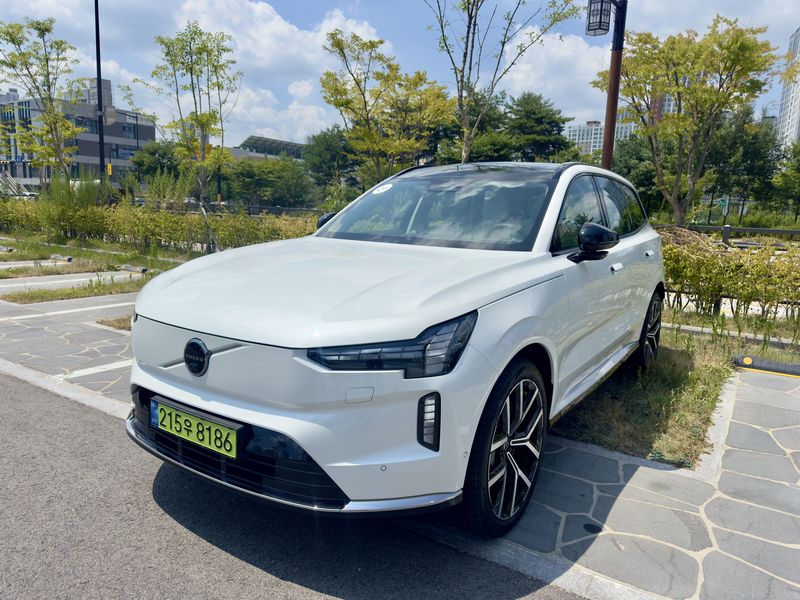
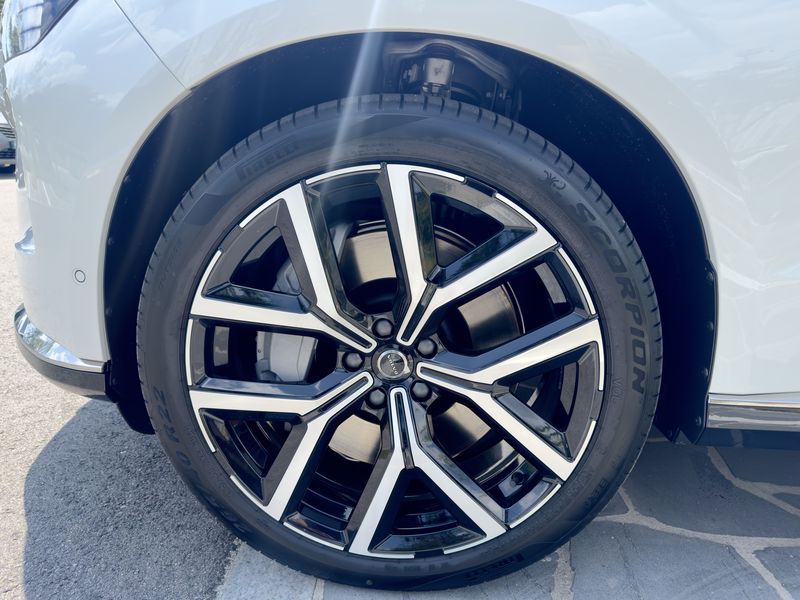
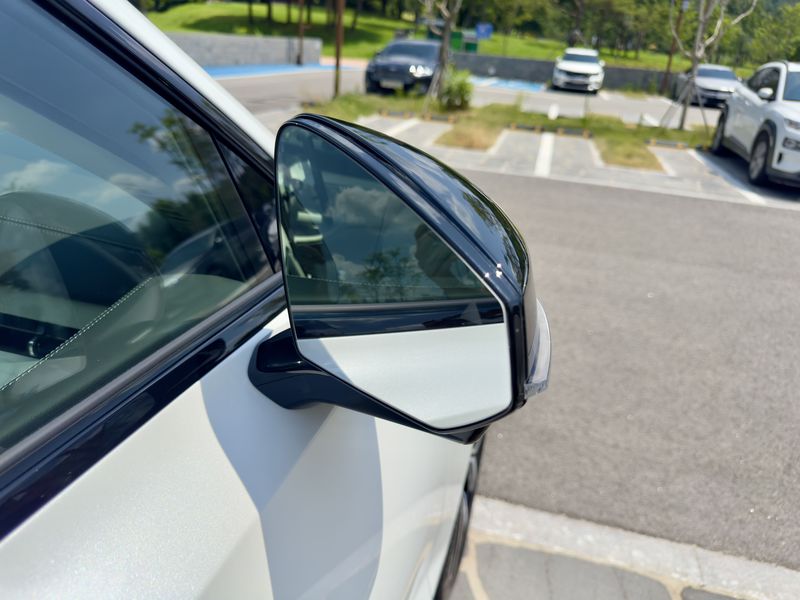
Early last month, I drove approximately 64 kilometers round trip from Dongdaemun Design Plaza (DDP) in central Seoul to Uijeongbu, Gyeonggi Province. The 32-kilometer one-way trip took an hour. Two people shared the driving, switching seats, and most of the route was congested urban roads. This was not a route for testing performance at high speed, but for seeing what remained while traveling slowly. The test vehicle was the Twin Motor Ultra trim.
The Volvo EX90 is the vehicle Volvo Cars has placed at the forefront of its transition to electrification. It was named Luxury Car of the Year at the 2025 World Car Awards and entered the Korean market at a lower price than the Volvo XC90 T8. Its starting price was set about 10 million won below that of the brand’s existing flagship SUV. The strategy is clear: the electric flagship is being positioned not as a higher-tier model, but as an alternative.
The powertrain is a twin-motor all-wheel-drive system. It produces a maximum 456 horsepower (335 kW) and 68.4 kgf·m of torque. It accelerates from zero to 100 km/h in 5.5 seconds. The battery is a 106-kWh nickel-cobalt-manganese (NCM) unit, with a maximum driving range of 625 kilometers on a single charge under WLTP standards.
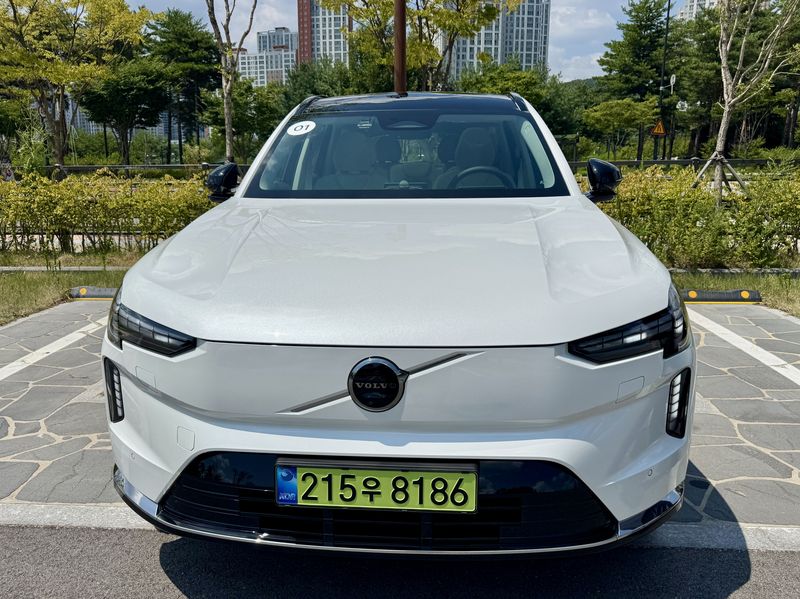
The first thing that catches the eye is the exterior. The vehicle measures 5,040 mm in length, 1,965 mm in width, and 1,740 mm in height, with a 2,985-mm wheelbase. Despite its body exceeding five meters, it does not look oversized on the road. The sides are defined by surfaces rather than lines, and the door handles sit flush with the body, following the same design direction. At the front are HD pixel headlights included in the Ultra trim. Volvo Cars explains that the lamps create a virtually unrestricted range of illumination.
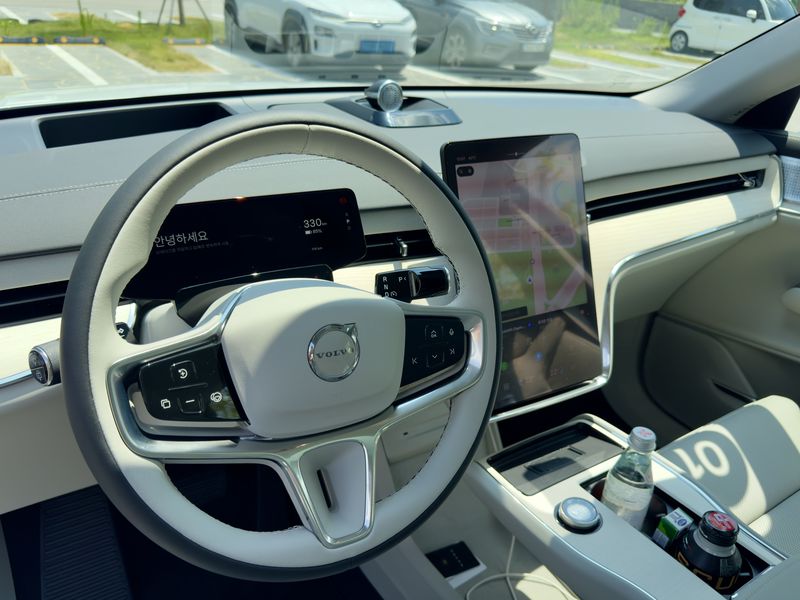
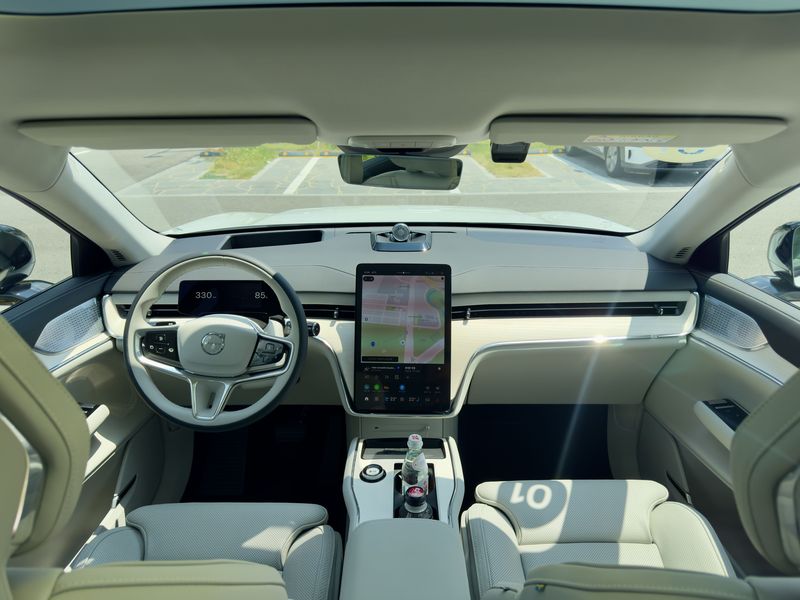
Pulling the handle and getting inside cuts away a layer of outside noise. The wood panel stretching across the dashboard incorporates SunLike LEDs from Korean company Seoul Semiconductor. The lighting produces a glow close to natural light. Around dusk, it looks less like it is illuminating the cabin and more like it is bringing the remaining daylight indoors. The wood is certified by the Forest Stewardship Council (FSC). The seats are upholstered in Nappa leather. Rather than enveloping the body softly, they provide firm, broad support. An electrochromic glass roof covers the ceiling, and its transparency changes at the press of a button.
The seating configuration can be chosen as either six or seven seats, a rare option among premium electric SUVs. Cargo capacity is 324 liters, while the front trunk offers 46 liters. Folding all the rear seats expands the total to more than 2,000 liters.
The 456 horsepower experienced from the driver’s seat did not feel hurried. The depth and speed of the accelerator input matched the response. Instead of the instant surge typical of electric vehicles, the car quietly followed in proportion to how far the pedal was pressed. Even with repeated acceleration and release in traffic, the vehicle did not nod back and forth. The intervention of regenerative braking was also barely noticeable. Top speed is limited to 180 km/h.
Safety is the area Volvo Cars emphasizes most. The Volvo EX90 is equipped with five cameras, five radars, and 12 ultrasonic sensors. However, the LiDAR announced during development was not included in the final specifications. Volvo Cars maintains that safety is not completed by any single sensor. Its proprietary core computing system, Hugin Core, integrates and processes sensor data, while software updates continuously refine the algorithms. In other words, one type of hardware has been omitted and replaced with software. What this approach has actually replaced will only become clear over time.
The body and battery have also been reinforced physically. Torsional rigidity is 50% higher than in the existing Volvo XC90, while energy absorption in a collision has increased by 20%. If heat builds up inside the battery pack and changes the pressure, the system detects it, and pyrofuses positioned at the front and rear cut off the high-voltage connection. An interior occupant-detection system is also included to alert occupants if a child or pet is left inside the vehicle.
There are also some points to consider. Most controls are housed in the 14.5-inch center display. Even lowering the climate-control temperature by one step requires going through the screen. Because the hand cannot memorize the location of a physical control, changing settings while driving requires the driver to shift their gaze.
Prices start at 106.2 million won for the seven-seat Twin Motor Plus. The tested Twin Motor Ultra costs 116.2 million won with seven seats and 118.2 million won with six. The Twin Motor Performance Ultra costs 121.2 million won with seven seats and 123.2 million won with six. The warranty covers five years or 100,000 kilometers, while the high-voltage battery is covered for eight years or 160,000 kilometers. Over-the-air updates are provided free of charge for 15 years. With its 800-volt system, the vehicle can charge from 10% to 80% in approximately 22 minutes using a 350-kW charger.
The memory of driving a good car usually stays with the driver. The Volvo EX90 chooses to pass that memory to the passenger seat. Its 456 horsepower is sufficient, but the car does not try to show off its power, and its body, which exceeds five meters, does not raise its voice on the road. Throughout the test route, what the vehicle did was gradually remove the things coming in from outside. The passenger notices the value of that more quickly than the person holding the steering wheel.
[email protected] Kim Dong-chan Reporter