256 People Missing at Sea Since 2021; Two Out of Three Still Unaccounted For
- Input
- 2026-09-04 08:59:03
- Updated
- 2026-09-04 08:59:03
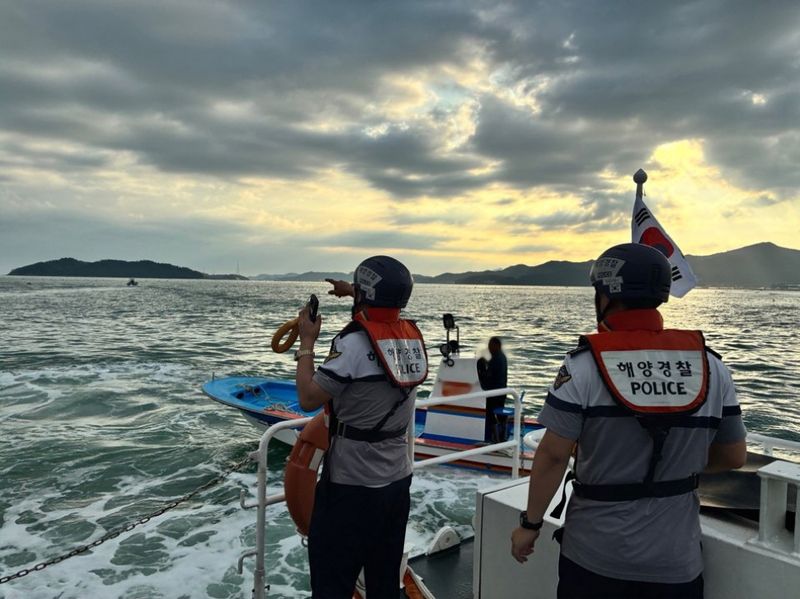
【Financial News, Jeju = Jung Yong-bok】 Of the 256 people who went missing at sea or along the coast from 2021 through June this year, 165 remain unaccounted for. That represents 64.5% of the total—roughly two out of every three people reported missing at sea.
Following the recent revelation of a case in Jeju Province in which a missing-person report was falsely closed, multiple people also went missing after a tugboat capsized off Busan’s Oryukdo Islets. Calls are growing to review not only the initial search response but also the long-term management system for people missing at sea, as well as on land.
Data titled “Maritime and Coastal Missing-Person Cases, 2021–2026,” submitted by the KCG to the office of Moon Dae-rim of the Democratic Party of Korea, showed on the 4th that 256 missing-person cases were reported during the period, involving 256 people.
Of these, the bodies of 91 people were found and the cases were reclassified as deaths, accounting for 35.5%. The remaining 165 people, or 64.5%, have not been found; their cases are either being managed under a suspension of investigation before booking as a suspect or remain under investigation.
Even those who were found often took considerable time to return to their families. The average time from disappearance to discovery in cases where the person was found deceased was approximately 49.8 days. The longest case took 679 days.
The number of missing people was 40 in 2021, 40 in 2022, and 41 in 2023, before rising sharply to 69 in 2024. There were 42 cases last year and 24 through June this year.
The number of missing people was highest in 2024 during the period examined. Of the 69 people who went missing that year, 22 were found and 47 remained unaccounted for.
Vessel accidents accounted for nearly half of the known causes of disappearance. A total of 123 people went missing in vessel accidents, including capsizings, representing 48.0% of the total. Cases in which the cause could not be determined, such as people disappearing while sailing, numbered 93, or 36.3%. There were 39 cases, or 15.2%, involving people jumping from vessels or bridges, while one person went missing in connection with a murder.
The fact that more than one in three disappearances had no identified cause is a point that warrants another review of the investigation and management systems for cases in which people remain unaccounted for over the long term.
The response to maritime disappearances also differs from that for people missing on land. When a missing-person report is received, the KCG conducts a maritime search and registers the case in the Korea Information System of Criminal Justice Services (KICS). If the person cannot be found, the authorities collect DNA from family members and manage the case under a “suspension of investigation before booking as a suspect” until the person is found.
The KCG maintains that, because of this structure, cases are not arbitrarily closed at the discretion of a single official responsible for missing-person cases. This distinguishes the system from the recently exposed case in Jeju Province involving the false closure of a missing-person report.
The speed of the initial search is particularly important in maritime accidents. Currents and wind can quickly expand the area in which a missing person may drift. As time passes, the search area grows, increasing the burden of deploying personnel, vessels, and aircraft.
The recent tugboat accident off Busan’s Oryukdo Islets illustrates this risk. On the 2nd, a tugboat carrying eight people capsized and sank in waters near the islets. One crew member was rescued, one died, and six remain missing. The KCG and the Navy are continuing the search with vessels, aircraft, and divers.
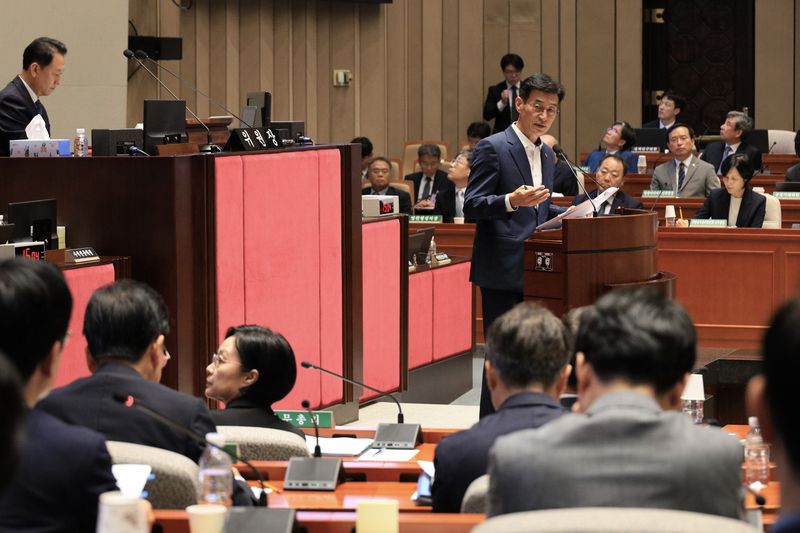
Based on the data, Moon plans to review the search and rescue system during this year’s National Assembly audit, from the initial response to maritime disappearances through the long-term management of people who remain unaccounted for.
The review is expected to cover the availability of search equipment and specialized personnel, the management of cases involving people missing for extended periods, information sharing among agencies, and the criteria for ending or resuming searches.
Moon Dae-rim said, “Because a rapid search and rescue operation immediately after a maritime disappearance can determine whether someone lives or dies, not a single moment can be wasted.” He added, “I will thoroughly examine during the National Assembly audit what needs to be improved in search equipment and personnel, as well as in the rescue system.”
[email protected] Jung Yong-bok Reporter