"I’m heading home now"—and the house starts moving: Inside LG’s AI home at IFA 2026
- Input
- 2026-09-04 10:00:00
- Updated
- 2026-09-04 10:00:00
This is the future of the AI home showcased at the LG Electronics booth at IFA 2026, Europe’s largest home-appliance exhibition, which opened in Berlin, Germany, on the 4th local time. This year, LG Electronics put its “AI home” front and center. The system goes beyond simply understanding commands and turning appliances on and off: It remembers users’ schedules and preferences, proactively suggests what needs to be done, and carries out those tasks.
An AI butler that acts first
LG ThinQ Claw, which LG Electronics unveiled for the first time at this year’s IFA, is a service that enhances the execution-oriented AI agent functions of the AI home hub LG ThinQ On. Rather than merely answering users’ inquiries, it connects to various devices and services with the user’s approval and performs tasks in the real world.
Even the way users call on the AI has become easier. Previously, users had to issue voice commands to LG ThinQ On installed inside the home. With LG ThinQ Claw, they can communicate with their home from outside through familiar messaging services such as KakaoTalk or Telegram.
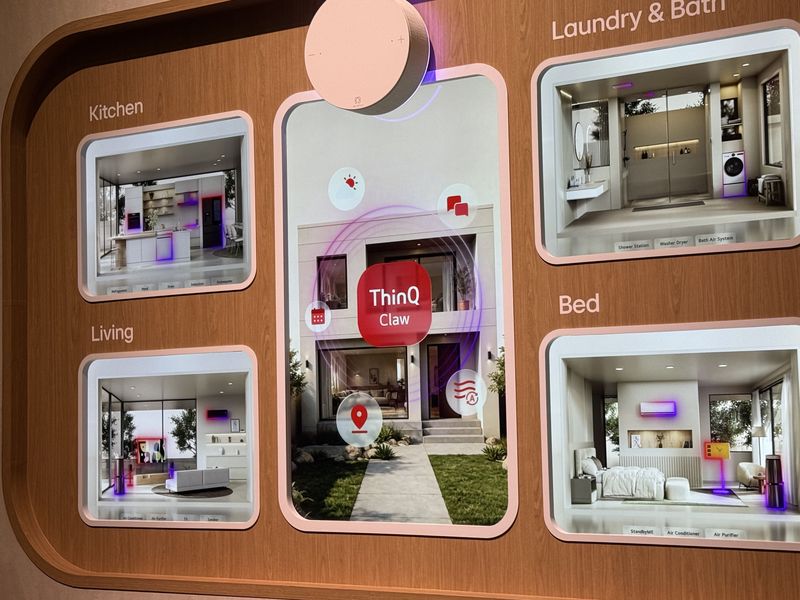
Simply sending the message "I’m heading home now" allows LG ThinQ Claw to determine the user’s current location and estimated arrival time. It also remembers the user’s preferred indoor temperature from previous conversations and suggests turning on the air conditioner and air purifier in advance. If the user agrees, it directly operates the connected appliances.
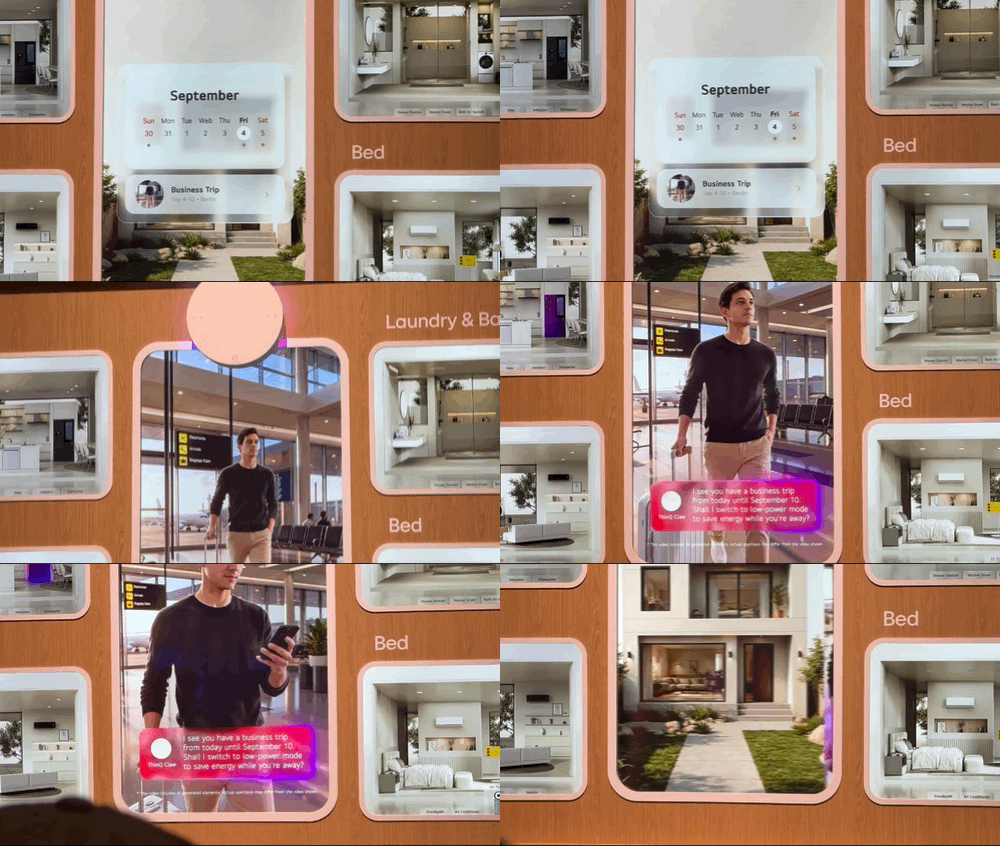
It also takes care of schedules automatically. If a four-day family trip to Vietnam is registered in Google Calendar, LG ThinQ Claw checks the itinerary and asks first, "While you’re away, shall I put the appliances into energy-saving mode and temporarily pause the automations?" Once approved, it turns off the lights and TV and even activates a vacant-home protection mode.
It also uses information remembered about the user. If the user uploads a grocery receipt or a photo of food to the messenger, the system recognizes the contents and, taking into account family members’ allergies remembered from previous conversations, provides information about ingredients that require caution or suitable recipes. During a child’s school vacation, it can also proactively recommend meal plans that reflect the child’s allergy information.
LG Electronics aims to begin a beta test of LG ThinQ Claw in South Korea as early as this month and launch it within the year. It is also considering expanding the service to overseas markets, including the United States and Europe.
An “AI home” on display instead of individual products
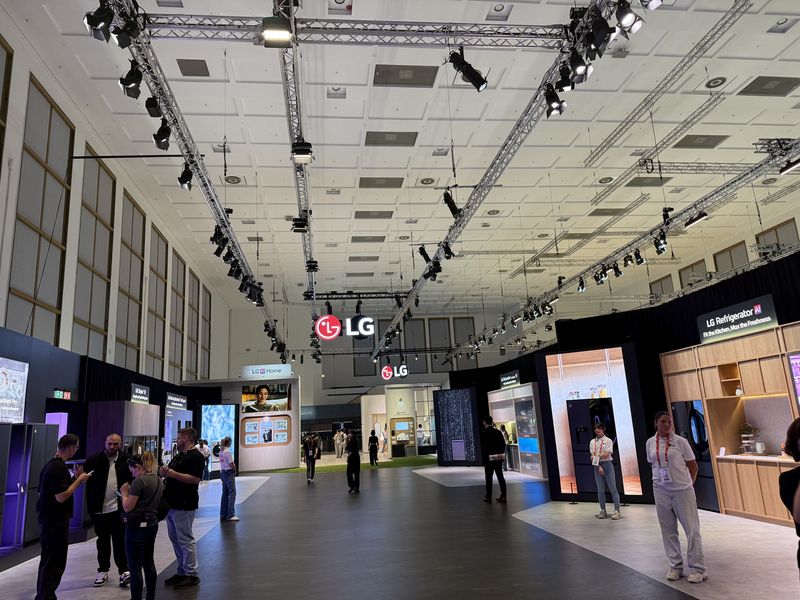
To present this AI home vision, LG Electronics centered this year’s exhibition on an “AI home solution” that connects multiple products and services into one, rather than focusing on competition over the features of individual appliances.
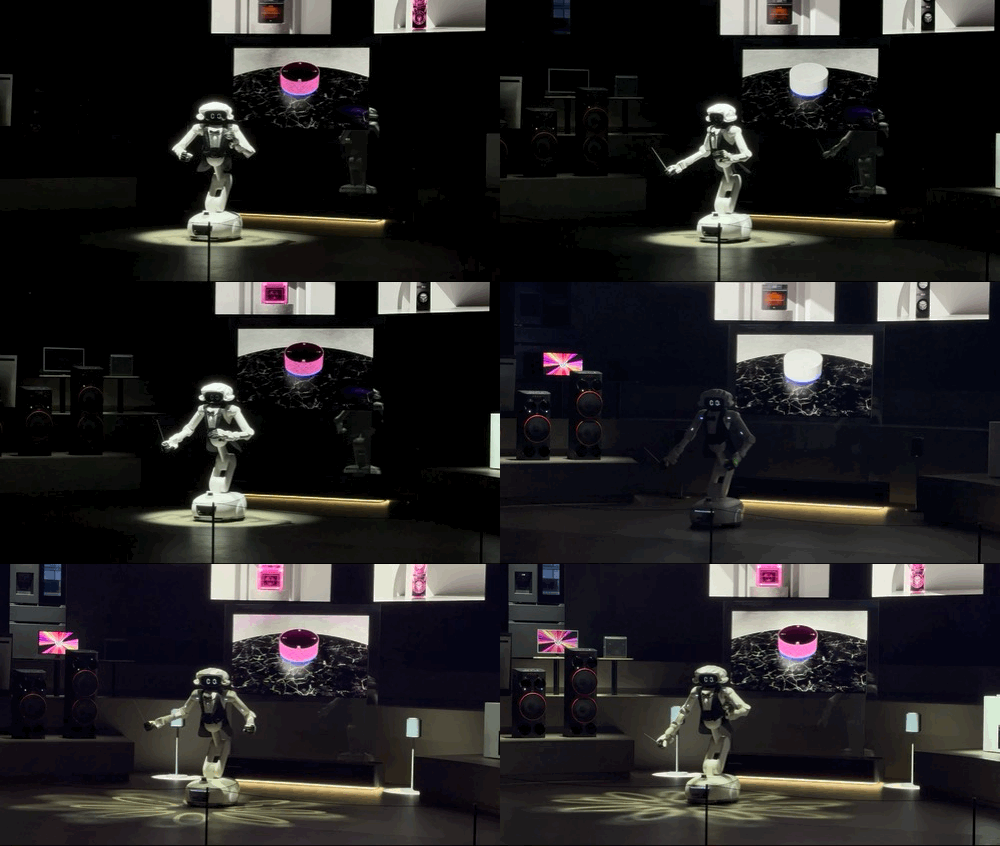
At the booth entrance, the home robot LG CLOiD welcomed visitors while conducting an “AI orchestra” made up of home appliances. A total of 31 products—including refrigerators and washing machines, as well as OLED TVs, LG StanbyME displays, laptops, and air conditioners—were arranged in a semicircle. The display represented various appliances in a home being coordinated around AI, much like a chamber orchestra.
Connectivity was also emphasized in the simulated living spaces. Instead of lining up appliances, LG Electronics recreated entire areas, including a living room, kitchen, bathroom, and dressing room. The aim was to show LG ThinQ On and LG ThinQ Claw connecting the appliances in each space and operating them according to the user’s circumstances.
The range of products on display, which last year focused on home appliances such as refrigerators, washing machines, and dishwashers, expanded this year to include TVs, monitors, and heating, ventilation, and air-conditioning (HVAC) products. The strategy is to shift the focus from selling individual products in the home to an AI home business encompassing entire spaces.
LG Electronics also actively positioned the AI home in the business-to-business (B2B) sector. At the booth, an air-source heat pump (AWHP) system supplying heating, cooling, and hot water was connected to the European AI home platform Homi to demonstrate energy-flow management. LG ThinQ Pro, aimed at construction companies and other businesses, allows managers to check the operating status of appliances, energy consumption, and malfunctions in individual households from a control room without visiting each home.
In addition, LG Electronics designated 46% of the entire booth as space for meetings with business partners. The company’s plan is to turn the AI home into a business opportunity targeting corporate customers, including construction companies and builders, rather than limiting it to technology that consumers can experience.
[email protected] Subin Lim Reporter