Vice President Vance Says Rates Must Fall to Ease Housing Costs, Publicly Pressuring the Fed
- Input
- 2026-09-04 04:45:10
- Updated
- 2026-09-04 04:45:10
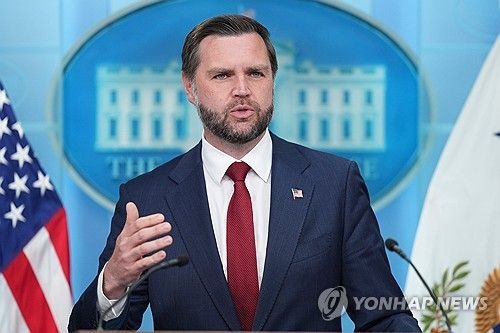
At a White House briefing on the 3rd (local time), Vice President JD Vance said, "We think the Fed should lower interest rates." Considering recent U.S. inflation data, he described a rate cut as "an appropriate and responsible response" and added, "We are doing a lot to keep rates low, but it would be nice if we could get some help from the Fed as well."
Vice President JD Vance directly cited housing as a reason rates need to come down. Asked about the Trump administration’s position on the recently volatile U.S. bond market, he said, "Clearly, the president cares a great deal about interest rates," adding, "One of the main reasons is that he wants Americans to be able to buy homes." He emphasized, "When interest rates rise, borrowing costs rise as well."
High interest rates are indeed placing a significant burden on the U.S. housing market. Although the policy rate does not directly determine mortgage rates, it affects home-loan rates through Treasury yields and financial markets more broadly. The 30-year fixed mortgage rate guaranteed by the Department of Veterans Affairs (VA) stood at 6.40% that day.
The problem is that the Trump administration’s demand for rate cuts conflicts with the monetary policy direction of Chair Kevin Warsh, whom President Trump nominated.
In a speech last week in Jackson Hole, Wyoming, Chair Kevin Warsh stressed his commitment to bringing inflation down to the Fed’s 2% target. He said, "Short-term interest rates are the most important policy tool for achieving the Fed’s dual mandate."
The remarks have been interpreted as meaning that rates could be raised further if inflation proves difficult to contain, prompting market speculation that a rate hike could come as early as September.
Opinions are also divided within the Fed.
Federal Reserve Governor Michael S. Barr said on the 1st that he was prepared to support a rate hike if inflation remains elevated. By contrast, Federal Reserve Governor Christopher J. Waller said that day that he was leaning toward keeping rates at their current level at the September FOMC meeting. He said he would support a hold as long as upcoming inflation data do not show an unexpected increase.
As a result, the Federal Open Market Committee (FOMC) meeting scheduled for the 15th and 16th is expected to be more uncertain than ever. Market forecasts are also closely divided over the possibility of a rate hike.
[email protected] Reporter Lee Byung-chul Reporter