Jeju 4·3 Healing System Set for Integration Two Years and Two Months After National Trauma Center Launch
- Input
- 2026-09-04 04:34:17
- Updated
- 2026-09-04 04:34:17
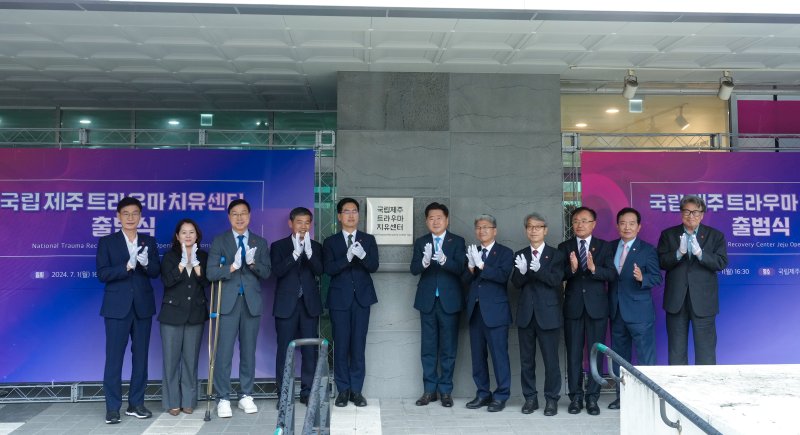
【Financial News Jeju = Reporter Yong-bok Jeong】 The National Center for Healing Trauma from State Violence, established to provide state-led healing for trauma suffered by victims of state violence, including those affected by the Jeju 4·3 uprising, is set to undergo organizational restructuring two years and two months after its launch. With the government deciding to merge the center’s legal entity into the Korea Democracy Foundation (KDF), how healing services for Jeju 4·3 victims will continue—with what organization and budget—has emerged as a new issue.
In particular, a legal amendment took effect in January this year, replacing the existing “branch offices” with “regional hub healing centers” to reflect the distinct characteristics of state violence by region and incident. Since the restructuring plan to merge the operating entity itself was announced just eight months after the regional healing foundation was strengthened, how to define the Jeju Center’s status and its specialized healing functions for Jeju 4·3 has become especially important.
On the 3rd, the government announced its “Plan for Reforming Public Institution Functions” after deliberation and approval by the 11th Public Institutions Management Committee. Under the restructuring, titled “Public Institutions DIET 2026,” a total of 109 institutions will be reduced, integrated or reorganized, including 15 through strategic structural reforms, 11 through the consolidation of similar or overlapping functions, and 83 through the integration of subsidiaries and small institutions.
Under the Ministry of the Interior and Safety (MOIS), the National Center for Healing Trauma from State Violence will be integrated into the Korea Democracy Foundation. According to the government, the National Center has an authorized staff of 25, while the Korea Democracy Foundation has 72 employees.
The National Center for Healing Trauma from State Violence is a separate legal entity established to help victims of state violence and their families recover from the aftereffects of trauma and psychological suffering and return to their daily lives.
The pilot program for healing trauma from state violence in Gwangju and Jeju was converted into a national program, and the Gwangju headquarters and the Jeju Center officially opened simultaneously on July 1, 2024. In Jeju, the launch was significant because it was the first time a system was institutionalized in which the state assumed responsibility for healing the psychological wounds of Jeju 4·3 victims and bereaved families.
A legal amendment aimed at further strengthening regional healing infrastructure also took effect this year. The Act on the Establishment and Operation of the National Center for Healing Trauma from State Violence, amended in 2025, changed the existing “branch offices” into “regional hub healing centers” effective January 1 this year.
The aim is to establish a healing system that reflects the distinct characteristics of state violence in each region and incident. The law also stipulates that the number of people requiring healing services in the region, accessibility, and the unique characteristics of community trauma must be considered when regional hub healing centers are established, designated and operated.
This was a particularly important change for Jeju 4·3. In its work plan for this year, the National Center said it would go beyond examining the impact of Jeju 4·3 on first-generation survivors. It also planned to analyze the effects on the second generation and develop psychological healing and support measures specialized for Jeju 4·3.
There is currently no basis for concluding that these functions will disappear as a result of the government’s restructuring. The government’s confirmed plan is to merge the separate legal entity known as the National Center for Healing Trauma from State Violence into the Korea Democracy Foundation.
The government’s functional reform plan did not provide details on the Jeju Center’s future form and name, its operating body, staffing and budget, or how Jeju 4·3-specific programs will be arranged after the integration. This is why the institution-by-institution integration roadmap to be prepared by the Ministry of the Interior and Safety will be important.
A legal amendment will also be necessary. The current Trauma Healing Center Act defines the National Center for Healing Trauma from State Violence as a separate legal entity. Integrating it into the Korea Democracy Foundation, a different legal entity, will require the National Assembly to revise the relevant laws.
The government has also stated that it will prepare functional reform roadmaps for each ministry and consult with the National Assembly on tasks requiring the enactment or amendment of laws. The specific timing of the integration has not yet been finalized.
The government has set out a principle of employment stability for staff. During the merger or abolition of public institutions, it plans to guarantee employment succession for employees other than executives and prevent existing pay levels from being reduced because of the integration. Depending on each institution’s circumstances, temporary allowances and welfare support may also be considered.
For Jeju, the more important issue is continuity of healing services. The outcome will directly affect users: whether specialists who have counseled Jeju 4·3 victims and bereaved families remain in place, whether expertise in the history of Jeju 4·3 and the harm suffered by its communities continues in the new organization, and whether the Jeju Center can secure independent programs and funding.
How the functions of the Korea Democracy Foundation and the National Center for Healing Trauma from State Violence will be combined has also yet to be specified.
The Korea Democracy Foundation is responsible for commemorating and carrying forward the democracy movement, as well as conducting investigations and research and providing democracy education. The Trauma Healing Center’s core duties are counseling, treatment and rehabilitation for victims of state violence, along with community healing.
Although the two organizations overlap in the policy areas of the past and human rights, record-keeping and commemorative projects differ in nature from specialized psychological healing. Even after the organizational integration, safeguards will be needed to preserve expertise in trauma caused by state violence as a distinct function.
Since the government began implementing a regional hub healing system this year that takes regional and incident-specific characteristics into account, the key question in Jeju is whether the intent of the law can be maintained throughout the integration process.
Jeju 4·3 was an event that left long-term effects not only through mass killings and the suffering of survivors, but also on families and local communities. A follow-up design is needed to ensure that a Jeju-specific healing system addressing state violence at the generational and community levels is not weakened in the process of organizational streamlining.
The government has said that, when regional interests are involved in the functional reform process, it will communicate with local governments and other relevant parties and prepare detailed implementation plans for each institution.
Although the legal entity is entering the integration process two years and two months after its launch, the state’s responsibility for healing Jeju 4·3 victims must not be reduced. How the government’s future restructuring plan guarantees the Jeju Center’s organization, budget, staff and specialized programs is therefore expected to become a key test of the plan.
[email protected] Yong-bok Jeong Reporter