Could a ‘Neutral Straw’ Replace mRNA Carriers That ‘Melt’ Cell Membranes Like Soap? [Unboxing the Lab]
- Input
- 2026-09-04 05:56:00
- Updated
- 2026-09-04 05:56:00
Do you remember the excitement of opening a delivery box? Even at this very moment, university laboratories are producing remarkable discoveries that could change our lives. They are simply wrapped in thick layers of packaging called “research papers.” In “Unboxing the Lab,” we will skip the complicated formulas and theories and bring you only the key findings you want to know. So, shall we open the box? Today’s featured discovery is this study.
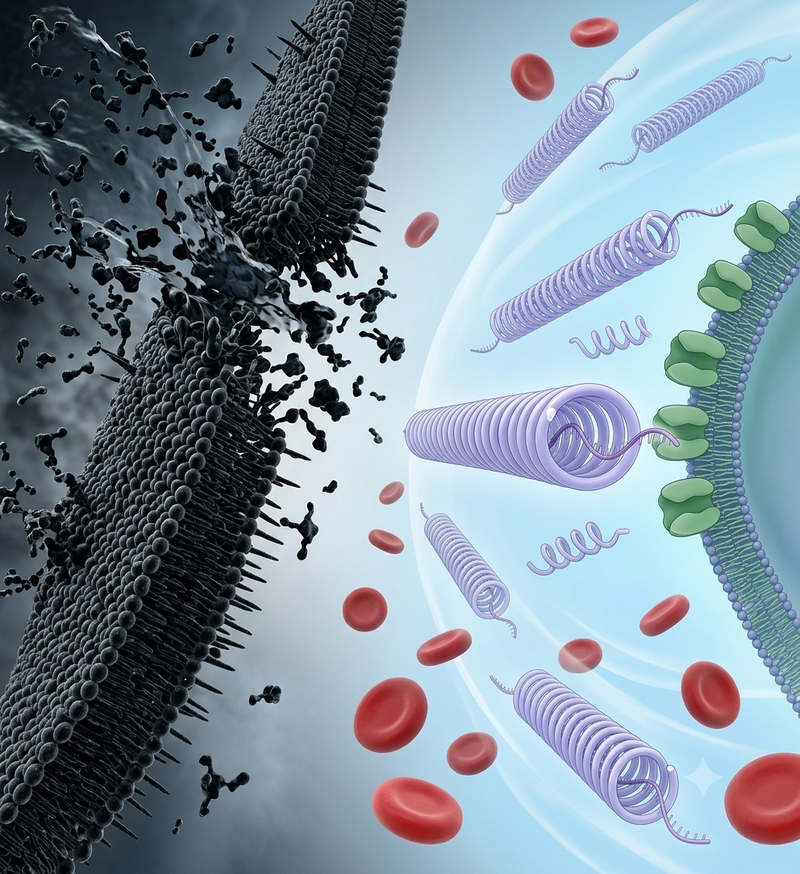
The achievement could be widely used to develop safe, next-generation mRNA vaccines and treatments for intractable diseases with fewer side effects. mRNA technology is expanding beyond infectious-disease vaccines into areas such as cancer treatments. However, conventional carriers can damage cell membranes in the body or trigger inflammatory responses. The newly developed neutral carrier dramatically reduces these side effects, providing a strong foundation for mRNA medicines that patients can receive repeatedly with confidence.
■Choosing ‘Hydrogen Bonds’ Over Electrical Charge
Conventional carriers use positively charged (+) lipids or polymers to wrap negatively charged (−) mRNA. The principle is similar to the attraction between the north and south poles of a magnet. However, these positively charged materials can act like soap or detergent, disrupting and rupturing cell membranes and causing toxicity.
Instead of relying on electrostatic attraction, the research team used different forces. It harnessed hydrophobicity—the tendency of oil-like substances to avoid water—and hydrogen bonds, through which molecules join together. The team precisely designed ENSP, a neutral material with no electrical charge, using peptides, the basic building blocks of proteins. Glucose was attached to the outside of the material. This strategy takes advantage of glucose transporters on the cell surface, prompting cells to draw in the nanocarrier on their own without recognizing it as a foreign substance, as if it were a nutrient.
Through repeated design improvements, the team increased the material’s condensation performance by 4,300 times compared with the initial model. The improved neutral peptide tightly wraps mRNA to form nanotubes with a diameter of 11 nanometers (nm, one-billionth of a meter). They are extremely fine, straw-shaped structures measuring only about one ten-thousandth the thickness of a human hair. The nanotubes also serve as a sturdy shield, protecting mRNA from enzymes that break it down in the body. The team successfully wrapped not only fluorescent-protein mRNA but also another type of mRNA, luciferase mRNA, confirming the technology’s versatility.
■Neither Cells nor Blood Reacted Adversely
The team also demonstrated the carrier’s delivery performance and safety. In cell experiments, about 85% of cells absorbed the nanotubes without rejecting them and successfully produced the target protein. Notably, the nanotubes’ surface charge remained close to neutral, changing from −18.4 mV to +1.7 mV. In other words, the nanotubes entered cells effectively without the strong positive charge that causes toxicity. In animal experiments, mRNA normally produced proteins at the injection site after subcutaneous administration and in the liver after intravascular injection.
The carrier showed outstanding safety in blood-toxicity tests. When mice received a conventional lipid nanoparticle (LNP) carrier intravenously, the proportion of morphologically normal red blood cells fell to 76.0% within 30 minutes. Noticeable deformation occurred, with red blood cells becoming distorted or developing pointed surfaces. By contrast, the proportion of normal red blood cells reached 91.9% after administration of the team’s neutral nanotubes. This was nearly the same as the 93.5% observed in normal blood without any drug, indicating a high level of safety.
Another notable measure was the hematocrit, which represents the total volume of red blood cells in the blood. Both the conventional carrier and the neutral nanotubes remained within the normal range of 45–60% over 24 hours. This means that toxicity may not be detected by measuring the apparent blood volume alone; damage can be identified only by examining cell shapes closely under a microscope. The study therefore presented not only a new type of safe carrier but also an evaluation method capable of detecting hidden toxicity in carriers with much greater precision.
Meanwhile, the findings were published in the multidisciplinary international journal Nature Communications.
[email protected] Man-ki Kim Reporter