Jeju Volcanic Rocks and 496 Hours of Sound: 16th Gwangju Biennale Opens
- Input
- 2026-09-04 00:00:00
- Updated
- 2026-09-04 00:00:00
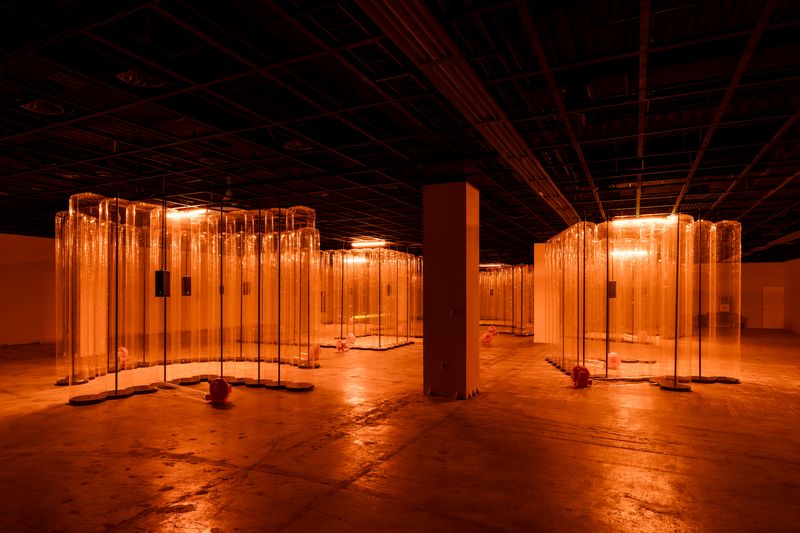
This exhibition goes beyond simply displaying visual works. Its appearance changes according to time and space through daily performances, videos projected on the exterior walls, and sound installations accessible without an admission ticket. Paintings created by the mothers of May Mothers’ House and artist Joo Hong, along with works made from objects donated by citizens, shed light on the region’s history and everyday solidarity.■Condensed to 43 Artists and Teams ... “Density” Over ScaleAccording to the Gwangju Biennale Foundation on the 4th, the exhibition’s title, “You Must Change Your Life,” comes from the final line of Rainer Maria Rilke’s poem “Archaic Torso of Apollo.” Like the speaker who undergoes a shift in perception after encountering a broken ancient sculpture, the exhibition examines the possibility of change—from individual lives to society, history, and the universe.
Artistic Director Ho Tzu Nyen jointly planned the exhibition with curators Gahee Park, Brian Kuan Wood, and KyungHwa Choi. The route begins in Exhibition Room 1 with “Molecules and Me,” then continues through “Bodies and Relations,” “Landscapes and Learning,” “The Universe and Change,” and “Air and Utterance,” guiding visitors from the microscopic world toward the self, the community, and the outside world.
The previous, 15th edition featured 72 artists from 30 countries. Its main exhibition was held at the Gwangju Biennale Exhibition Hall and eight locations in Yangnim-dong. This year, the number of participants has been reduced to 43 artists and teams, while the main exhibition has been consolidated into a single exhibition hall. By presenting multiple works by individual artists, the organizers chose the “density” of the work over expanding its scale.
Ho Tzu Nyen said, “This exhibition is not one that expands spatially. It is a journey toward a deeper inner world, and that journey ultimately leads to the most distant outside world.”
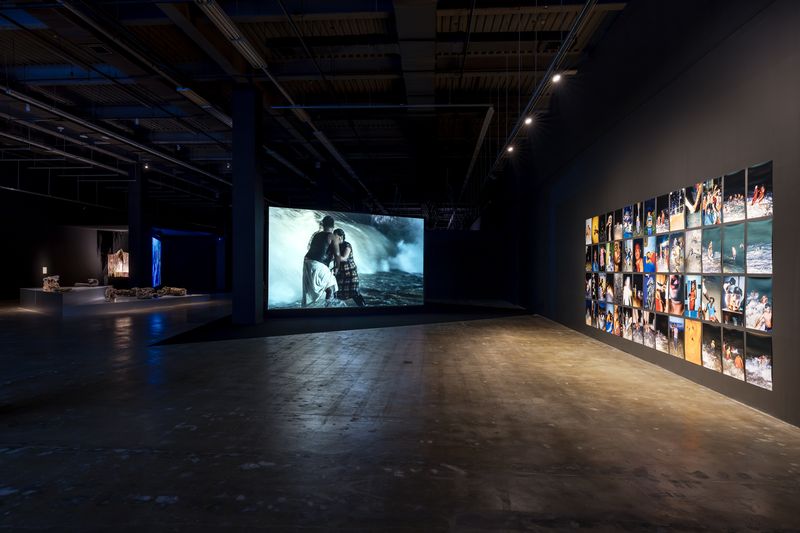
Kim Seon-ik’s new work “Factory Lights” will play for the entire 496 hours of the biennale’s operating period. Angela Goh’s “Craft” will be performed four times a day in the outdoor passage connecting Exhibition Rooms 2 and 3. James T. Hong’s video “Apology” runs for approximately 11 hours. Portions of it will be projected each day from 7 to 9 p.m. onto three sides of the exhibition hall’s exterior walls.
Exhibition Room 5, which can be entered without an admission ticket, will feature Jacqueline Kiyomi Gork’s sound installation “Offbeat BPM (R Rose Variations).” Akio Suzuki selected locations around the exhibition venue where visitors can listen closely to the sounds of the city. Icons combining an ear and a footprint mark these spots. In the lobby, visitors can also encounter E Roon Kang’s “Image-Poem” project, in which AI generates poems based on images of works by participating artists.
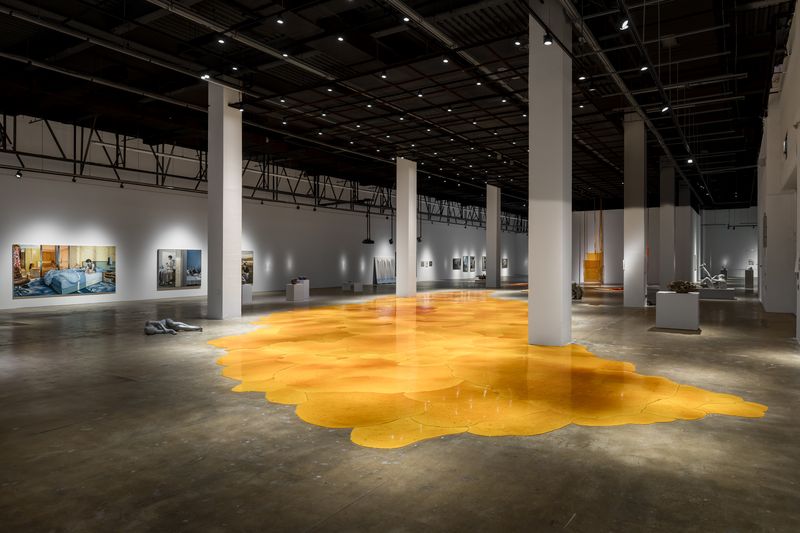
Gwangju’s history and everyday life form another central axis of the exhibition. The 322 paintings created since 2022 by the mothers of May Mothers’ House and artist Joo Hong through painting classes capture the process by which personal memories of the May 18 Democratic Uprising expand into shared history and solidarity. The exhibition also introduces paintings and tea utensils by Heo Baekryeon, as well as Chunsul Tea produced at his tea fields on Mount Mudeungsan, and includes a space where visitors can savor the tea.
On the 4th, when the opening ceremony will be held, Kwon Byungjun and Park Chan-kyong’s new work “Calling” will be unveiled. The work was made by melting metal donated by citizens and turning it into instruments and sound devices. Electronic music performances by Kim Seon-ik and Ryu Han-gil, along with outdoor performances by Haepa-ri and R Rose, will follow. On the 5th and 6th, curator and participating-artist talks, listening sessions, performances, and exhibition tours will take place.
[email protected] Jang In-seo Reporter