"Minimizing agencies remaining in the capital area... Additional 700,000 won per month in allowances for employees relocating to provincial areas" [Administrative and Public Institution Relocation and Reorganization]
- Input
- 2026-09-03 18:51:41
- Updated
- 2026-09-03 18:51:41
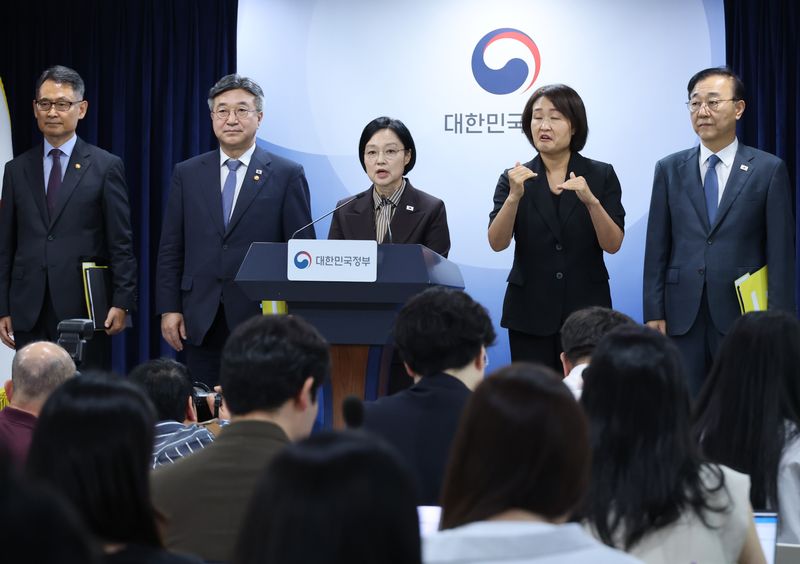
On the 3rd, the Ministry of Land, Infrastructure and Transport announced the "Principles and Implementation Directions for the Second Phase of Public Institution Relocation to Provincial Areas," and plans to finalize the specific relocation plan in the fourth quarter of this year. The list of institutions subject to relocation was not disclosed that day. The core of this second phase is to minimize the number of institutions remaining in the Seoul metropolitan area. The criteria for remaining in the capital area applied during the first phase will be reviewed from scratch; in principle, institutions without special reasons to remain in the capital area, such as national defense and foreign affairs institutions, will be included among those subject to relocation.
Kim Yun-duk, Minister of Land, Infrastructure and Transport, emphasized, "Unless an institution absolutely must remain, we will include it among those subject to relocation in principle."
The method for determining relocation areas is also changing. In light of the limitations of the first phase, which dispersed institutions across various regions, the government will focus on bringing institutions together around existing Innovation Cities. The aim is to maximize the impact of relocation by strengthening links between institutions relocated during the first phase and those newly relocating.
Kim Yun-duk explained, "We will pursue relocations centered on existing Innovation Cities to maximize their ripple effects," adding, "We will fully consider the 5 Poles 3 Special Growth Engine and the functional clusters of existing Innovation Cities."
The pace of relocation will also be accelerated. During the first phase, it took more than seven years from the announcement of the plan to the actual relocation of institutions. This time, the government plans to begin pilot relocations next year by using measures such as leasing private buildings, without waiting for new office buildings to be constructed. Kim Yun-duk stated, "Unlike in the first phase, we will not wait for new office buildings to be constructed; instead, we will immediately begin pilot relocations next year by leasing private buildings and using other measures," adding, "We will also prepare effective housing support measures to minimize the burden on employees of relocating institutions who must move their homes within a short period."
New support measures will also be introduced to encourage employees to relocate early. The relocation allowance of 200,000 won per month for two years and moving expenses provided during the first phase will be maintained. In addition, a long-distance preferential allowance of up to 200,000 won per month for two years will be provided based on the relocation distance. An early-relocation allowance of up to 500,000 won per month for two years will also be newly introduced, depending on the timing of the relocation. Excluding existing support, the two newly created allowances together amount to up to 700,000 won per month.
The government will also strengthen links between relocating institutions and local universities and industries. It plans to expand the recruitment of local talent and cooperation with local universities, while strengthening connections among businesses, universities, and research organizations centered on the relocating institutions.
The living conditions of Innovation Cities will also be improved to meet the growing population and demand. The central and local governments plan to expand infrastructure such as transportation, education, medical care, and culture to enhance the self-sufficiency of Innovation Cities. The first phase of public institution relocation to provincial areas took place over 14 years, from 2005 to 2019, during which 150 institutions and approximately 50,000 people moved to provincial areas. About 70% of employees at the relocated institutions settled there with their families. Kim Yun-duk said, "Positive changes have emerged in the regional economy, including the growth of key regional industries centered on institutions relocated during the first phase, increased recruitment of local talent, and expanded local tax revenue." He added, "We will develop Innovation Cities into premium cities befitting their role as regional growth hubs."
[email protected] Reporters Jeong Gyeong-su and Choi Ga-young