Home Prices Rise as Access to Loans Narrows Further, Triggering Wave of Contract Cancellations in Seoul’s Outer Districts
- Input
- 2026-09-03 18:18:46
- Updated
- 2026-09-03 18:18:46
An analysis of data from the Ministry of Land, Infrastructure and Transport (MOLIT)’s actual transaction price disclosure system on the 3rd found that 168 Seoul apartment sale contracts were canceled in August.
Contract cancellations were concentrated in Seoul’s outer areas. By district, Nowon District and Gangseo District recorded 16 cancellations each in August, the highest among Seoul’s 25 districts. They were followed by Dongdaemun District with 13 and Gangdong District with 10, meaning all four districts with the most cancellations in August were outside Gangnam.
Seocho District and Songpa District followed with nine cancellations each. Guro District, Yangcheon District and Jungnang-gu recorded eight each, while Gangnam-gu, Gwanak District, Mapo District and Jung-gu recorded seven each. Gangnam-gu’s total was less than half the figure for Nowon District and Gangseo District.
Nowon District also stood out in the cumulative figures for this year. Of the Seoul apartment sale contracts canceled from January through August, 118 were in Nowon District, the highest among the 25 districts. Gangnam-gu followed with 86, while Songpa District and Gangseo District recorded 82 each and Dongdaemun District recorded 71.
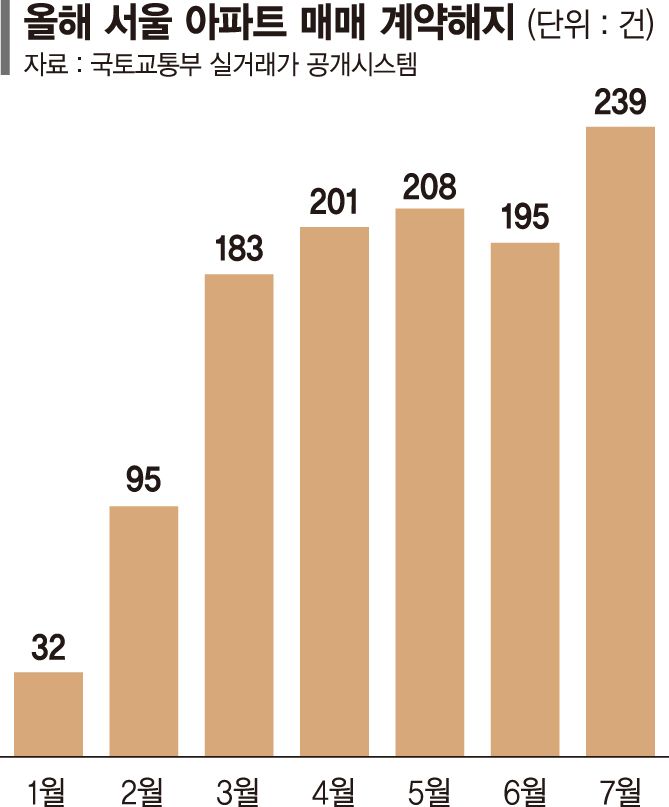
Seoul apartment contract cancellations rose from 32 in January and 95 in February to 183 in March, then reached 201 in April, 208 in May and 195 in June. In July, the number climbed to 239, a 22.6% increase from the previous month and the highest level of the year.
Buyers’ financing burdens are cited as one reason cancellations have been particularly common in outer districts. As financial institutions tighten household-loan management, a gap may emerge between the loan amount expected when a contract was signed and the amount actually available, making it difficult to prepare the final payment. Analysts say genuine end-user buyers who rely on loans may be especially sensitive to changes in borrowing limits and principal-and-interest repayment burdens.
The market also believes that sellers reversing contracts in anticipation of further home-price increases has played a role. If actual transaction prices or asking prices rise after a contract is signed, a seller may decide that canceling the existing deal—even after paying compensation equal to twice the deposit—and reselling at a higher price is more advantageous. Industry observers explain that expectations of rising prices and financing burdens are acting simultaneously, leading both buyers and sellers to reconsider their decisions after signing contracts.
A real-estate industry official said, "As expectations of rising home prices and financing burdens persist at the same time, cases in which buyers reconsider contracts because of funding problems and sellers do so because they expect further price increases may continue for the time being. However, since the number of cancellations fell in August, we will need to watch whether cancellations rise again depending on future lending conditions and price trends."
[email protected] Choi A-young Reporter