Supreme Court of Korea: "People with Disabilities Also Have the Right to Enjoy Movies" ... Puts Halt to 3% Screening Limit
- Input
- 2026-09-03 17:02:34
- Updated
- 2026-09-03 17:02:34
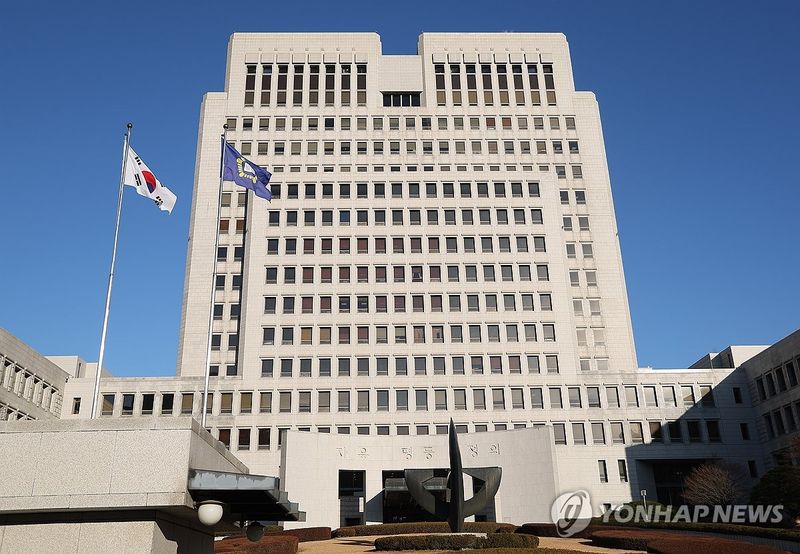
According to legal sources on the 3rd, the First Petty Bench of the Supreme Court of Korea, with Justice Cheon Dae-yeob presiding, overturned the portion of the lower court's ruling unfavorable to the plaintiffs in the final appeal of a discrimination relief lawsuit filed by two people with visual impairments, including Mr. Kim, and two people with hearing impairments, including Mr. Oh, against CJ CGV Co., Ltd., Lotte Cultureworks, and Megabox JoongAng Co., Ltd., and remanded the case to the Seoul High Court. The appeals filed by the movie theaters were all dismissed.
The court ruled, "The lower court's overlapping application of criteria regarding the number of screenings and the scope of theaters to both open and closed screening methods amounts to an excessive consideration of the defendants' financial burden, making it difficult to accept." The court further pointed out, "We must also examine whether there are means to reduce the defendants' financial burden by enabling people with disabilities to enjoy movies in theaters on equal footing with people without disabilities, and furthermore, together with people without disabilities."
In particular, the Supreme Court of Korea highlighted the social and cultural significance of the right of people with disabilities to access and enjoy movies. The court ruled, "Guaranteeing the right of people with disabilities to access and enjoy movies serves not only as an opportunity for the self-development and social participation of individuals with disabilities but also as a direct means for the social integration of people with and without disabilities." Furthermore, the court emphasized, "When determining the scope and content of affirmative action measures for the remedy of discrimination, the court must ensure that the constitutional principle of protecting people with disabilities is reasonably harmonized with the value of protecting the property rights and economic freedom of film exhibitors." It also stated, "To substantially guarantee the rights of people with disabilities, affirmative action is required at the social and national levels," adding that "even though the Constitution guarantees the property rights and economic freedom of individuals and enterprises, restricting such freedoms to a certain extent is inevitable."
The lawsuit began in February 2016. Kim and others demanded that the three movie theater companies provide audio descriptions for people with visual impairments and Korean subtitles and FM systems for people with hearing impairments, claiming that the companies failed to provide reasonable accommodations required under the Act on Prohibition of Discrimination Against Persons with Disabilities. They cited the 2011 film *Silenced* as an example. They argued that although the movie dealt with human rights violations against people with hearing impairments, people with hearing impairments were actually unable to watch it.
The Act on Prohibition of Discrimination Against Persons with Disabilities stipulates that cultural and arts service providers shall not engage in discriminatory acts by restricting, excluding, separating, or refusing without justifiable grounds by applying standards that do not take disability into account. Article 21, Paragraph 1, and related provisions of the same Act impose an obligation on cultural and arts service providers to provide 'reasonable accommodations' for people with disabilities.
In December 2017, the Seoul Central District Court accepted all of the plaintiffs' claims in the first trial and ruled that the requested accommodations should be provided.
It was in the second trial that the judgments diverged. In November 2021, the Seoul High Court acknowledged that the failure to provide audio descriptions and subtitles constituted discrimination, but partially accepted the movie theaters' claims regarding financial burdens, thereby reducing the scope of accommodations compared to the first trial. The ruling stated that without distinguishing between open and closed screenings, if the total number of seats in all theaters within a multiplex exceeds 300, subtitles and audio descriptions only need to be provided in at least one theater for screenings corresponding to 3% of the total number of screenings.
Open screening is a method of screening so-called "barrier-free" films, which are produced with audio descriptions and subtitles included in the movie itself, in bulk. Closed screening is a method of providing separate receiver devices to audiences with disabilities who require audio descriptions and subtitles. The Supreme Court of Korea ruled that it was incorrect to combine these two methods, which are different in nature, and apply the same standards regarding the number of screenings and the scope of screening venues. Both the people with disabilities and the movie theaters appealed this ruling.
In addition, the Supreme Court of Korea provided sign language interpretation for the plaintiffs with hearing impairments during the ruling that day. For the first time, it also prepared and provided "Easy-Read" judgment materials that simplify legal terminology.
Kim Jae-wang, an attorney at the Public Interest Law Center of Seoul National University Law School, said, "It is significant in that it recognizes the right of people with visual and hearing impairments to enjoy culture as a right."
[email protected] Kim Dong-gyu Reporter