Prolonged Uncertainty in the Strait of Hormuz Highlights the Value of SK and POSCO’s Overseas Resource Development
- Input
- 2026-09-05 06:59:00
- Updated
- 2026-09-05 06:59:00
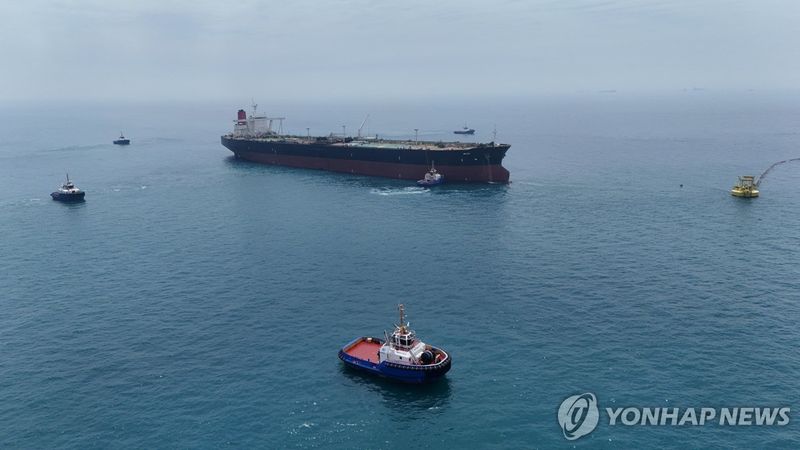
[Financial News] As disruptions to shipping through the Strait of Hormuz persist, the value of crude oil and natural-gas production assets secured directly by South Korean companies overseas is coming into focus. With the recovery of cargo traffic through the Strait of Hormuz limited despite the waterway previously carrying about 20% of global liquefied natural gas (LNG) trade, SK Innovation and POSCO International are expanding gas-field and oil-field development and production, mainly in Australia and Southeast Asia.
According to the International Energy Agency (IEA) on the 5th, LNG exports from Qatar and the United Arab Emirates (UAE) through the Strait of Hormuz totaled about 112 billion cubic meters last year, accounting for 19% of global LNG trade. LNG supplies declined after disruptions to shipping through the strait began following the Middle East conflict in March this year, and cargo traffic has yet to recover to pre-conflict levels.
Instability in Middle Eastern supply chains is also a burden for South Korea, which relies heavily on LNG imports. According to S&P Global Energy CERA, South Korea imported 48.03 million tons of LNG last year, ranking third worldwide after China and Japan. Since most LNG passing through the Strait of Hormuz is bound for Asia, prolonged disruptions to shipping could increase spot prices and procurement uncertainty, analysts say.
Against this backdrop, the Barossa gas field in Australia, where SK Innovation E&S began production this year, is cited as an example of supply-source diversification. SK Innovation E&S will secure about 1.3 million tons of LNG annually from Barossa over the next 20 years, for a total of 26 million tons. The annual volume is equivalent to about 3% of South Korea’s total LNG imports last year. The first LNG produced at Barossa arrived at the Boryeong LNG Terminal in South Chungcheong Province in February.
Condensate produced during the LNG process has also begun arriving in South Korea. Last month, 300,000 barrels of condensate from Barossa arrived at Incheon North Port for the first time. SK Innovation E&S plans to secure about 1.1 million barrels of condensate annually from Barossa and use it as feedstock for naphtha, petroleum and petrochemical products at SK Incheon Petrochem.
SK Innovation’s resource development business is also continuing in China and Vietnam. Its subsidiary SK earthon is producing crude oil from China Block 17/03 after conducting exploration and development as the operator. In Vietnam, it is carrying out production operations in Vietnam Block 15-1, as well as development and exploration projects in Vietnam Block 16-2, Vietnam Block 15-1/05 and Vietnam Block 15-2/17. It plans to begin crude oil production at Vietnam Block 15-1/05 in the fourth quarter of this year.
POSCO Group is also expanding its overseas natural-gas production assets. POSCO International produces natural gas from an offshore gas field in Myanmar and is expanding gas production capacity in eastern Australia through Senex Energy, which it acquired in 2022. It is also exploring new gas fields in Malaysia and Indonesia.
However, securing overseas production blocks does not mean that all of the output will be shipped to South Korea. Depending on the contract structure and buyers for each block, the output may be sold locally or to third countries. Even so, securing production interests and long-term contracts can reduce dependence on a particular region or short-term spot markets and broaden procurement options when prices surge.
An industry official said, "If disruptions to major shipping routes such as the Strait of Hormuz recur, it will be difficult to address price and supply risks simultaneously by simply purchasing volumes on the spot market. The importance of securing both overseas production blocks and long-term contracts can only grow."
[email protected] Kim Mi-hee Reporter