"My Legs Are Numb and Painful, but Is My Back to Blame?"... Is Surgery the Answer? [Health Talk]
- Input
- 2026-09-03 16:04:21
- Updated
- 2026-09-03 16:04:21
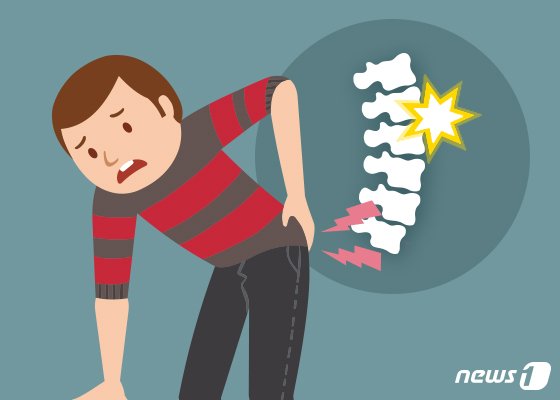
[Financial News] Severe pelvic pain and numbness in the legs may indicate a problem with the lower back. Spinal stenosis may be suspected when pain that feels as though the buttocks are giving way occurs after walking a certain distance, accompanied by numbness in the legs that improves after sitting briefly or bending the back, with the symptoms recurring repeatedly.
Spinal stenosis is a condition in which the spinal canal, the passageway for nerves, narrows because of degenerative changes and compresses the nerve roots that control the legs. Lower-back pain is generally defined as pain extending from the 12th thoracic vertebra and the area below the ribs to the crease beneath the buttocks. The pain can radiate to the thighs, knees, calves, ankles and feet.
Try Three Months of Conservative Treatment First... The Goal Is to Reduce Pain to 2–4
However, spinal stenosis does not automatically require surgery.
Kang Min-seok, a professor of orthopedic surgery at Konkuk University Medical Center, advised, "If there is no clear loss of strength in the legs, it is not too late to consider surgery after trying conservative treatment for at least three months."
According to the National Health Insurance Service (NHIS), the number of patients treated for spinal stenosis rose 9.2% over five years, from approximately 1.647 million in 2017 to approximately 1.799 million in 2021.
Spinal stenosis most often develops after a herniated disc has progressed over a long period. Although discs often stabilize on their own over time, the disc height decreases during this process, the joints at the back become stiff, and the ligaments loosen. As a result, the passageway for the nerves gradually narrows.
When the spinal canal narrows, the entire leg—including the buttocks, thighs and calves—may become numb and painful, or lose strength while walking. This is called intermittent neurogenic claudication. The symptoms improve after a brief rest or by bending the back, but recur when walking resumes.
Professor Kang said, "The goal of conservative treatment for spinal stenosis is to reduce pain from 6–8 on a 10-point scale to 2–4," adding, "If there is no clear loss of strength in the legs, patients should undergo conservative treatment for at least three months. Surgery can then be considered if daily life remains difficult."
Conservative treatments include nerve blocks to reduce inflammation and percutaneous procedures, such as epidural neuroplasty, which may be considered when pain is severe or lesions are present in multiple areas. Surgery is considered when nerve function deteriorates, such as when leg strength noticeably declines or walking becomes difficult.
Bilateral Endoscopic Surgery Through 0.8-cm Incisions Offers Faster Recovery and Fewer Complications
When surgery is necessary, unilateral biportal endoscopic spine surgery (UBE), which minimizes incisions, has recently attracted attention. Two incisions measuring 0.8 cm are made; an endoscope is inserted through one and surgical instruments through the other. The procedure decompresses the area pressing on the nerves while removing as little bone and ligament as possible.
Professor Kang Min-seok explained, "A multicenter clinical study conducted with Seoul National University Bundang Hospital, Hallym University Kangnam Sacred Heart Hospital and others since 2020 found that bilateral endoscopic surgery produced outcomes similar to those of conventional open surgery, while causing less postoperative pain, enabling faster recovery and resulting in statistically significantly fewer wound-related complications."
Early spinal endoscopic surgery involved removing a disc through a single tube measuring 1 cm in diameter. Although it was less invasive, it had limitations, including incomplete decompression and a somewhat higher recurrence rate. Professor Kang explained that bilateral endoscopic surgery was developed to address these shortcomings.
These advantages also apply to spinal fusion using a bilateral endoscopic approach. In the early stages, the procedure took somewhat longer, but advances in surgical techniques have significantly shortened the operating time. Above all, compared with conventional methods, it carries a significantly lower risk of postoperative infection and allows more thorough preparation of the endplates for spinal fusion. However, it may be difficult to use when three or more spinal segments must be fused together. In such cases, Professor Kang Min-seok introduced lateral lumbar interbody fusion (LLIF) as an alternative.
After nerve decompression or discectomy, patients can walk wearing a brace beginning four to five hours after surgery on the same day. They are discharged on the second postoperative day and can generally resume daily activities after about four weeks. Patients who undergo spinal fusion stay longer—six nights and seven days—and require approximately three months to recover.
Unilateral biportal endoscopic spine surgery is covered by national health insurance. However, some treatment materials, including hemostatic agents, anti-adhesion agents and bone substitutes, are not covered and may incur additional costs.
Sitting for long periods or sitting on the floor is also bad for the lower back. Regular walking on level ground and extension exercises that bend the back backward, known as McKenzie exercises, can help. Exercises to strengthen the lower-back muscles should begin after the pain has subsided to some extent.
[email protected] Medical Specialist Jung Myung-jin Reporter