“Even After Setting Aside 59 Trillion Won, It Keeps Buying”: Why Buffett’s Successor Is Betting on Japanese Trading Houses
- Input
- 2026-09-03 16:45:24
- Updated
- 2026-09-03 16:45:24

【Financial News Tokyo = Correspondent Hye-jin Seo】Greg Abel, CEO of Berkshire Hathaway and successor to “investment guru” Warren Buffett, said on the 3rd that he would buy additional stakes in Japan’s five major general trading companies and expand joint mergers and acquisitions (M&A) and business investments. The strategy is to use approximately 58 trillion won in cash awaiting investment to elevate Japanese companies from simple stock investments to global business partners.
In an interview with Nihon Keizai Shimbun (Nikkei) in Tokyo that day, CEO Abel said, “Our goal is to continue increasing our stakes in the general trading companies. After returning to Omaha and reviewing the situation, if we decide that we should raise our stakes, we will do so.”
He emphasized, “We will work with the five major general trading companies and Tokio Marine Holdings to facilitate the discovery of investment opportunities. This is an excellent opportunity for Berkshire’s growth.” He described cooperation with Japanese companies as a “perfect combination” of Berkshire’s financial strength and Japanese companies’ ability to identify businesses.
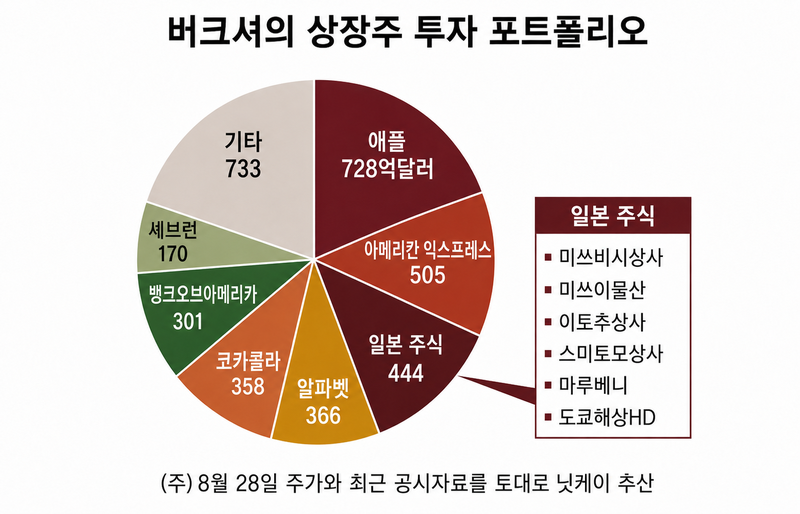
Berkshire holds stakes of more than 10% in Mitsubishi Corporation, ITOCHU Corporation, Mitsui & Co., Sumitomo Corporation, and Marubeni, respectively. As of the 28th of last month, its holdings in the six Japanese companies, including Tokio Marine Holdings, were worth approximately $44 billion, or about 59.7 trillion won. Viewed as a single investment group, the amount exceeds Berkshire’s holdings in Alphabet or Coca-Cola. Japan is Berkshire’s largest investment destination outside the United States.
Berkshire’s cash and U.S. Treasury bills totaled $365.5 billion, or about 57.64 trillion won, as of the end of June, exceeding Toyota Motor’s market capitalization.
Nikkei said, “Since Buffett announced his intention to retire last May, Berkshire’s stock price has significantly underperformed the U.S. Standard & Poor’s 500 Index (S&P 500), and CEO Abel appears to be seeking a new growth engine by putting the accumulated cash to work.”
CEO Abel’s visit to Japan—the first since taking office—and his consecutive meetings with the management of the five major general trading companies and Tokio Marine Holdings were also aimed at expanding the partnerships into business operations. The general trading companies proposed specific joint investment projects across various industries during the meetings, Nikkei reported.
■ “From Ramen to Missiles”: Global Supply Chains as Assets
The biggest reason Berkshire invested in Japan’s general trading companies is their business structure, based on “selection and diversification.”
General trading companies participate in global supply chains ranging from energy and raw materials to food, distribution, and infrastructure. The five major general trading companies have approximately 5,000 employees stationed overseas. Because their businesses are diversified, weakness in one industry can be offset by other fields, while information and investment opportunities from around the world can be secured quickly.
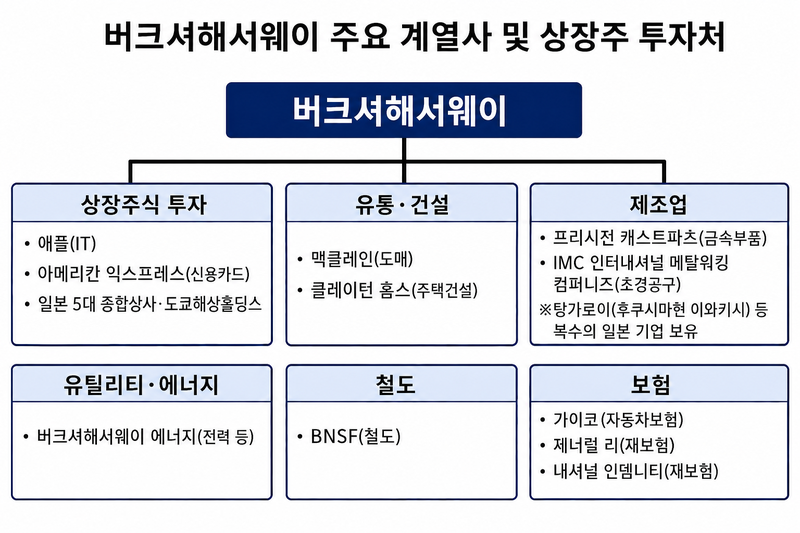
This structure resembles Berkshire’s as well. Berkshire, which operates diverse businesses including insurance, railroads, energy, and manufacturing, makes long-term investments based on stable cash flow. General trading companies have likewise transformed from trade intermediaries into “portfolio managers” that increase profits by buying and selling assets.
CEO Abel also cited the quality of management as a strength of Japanese companies. He said, “I have considerable confidence in the very high-quality management systems of Japanese companies.”
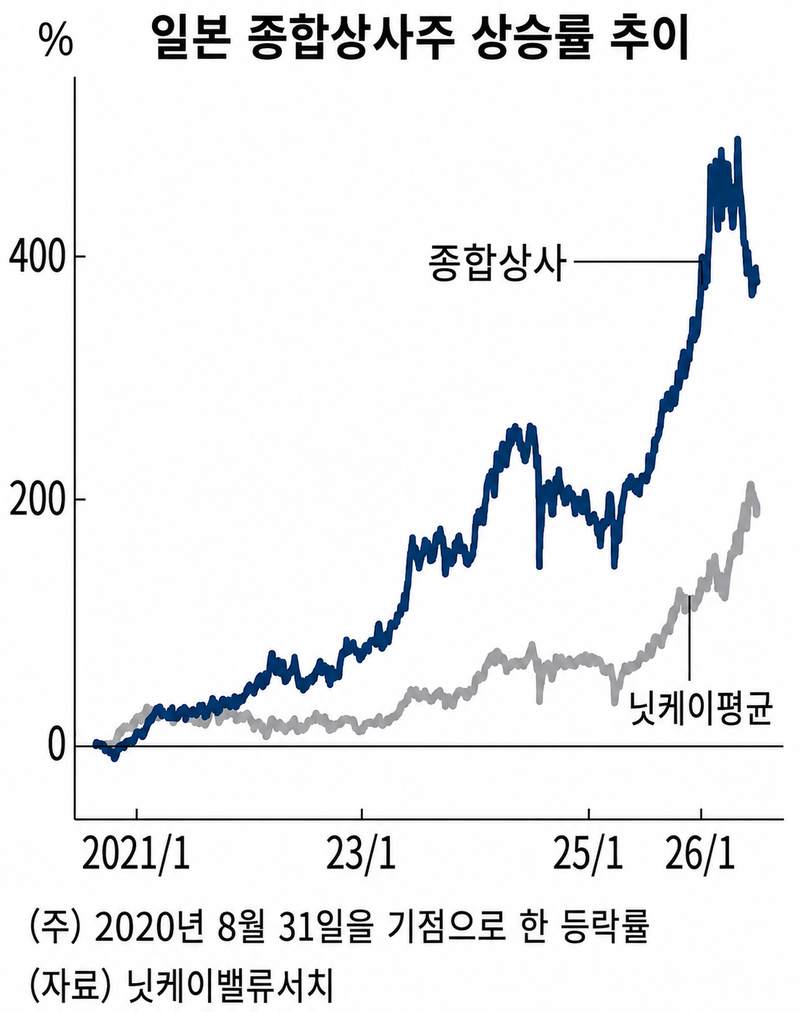
The general trading companies’ expansion of dividends and share buybacks alongside rising profits has also supported Berkshire’s long-term investment strategy. Since Berkshire began investing, the combined market capitalization of the five major general trading companies has increased approximately fivefold.
Berkshire’s investments in Japan also help geographically diversify its business and stock portfolio, which is concentrated in the United States.
Berkshire sold all of its stake in Chinese electric vehicle maker BYD by last year. It also disposed of all the Taiwan Semiconductor Manufacturing Company (TSMC) shares it purchased in 2022 within several months, citing geopolitical risks in the Taiwan Strait. Analysts say Berkshire chose relatively stable Japanese companies as long-term partners over companies in China and Taiwan.
■ Issuing Yen Bonds Despite 3% Interest Rates: Expanding Joint M&A
Berkshire’s investment in Japan’s general trading companies is evolving from a financial investment aimed at gains in share value and dividends into joint business ventures.
ITOCHU is already cooperating in the Asian business of a U.S. apparel company affiliated with Berkshire. Sumitomo Corporation liquefies natural gas secured in the United States into LNG at facilities affiliated with Berkshire and then sells it. Berkshire plans to pursue joint M&A with Tokio Marine Holdings. The framework combines the general trading companies’ global networks and ability to identify businesses with Berkshire’s financial strength and creditworthiness.
Rising interest rates in Japan are not expected to hinder the expansion of these investments. Berkshire has purchased shares in the general trading companies with funds raised by issuing yen-denominated corporate bonds. Although the yield on 10-year Japanese government bonds has exceeded 3% annually for the first time in 30 years, raising corporate borrowing costs, CEO Abel said, “From an issuer’s perspective, an interest rate of around 3% is fully manageable.”
He added, “We will continue issuing yen-denominated bonds and use them as a funding tool for various investments.” The judgment is that the increased funding costs can be absorbed when considering the dividend income from the general trading companies and the potential increase in corporate value through joint businesses.
CEO Abel also left open the possibility of new investments in other Japanese listed companies. However, he said, “We are focusing on a carefully selected small number of companies, not all companies listed on the Tokyo Stock Exchange (TSE).” This means Berkshire will choose investments based on individual companies’ business models and management quality rather than Japan’s macroeconomy or policies.
Meanwhile, shares of the general trading companies rose across the board after CEO Abel’s remarks about additional purchases that day. On the Tokyo Stock Exchange, Mitsubishi Corporation surged 4.48% intraday, while ITOCHU, Marubeni, Mitsui & Co., and Sumitomo Corporation also advanced.
Analysts said the so-called “Buffett effect” had come back into focus as funds moved from AI and semiconductor stocks into relatively undervalued value stocks.
[email protected] Hye-jin Seo Reporter