Gwangju Bank: “Ordinance Revision Ahead of Treasury Bank Selection Requires Caution”
- Input
- 2026-09-03 15:19:18
- Updated
- 2026-09-03 15:19:18
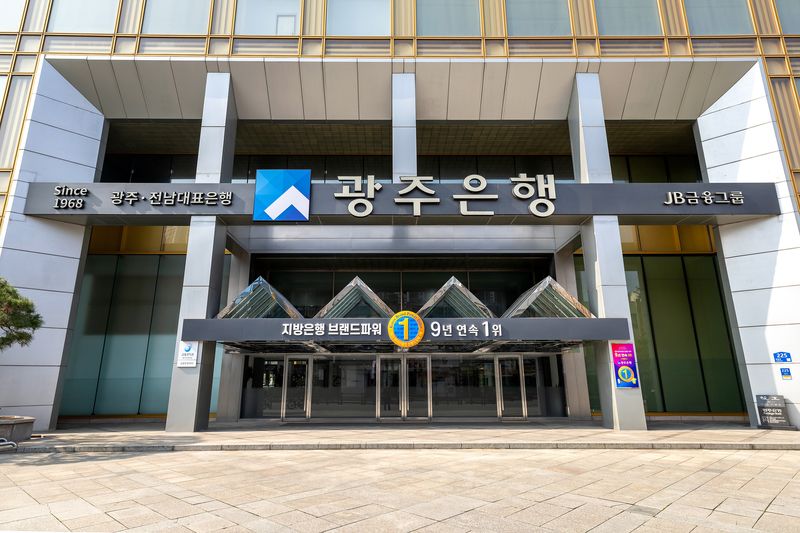
【Financial News Jeonnam-Gwangju = Reporter Hwang Tae-jong】 Gwangju Bank said on the 3rd that “changing the evaluation criteria at a time when the announcement of the treasury bank selection is imminent requires caution,” regarding the partial amendment bill to the ordinance on the designation and operation of the treasury bank being pursued ahead of the selection of the treasury bank for Jeonnam-Gwangju Integrated Special City.
According to Gwangju Bank, the amendment bill would incorporate the regional distribution of cities, counties and districts into the detailed evaluation criteria and methods for the number of branches, unmanned branches and ATMs operated by each financial institution within the jurisdiction.
Gwangju Bank said, “Although the stated purpose is to consider residents’ access to financial services in rural and island areas, establishing or strengthening evaluation criteria that financial institutions cannot adjust in the short term when the treasury bank selection is imminent could undermine financial institutions’ predictability and the fairness of the selection process.”
It also stated, “The possibility that the evaluation structure could become relatively favorable to a particular financial institution also requires objective review.”
If the distribution of existing branches, unmanned branches and ATMs across cities, counties and districts is directly reflected in the evaluation, it could structurally favor a particular financial institution that already has an extensive branch network, hindering fair competition and creating an entry barrier for other financial institutions.
In particular, it said, “Amid ongoing controversy over whether branches operated by separate legal entities, such as regional agricultural cooperatives, should be recognized as part of a particular financial institution’s network, clear criteria that take into account the legal and operational substance of each branch should be established first, rather than revising a separate ordinance.”
Gwangju Bank also raised concerns that the phrase “reflecting the regional distribution across cities, counties and districts in the number of installations” does not clearly indicate whether the assessment is quantitative or qualitative. Differences in interpretation among financial institutions could subsequently lead to objections or disputes. It added that assessing financial access based solely on the number of branches or their regional distribution has limitations. Because population and financial demand vary by region, evaluating residents’ actual convenience requires consideration of each region’s branch network relative to its population and the convenience of using those services, but the proposed criteria may not adequately reflect these factors.
Finally, Gwangju Bank stated, “Because the treasury bank selection is an important process for deciding which financial institution will manage the region’s finances for four years, fairness, transparency and predictability should take priority over whether the criteria benefit or disadvantage a particular financial institution.” It added, “We hope this discussion will serve as an opportunity to establish a reasonable evaluation system that improves residents’ actual access to financial services while remaining acceptable to all participating institutions, rather than creating criteria favorable to a specific financial institution.”
[email protected] Hwang Tae-jong Reporter