"More Painful Than Childbirth"—Stabbing Flank Pain Caused by Urinary Stones
- Input
- 2026-09-03 14:54:57
- Updated
- 2026-09-03 14:54:57
[Financial News] Park, a 52-year-old office worker living in Busan, recently visited an emergency room after being struck at dawn by sudden, excruciating pain in his right flank. The stabbing pain continued, causing cold sweats and even vomiting. A CT scan performed in the emergency room revealed that the pain was caused by a 6 mm urinary stone.
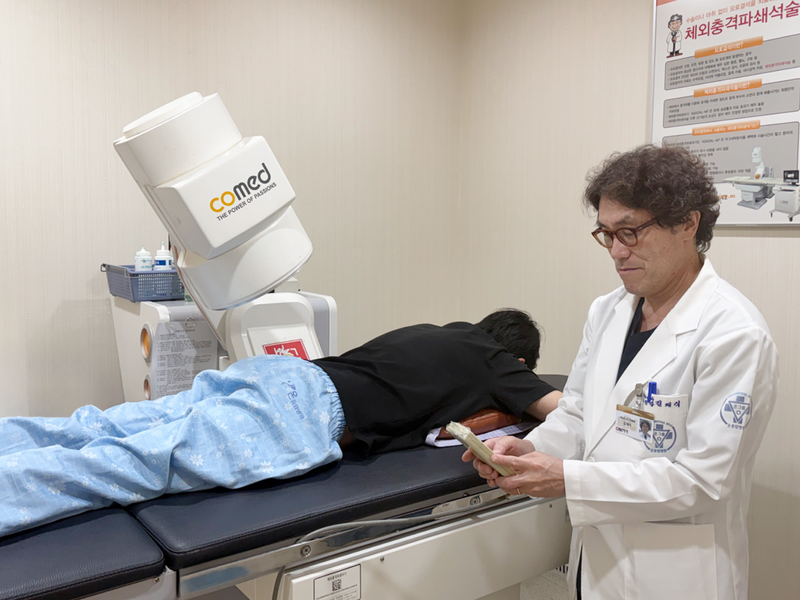
After undergoing extracorporeal shock wave lithotripsy at On Hospital’s Department of Urology that day, Park was finally able to escape the pain once the stone had been safely broken up.
According to the latest disease statistics from the Health Insurance Review and Assessment Service (HIRA) released on the 3rd, the number of urinary-stone patients in South Korea has reached approximately 320,000 a year, increasing steadily by more than 8% over the past five years.
Men accounted for approximately 65% of all patients, nearly twice as many as women. By age group, patients were concentrated among people in their 40s and 50s, who are actively engaged in economic activity.
A urology chief at On Hospital in Busan explained that urinary stones are "a disease in which stones form in the urinary system, including the kidneys, ureters and bladder, blocking the flow of urine and causing severe pain and inflammation."
The urology chief emphasized, "Urinary stones can cause pain so severe that it is often compared with the pain of childbirth. If left untreated, they can lead to kidney damage, so special caution is necessary."
The key mechanism behind urinary stones is the supersaturation and crystallization of waste products contained in urine.
When people do not consume enough fluids, their urine becomes concentrated. Calcium, oxalate and uric acid dissolved in the urine then clump together to form tiny crystals. As these crystals gradually grow and block the ureter or the entrance to the kidney, the ureter goes into spasm and hydronephrosis develops as the kidney swells, causing explosive pain.
Gallstones in the gallbladder and urinary stones are entirely different diseases, although they are often confused by the general public.
The urology chief pointed out, "Gallstones are a digestive-system disease caused by substances such as cholesterol or bilirubin in bile solidifying, whereas urinary stones are a urinary-system disease caused by waste products in urine hardening. Their causative substances and formation pathways are completely different."
Medical professionals tailor treatment according to the stone’s size and location and whether complications are present. If a stone is smaller than 4 mm and the pain is not severe, patients are advised to increase their fluid intake and take medication to widen the ureter while waiting for the stone to pass naturally in the urine.
By contrast, when a stone is 5 mm to less than 1 cm in size, extracorporeal shock wave lithotripsy (ESWL) is generally performed first. High-energy shock waves are directed at the stone from outside the body to break it into tiny fragments. The procedure can be completed quickly without anesthesia or a skin incision, placing relatively little burden on the patient. If the stone is 1 cm or larger or particularly hard, a thin flexible endoscope is inserted through the urethra, and the stone is directly fragmented and removed with a laser through ureteroscopic surgery.
Urinary stones frequently recur even after treatment, with the five-year recurrence rate reaching 50%. Consistent preventive care in daily life is therefore essential.
The most effective way to prevent urinary stones is to drink enough water to maintain a daily urine output of at least 2 liters.
As increased sodium intake raises the amount of calcium excreted in the urine and makes stones more likely to form, people should maintain a low-sodium diet. Citric acid, which is abundant in tangerines, lemons and oranges, binds with calcium in the urine and inhibits stone formation, so eating these fruits regularly can help.
By contrast, excessive consumption of foods high in oxalate, such as spinach, nuts and chocolate, should be avoided. In particular, long-term use of high-dose vitamin C supplements of 1,000 mg or more can increase the risk of stones because vitamin C is metabolized into oxalate in the body. People at risk of urinary stones should therefore adjust their dosage.
The urology chief at On Hospital urged, "If flank pain is accompanied by symptoms such as blood in the urine, vomiting or painful urination, do not delay. Visit a urology department and receive an accurate diagnosis."
[email protected] Byline withheld Reporter