Ministry of Justice Ends 44-Year 'Gwacheon Era'... Relocates to Sejong in the First Half of Next Year
- Input
- 2026-09-03 14:27:56
- Updated
- 2026-09-03 14:27:56
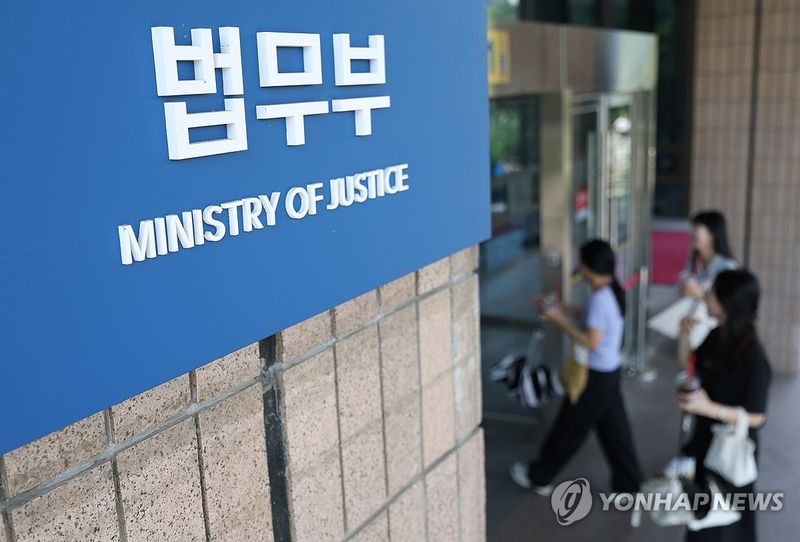
According to legal circles on the 3rd, the government announced the 'Plan for Relocation of Administrative and Public Institutions and Measures for Reforming the Functions of Public Institutions' at the Government Complex Seoul that day and decided to proceed with relocating central administrative agencies located in the metropolitan area, such as the Ministry of Justice and the Ministry of Gender Equality, to Sejong starting in the first half of next year.
Prime Minister Han Seong-sook stated, "Starting in the first half of next year, we will prioritize relocating central administrative agencies located in the capital area to Sejong Special Self-Governing City, beginning with agencies whose relocation would involve a large scale and significant ripple effects."
The Government Complex Gwacheon was constructed in 1982 as the Second Government Complex to alleviate the shortage of space at the Government Complex Seoul and the concentration of the population in the metropolitan area. The following year, the Ministry of Justice moved in along with the Ministry of Construction, the Ministry of Agriculture, Forestry and Fisheries, and others. In the 2010s, the economic and social ministries in the Government Complex Gwacheon moved to the Government Complex Sejong in stages, but the Ministry of Justice remained in Gwacheon.
This was because there was a legal basis. The Special Act on the Construction of Administrative City, enacted after the Constitutional Court of Korea ruled the Special Act on the New Administrative Capital unconstitutional in 2004, designates five ministries, including the Ministry of Justice and the Ministry of Gender Equality and Family, as agencies excluded from relocation to Sejong. For this relocation to proceed, the Special Act on the Construction of Administrative City must first be amended to remove the Ministry of Justice from the list of excluded agencies. Minister of the Interior and Safety (MOIS) Yun Ho-jung announced that day that he would push for a legal amendment to remove the Ministry of Justice and the Ministry of Gender Equality from the list of agencies excluded from relocation. The specific agencies to be relocated, the methods, and the timing will be finalized by revising and publicly announcing the 'Relocation Plan for Central Administrative Agencies, etc.' following consultations with relevant central administrative agencies and public hearings.
There has been a bewildered reaction within the Ministry of Justice because no prior consultation took place. There are also calls to devise measures to minimize functional inefficiencies resulting from the geographical separation from major judicial institutions, such as the Supreme Court of Korea and the Constitutional Court of Korea. The decision appears to reflect an intention to strengthen policy cooperation with other ministries now that the Government Complex Sejong has established itself as the administrative center, as well as the rationale of balanced national development.
For the prosecution and police, the construction of new buildings is a prerequisite. The government plans to relocate the headquarters of the Public Prosecution Office and the Serious Crime Investigation Agency, which will launch on October 2, to Sejong after constructing separate buildings. However, concerns are being raised that confusion could increase if the relocation of the buildings coincides with the numerous follow-up legislative and procedural tasks resulting from the sweeping reorganization of the criminal justice system.
The Korean National Police Agency, which was included in the second round of relocations, is also in turmoil. However, the actual relocation is expected to take considerable time. The agency must begin with feasibility studies, site selection, budget acquisition, and design and construction procedures, and because the building has approximately 2,000 full-time employees and must be equipped with various security and investigative facilities, it is expected to take at least several years even if the process begins now.
[email protected] Kim Dong-gyu Reporter