Seoul National University Hospital Confirms MEST’s Effectiveness for Knee Osteoarthritis: “Even 74% of End-Stage Patients Responded”
- Input
- 2026-09-03 14:31:28
- Updated
- 2026-09-03 14:31:28
[Financial News] Muscle Enhancement and Support Therapy (MEST), a nonsurgical treatment designed to support muscle function in patients with knee osteoarthritis, showed potential to improve pain and walking ability in real-world clinical practice, including among end-stage patients. Treatment response also varied according to the amount of effusion in the knee joint.
Seoul National University Hospital said on the 3rd that a research team led by Kim Jeong-su of the Department of Anesthesiology and Pain Medicine had published the results of a study analyzing 62 patients with knee osteoarthritis who underwent MEST in the international journal Journal of Pain Research. MEST involves inserting biodegradable polydioxanone (PDO) filaments into the muscles around the knee to support weakened muscles.
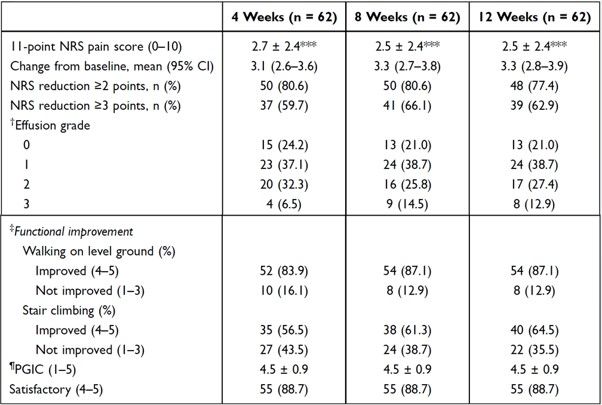
The average pain score, which was 5.8 before the procedure, fell to 2.5 after eight weeks on the Numeric Rating Scale (NRS). Pain scores decreased by at least two points in 80.6% of all patients. Walking on level ground improved in 87.1% of patients, while stair climbing improved in 61.3%. Notably, 73.9% of patients with end-stage osteoarthritis, classified as Kellgren-Lawrence grade 4, also responded to treatment.
The variable that most clearly distinguished treatment response was intra-articular effusion. The response rate was 91.7% among patients with no or mild effusion on ultrasound, compared with 65.4% among those with moderate or greater effusion. The research team analyzed that inflammation or effusion may have played a role through arthrogenic muscle inhibition (AMI), a condition in which joint problems suppress muscle activation. No serious procedure-related adverse events were reported during the 12-week follow-up period.
Professor Kim Jeong-su noted, "Selecting patients while considering characteristics such as the amount of intra-articular effusion may be important for improving treatment outcomes."
However, because this study was a retrospective analysis, further validation is needed regarding its long-term effects and the patients who are most suitable for the treatment.
[email protected] Kim Gyeong-a Reporter