Government's Decision to Merge Port Authorities Draws Opposition in Busan: "We Oppose a Hasty Merger"
- Input
- 2026-09-03 14:14:00
- Updated
- 2026-09-03 14:14:00
The Busan Pan-Citizen Council for Becoming a Maritime Powerhouse issued an emergency statement that afternoon, making this position clear.
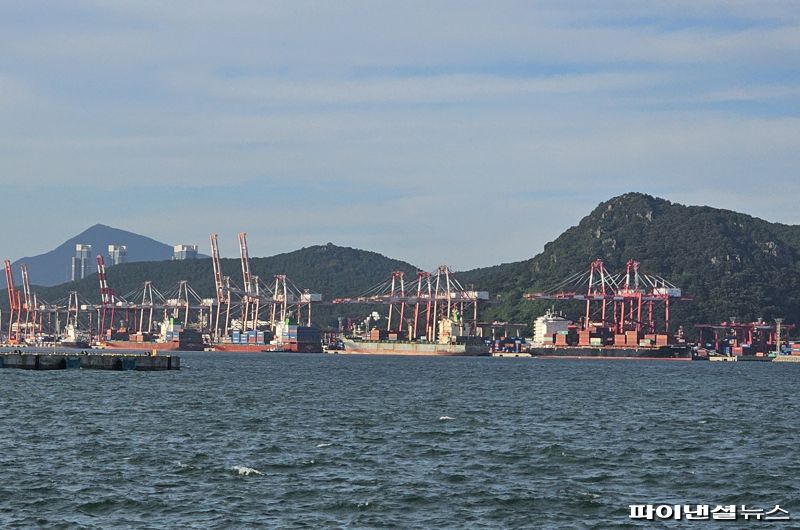
The council said, "We support the underlying goal of improving overlapping functions at public institutions and enhancing efficiency. However, port authorities are different from ordinary administrative agencies. They are key implementing bodies in the national logistics industry, competing with ports around the world through port development, large-scale investment, the attraction of global shipping companies, and the development of hinterland complexes." It emphasized, "Therefore, the standard for judgment should not be whether the number of institutions can be reduced, but how much Korea's port competitiveness would improve if they were merged."
It continued, "Before proceeding, there must be an objective verification of exactly where and to what extent excessive competition and overlapping functions between ports, which the government has cited as grounds for the merger, have actually occurred. The proper order is to prove that excessive competition first, before deciding on a merger." It added, "This is not simply a matter of organizational restructuring. It would change the system for allocating capital and making investment decisions at Korea's major ports. Before pursuing a merger, the government must first establish principles for reinvesting the revenue generated by each port."
It further urged, "The government must specifically disclose how the investment and business budget authority to be granted to the Busan organization compares with the current authority of Busan Port Authority. It must also explain how it will guarantee the Port of Busan's ability to execute projects under a national multimodal logistics strategy linking the New Port, Busan North Port, the Northern Sea Route (NSR), and Gadeok Island New Airport." It added, "If the government is pursuing Busan as a maritime capital while converting it into a regional organization of a single nationwide port authority, it must first explain what strategy this represents."
The Council for the Development of Busan as a Maritime Capital and other groups also issued emergency statements that day, arguing that the decision to merge the port authorities was being rushed and should be withdrawn.
They criticized the plan, saying, "The Port of Busan is a world-class container and transshipment port and a strategic hub in the era of the Northern Sea Route; Incheon Port is the international logistics gateway to the Seoul metropolitan area; the Port of Ulsan is a key port for the national energy industry; and Yeosu Gwangyang Port is an industrial port supporting key national industries such as steel and petrochemicals." They added, "Bringing port authorities with entirely different functions, hinterland industries, and development strategies under a single centralized organization could significantly weaken the expertise and autonomy of each port, as well as its ability to make swift decisions."
They continued, "Major ports around the world compete fiercely based on the expertise and autonomy of individual ports, rather than through uniform integration. If the government truly wants to strengthen the international competitiveness of Korean ports, what is needed is not integration but stronger independence, expertise, and accountable management for each port authority." They stressed, "This is an issue that should be decided only after thorough consideration, following sufficient public discussion, the collection of regional opinions, and verification by industry and experts."
[email protected] Byeon Ok-hwan Reporter