Jeju Medical Center and Seogwipo Medical Center, Two Public Hospitals, Post a Combined Deficit of 50.2 Billion Won Over Three Years... Government to Intensively Manage Them for Debt Reduction
- Input
- 2026-09-03 14:05:16
- Updated
- 2026-09-03 14:05:16
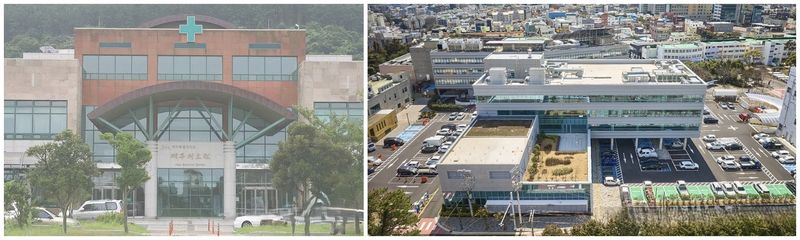
[Financial News Jeju = Reporter Jeong Yong-bok] Jeju Medical Center and Seogwipo Medical Center, the two pillars of Jeju's public healthcare system, have both been included in the government's intensive financial management program. The two medical centers recorded combined net losses of 50.2 billion won from 2023 through last year, leaving them with the dual task of maintaining essential medical services while improving their revenue and cost structures.
According to the Ministry of the Interior and Safety (MOIS) on the 3rd, 102 local public institutions nationwide were designated as priority debt management institutions for 2026 after financial indicators—including debt size, debt ratio, and return on total assets—were evaluated based on settlement data from the past three years.
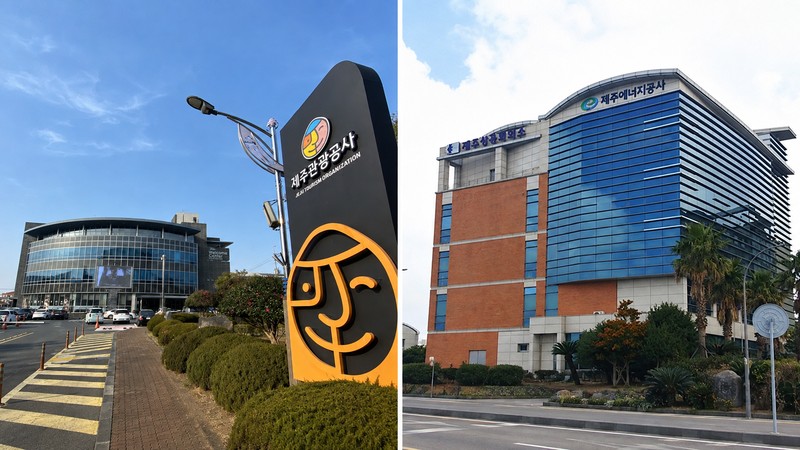
In Jeju Island, four institutions were included: Jeju Tourism Organization, Jeju Energy Corporation (JEC), Jeju Medical Center, and Seogwipo Medical Center.
Among them, Jeju Medical Center and Seogwipo Medical Center were again included among the 28 institutions subject to debt reduction because of their relatively high financial risk. They are the only institutions in Jeju Island designated as debt-reduction targets.
Of the 28 debt-reduction institutions nationwide, 14 are local medical centers, including Seoul Medical Center and Busan Medical Center, as well as four in Gangwon, two in Chungbuk, three in Chungnam, one in Jeonnam, and two in Jeju. This indicates that the financial difficulties facing local medical centers are not limited to Jeju Island but are occurring simultaneously throughout the country's public healthcare sector.
The financial conditions of the two medical centers in Jeju Island deteriorated rapidly after they operated as hospitals dedicated to treating COVID-19 patients.
Jeju Medical Center recorded a surplus of 4.559 billion won in 2022 but posted a deficit of approximately 5 billion won in 2023. Net losses continued at approximately 5.5 billion won in 2024 and approximately 10.2 billion won last year. Its cumulative deficit over the past three years is 20.7 billion won.
Seogwipo Medical Center likewise shifted from a surplus of 1.309 billion won in 2022 to a deficit of approximately 12 billion won in 2023. After losses of approximately 7.2 billion won in 2024 and 10.3 billion won last year, its cumulative deficit over the past three years reached 29.5 billion won.
Combined, the two medical centers posted deficits of 17 billion won in 2023, 12.7 billion won in 2024, and 20.5 billion won last year. Last year's deficit increased by 7.8 billion won, or approximately 61%, from the previous year.
Government oversight will also become stricter. The 102 priority debt management institutions, including Jeju Tourism Organization and Jeju Energy Corporation (JEC), must establish and disclose five-year financial debt management plans containing measures to reduce debt and improve profitability.
Institutions separately designated as debt-reduction targets, such as Jeju Medical Center and Seogwipo Medical Center, will face an additional level of oversight. The appropriateness of their financial debt management plans and their actual implementation results will be directly reflected in management evaluations of local public institutions.
MOIS assessed financial risk by applying borrowing dependence, the interest coverage ratio, operating profit margin, current ratio, and operating balance ratio alongside common indicators such as debt size, debt ratio, and return on total assets.
The financial conditions of local public enterprises nationwide also deteriorated. Last year, the 421 local public enterprises nationwide recorded net losses of 3.5216 trillion won, an increase of 840.3 billion won, or 31.3%, from the 2.6813 trillion won recorded the previous year.
However, improving the management of Jeju's two medical centers requires a different approach from that used for ordinary profit-oriented public enterprises. Jeju Medical Center and Seogwipo Medical Center provide public and essential medical services that must be maintained in the region even when they are not profitable. Reducing clinical functions or medical personnel to cut costs could improve their financial structures, but it could also reduce the medical services available to residents.
Jeju Medical Center operates departments including psychiatry and rehabilitation medicine, as well as an artificial kidney unit and public healthcare programs. It also performs public healthcare functions that are difficult to provide solely through private medical institutions, including free mobile clinics in island areas.
Seogwipo Medical Center is the hub public hospital for the southern part of Jeju Island, operating a 24-hour emergency medical center and providing childbirth and neonatal services. Since the expansion of its new building, the burdens of medical personnel, medical supplies, and facility operating costs have also increased.
This structure was also confirmed at the Jeju Special Self-Governing Provincial Council late last year. Jeju Island explained that although the bed occupancy rate at Seogwipo Medical Center had recovered to more than 75%, labor costs for essential medical personnel, medical supplies, and facility operating expenses were placing a burden on management.
Ultimately, the core of the five-year financial debt management plans required by the government is expected to be 'what to reduce and what to preserve,' rather than 'how much to reduce.'
Even while pursuing management efficiency, the institutions must reorganize their staffing, beds, medical departments, and cost structures without compromising medical functions that are difficult to replace locally, such as emergency care, childbirth, mental healthcare, and rehabilitation. Another issue that must be resolved is whether the policy costs associated with providing public healthcare should remain solely as deficits of the local medical centers, or how much of those costs should be covered by the national government and Jeju Island.
MOIS plans to strengthen the management of local public institutions, along with financial management, so that they can provide residents with stable public services.
Jeju Island also faces a growing challenge. It must design not only management normalization plans to reduce the debt and deficits of the two medical centers, but also measures to expand the financial support and state assistance needed to maintain essential medical services.
As both medical centers have been included in the government's debt-reduction targets, the future of Jeju's public healthcare is expected to depend on how personnel, beds, medical functions, and costs are adjusted in the upcoming five-year plans. A key task has emerged: establishing clear standards that balance management improvement with public service so that the medical services residents need are not reduced in the process of cutting deficits.
[email protected] Jeong Yong-bok Reporter