KEF: "Reassignments resulting from new plant construction should be excluded from the scope of labor disputes"
- Input
- 2026-09-03 14:00:00
- Updated
- 2026-09-03 14:00:00
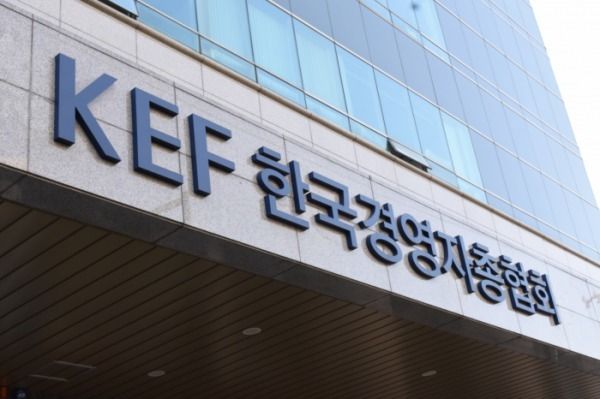
On the 3rd, the Korea Employers Federation (KEF) issued a statement outlining these concerns. It highlighted the potential problems if personnel reassignments resulting from new plant construction or the adoption of Artificial Intelligence (AI) and other new technologies—examples cited in the implementation guidelines released by MOEL that day—are treated as subjects of labor disputes.
KEF explained, "The purpose and substance of personnel reassignments resulting from corporate investment and the construction or expansion of plants and facilities are not to reduce or reorganize existing employment relationships, but to organize and allocate the human resources needed for newly established or expanded production organizations."
It stressed, "As a rule, personnel reassignments resulting from new plant construction do not entail unfavorable changes to workers' status or working conditions. They therefore constitute ordinary personnel transfers based on the employer's managerial authority and cannot be regarded as subjects of labor disputes."
KEF expressed concern that even after an investment in a new plant has been approved, skilled workers and research personnel are difficult to secure through new hiring or external recruitment alone. If collective bargaining over personnel allocation is delayed or industrial action occurs, it could become virtually impossible to operate the plant.
Regarding the adoption of new technologies, KEF described it as "a routine managerial decision made to improve business efficiency" and pointed out, "If the resulting personnel reassignments and changes in work methods are treated as subjects of labor disputes, even the exercise of companies' ordinary personnel and managerial authority could become subject to industrial action."
It added, "In an era of major transformation driven by AI and semiconductors, when the swift and flexible deployment of personnel is essential, personnel reassignments resulting from new plant construction and the adoption of new technologies must be excluded from the scope of labor disputes to prevent labor-management conflicts from disrupting such projects."
KEF also raised concerns about provisions concerning management performance bonuses. The MOEL implementation guidelines state that "management performance bonuses concerning the determination of working conditions, including workers' wages, welfare, and other treatment, constitute a mandatory subject of collective bargaining." However, they do not specify when management performance bonuses qualify as wages or other working conditions, KEF said.
KEF suggested, "Although the guidelines explain that management performance bonuses do not have uniform types or legal characteristics, they fail to clarify when such bonuses constitute wages or other working conditions. We are concerned that this could instead increase confusion in the field. At a minimum, the guidelines should specify the requirements for types of management performance bonuses that court precedents have recognized as wages, thereby clarifying when they become mandatory subjects of collective bargaining."
KEF also said that although MOEL issued interpretive guidelines on the Trade Union and Labor Relations Adjustment Act amended in February and has now released these implementation guidelines, conflicts in workplaces over the scope of labor disputes, including personnel reassignments, are still expected to continue.
KEF emphasized, "Ultimately, the definition of labor disputes under the Trade Union and Labor Relations Adjustment Act should be revised to clearly stipulate that corporate decisions—including the construction of new plants and the resulting personnel reassignments—are excluded from the scope of labor disputes, in order to prevent conflicts."
[email protected] Dong-chan Kim Reporter