Government to actively foster new national security innovation companies... even opening military data and test sites
- Input
- 2026-09-03 14:51:05
- Updated
- 2026-09-03 14:51:05
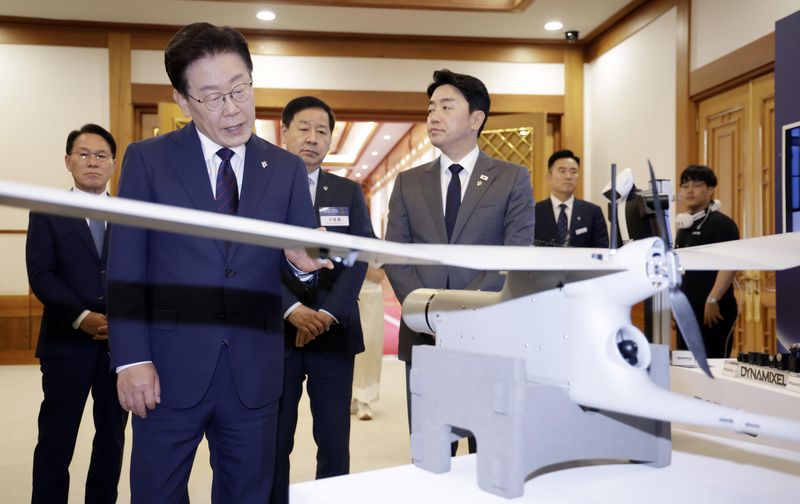
On the 3rd, the Ministry of SMEs and Startups held the second meeting of the 'Working Group for Fostering New National Security Innovation Companies' with relevant ministries, including the Ministry of Economy and Finance, the Ministry of National Defense, the Defense Acquisition Program Administration (DAPA), and the Korea AeroSpace Administration (KASA), and discussed these measures.
The government has decided to form a 'New National Security Innovation Company Pool' centered on companies selected for the Ministry of SMEs and Startups' 'Everyone's Challenge Defense,' defense innovation companies designated by the Defense Acquisition Program Administration (DAPA), companies with sector-specific public certifications for technologies and products, and companies participating in government projects related to national security and defense.
It also plans to specify the methods for forming the company pool, such as recommendations from relevant ministries, associations, and organizations or direct applications from companies, as well as the recommendation and application criteria, including the proportion of sales from the national security sector, patent ownership, and the research and development (R&D) history of related technologies.
The meeting also reviewed measures to provide innovative companies with opportunities to access core military data through the Military-Industry-Academic Cooperation Center and the Defense Data Safe Zone, enabling them to use data from actual defense sites and verify their technologies, while expanding the data that can be disclosed to the private sector.
They also discussed plans to operate dedicated demonstration units and innovation labs to verify innovative civilian technologies in real-world environments, and to support companies in confirming the performance and military applicability of their developed products at military test sites through the Defense Acquisition Program Administration's demonstration testing projects.
The government is also pursuing the enactment and amendment of relevant laws to rapidly introduce products and technologies from new national security innovation companies and provide institutional support for fostering them.
The Ministry of Economy and Finance plans to establish a rapid procurement system under the State Contracts Act that allows R&D agreements and purchase contracts to be pursued simultaneously.
The Ministry of National Defense and the Defense Acquisition Program Administration (DAPA) are reviewing ways to apply new acquisition methods included in the recently proposed Advanced Defense Forces Project Act—such as mission-oriented requirements, competitive acquisition, and agile development—to the military adoption of advanced civilian technologies.
The Ministry of SMEs and Startups shared a draft of the Special Act on Fostering New National Security Innovation Companies, which sets out the promotion system for fostering innovative companies, as well as company designation and cancellation, support, and special provisions.
Based on these discussions, the Ministry of SMEs and Startups plans to work with relevant ministries to develop a full-cycle support system covering everything from company discovery to investment, R&D, demonstration, procurement, and market entry.
Park Yong-sun, head of the SME Policy Office at the Ministry of SMEs and Startups, said, "To secure future competitiveness in new national security, it is important to rapidly identify innovative technologies held by the private sector and connect them so that they can be used in actual defense and national security settings." He added, "We will work closely with relevant ministries to create an ecosystem in which innovative SMEs and venture companies can overcome barriers to investment, R&D, demonstration, and procurement and grow into key companies leading the future new national security sector."
[email protected] Kim Hyun-chul Reporter